

The life stories of children involved in crime also resemble each other. Experts point out that the majority of them are children who have been exposed to intense and continuous violence such as domestic violence, neglect, abuse, and poverty from the first years of their lives. Experts, warning that ‘violence triggers violence and victimhood, and victimhood triggers involvement in crime,’ state, ‘Children exposed to negative life events, violence, neglect, and abuse in the family environment have an increased tendency towards crime. Therefore, families should have better interaction and communication with their children and protect them from potential risks.’
Content
Child's tendency towards crime increases when exposed to violence and neglect
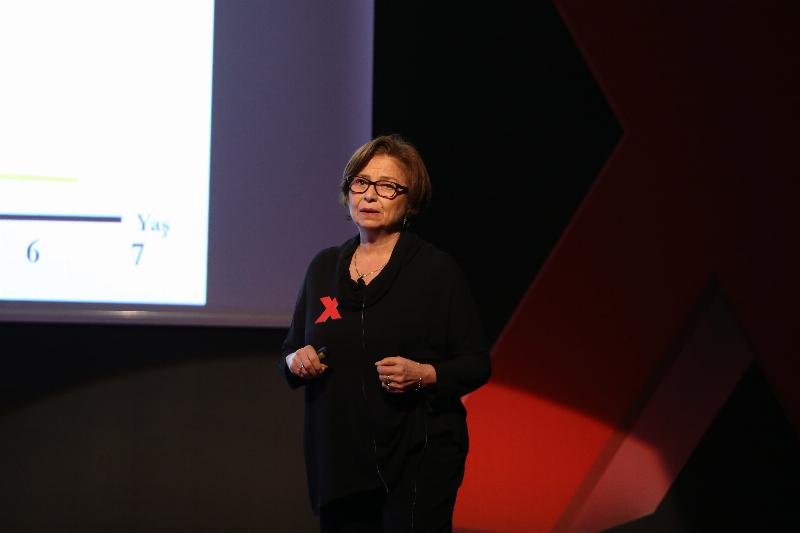
Üsküdar Üniversitesi Faculty of Health Sciences Child Development Department Head Prof. Dr. Nurper Ülküer made evaluations regarding children involved in crime.
Prof. Dr. Nurper Ülküer stated that even the presence of the words 'crime' and 'child' in the same sentence implies a potential violation of child rights, and said, “It is essential to investigate why these children are drawn into crime and to take necessary measures to eliminate the challenging conditions they face.”
Last year, 117 thousand children were involved in crime
Prof. Dr. Nurper Ülküer stated that approximately half a million children in our country came into contact with security units last year, and said, “Although this figure is lower than last year, it is still a considerable number. Children coming to law enforcement agencies mostly come as victims. One-fourth of them are involved in crime, meaning they committed an act defined as a crime in laws; a smaller portion comes with the allegation of committing an act, and a very small portion comes for information or as found children. Within this group, 117 thousand children are defined as children involved in crime. While the number of children proportionally increases as they get older, reports also indicate that two out of every 10 children are under 11 years old. According to statistics, boys are involved in crime more frequently than girls.”
Family and environmental interaction are crucial in child development
Prof. Dr. Nurper Ülküer noted that children's development is shaped not only by their innate genetic characteristics but also by the stimuli they receive from the environment, and said, “Neurological brain development studies, which have gained increasing importance in recent years, have proven that the architecture of children's brain development is formed by the stimuli the child receives from the environment and their responses to them. In other words, it is now known that interactions with parents or other important adults from the moment of birth are crucial for the development of the child's senses, emotions (which includes the control and recognition of emotions), language development, and the acquisition of learning skills.”
Intense neglect and abuse leave lifelong effects
Prof. Dr. Nurper Ülküer stated that the first years of childhood are therefore the most critical years, and said, “It is known that many socio-emotional developmental problems arise as a result of negative effects during this period. In particular, it is known that toxic stress, defined as the prolonged continuation of intense neglect and abuse, leaves irreversible neural traces in the brain during the early years of childhood, and these effects continue throughout life.”
The life stories of children involved in crime resemble each other
Prof. Dr. Nurper Ülküer noted that the life stories of children involved in crime are similar, and said, “The majority are children who have been exposed to intense and continuous violence (domestic violence, neglect, abuse, poverty..) from the first years of their lives. Violence triggers violence and victimhood, and victimhood triggers involvement in crime.”
Prof. Dr. Nurper Ülküer noted that there are also studies attributing more responsibility to genetic influences than environmental influences in children's involvement in crime, and said, “Genetic influence, including mental illness and a predisposition to criminal behavior, various types of antisocial behavior, and impulsivity that can support such behaviors, is also supported by scientific studies as being related to hereditary factors from parents. However, it has also been reported that these environmental risks that children are exposed to increase the effect of genetic risk factors.”
The role of parents, caregivers, and peer groups is significant
Prof. Dr. Nurper Ülküer noted that generally two important environmental factors play a role in children's involvement in crime, and said, “The first is parents/caregivers in the early years of childhood, and the second is peer groups in later years. Peer groups are usually formed by children who have had similar negative experiences finding each other, and thus negative behaviors are mutually accepted and reinforced.”
70 out of 100 children have experienced traumatic events
Prof. Dr. Nurper Ülküer stated that another environmental factor is childhood traumas, and said, “Various reports indicate that 70 out of every 100 children in the world have experienced traumatizing events such as physical abuse and sexual abuse. Exposure to these and similar events in childhood brings a range of negative emotional, developmental, behavioral, and academic consequences, including developmental delays, substance abuse, and suicide, as well as forming the basis for psychiatric disorders.”
Prof. Dr. Nurper Ülküer said, “Over-arousal, a common symptom of post-traumatic stress disorder, and easily triggered behavioral patterns such as aggressive behavior and excessive anger can contribute to children's involvement in crime. Changes in emotion processing, such as a person's deficiencies in recognizing their own or others' emotions, altered cognitive processes like perceiving hostile intentions in others, and altered interpersonal processes such as difficulty forming bonds with people, as a result of traumatic stress, are also included among the processes affecting a child's involvement in crime.”
Instead of punishing; rehabilitation should be done in the pre-crime area
Prof. Dr. Nurper Ülküer, noting that measures should be taken through laws to protect children from social and psychological dangers, considering the situations of children involved in crime, said the following:
“When necessary, if there is family neglect and abuse, the child must also be protected from the family. Preventive, protective, and restorative institutions are needed to support the continuity of the child's development and to reduce the effects of negative experiences. On the other hand, the justice system is obliged to protect children's rights, especially within the framework of the Child Protection Law (CPL). Instead of punishing children; rehabilitating them in the pre-crime area should be an important principle. Also, within the framework of the CPL, it is important to prevent the process that leads a child to crime and to take preventive measures to avoid their involvement in crime.
Protective and supportive measures should be taken
CPL fundamentally accepts that children should be placed under supervision instead of being punished, protected in family environments without being separated from their families, and that punishment should be resorted to as a last resort. After a child encounters judicial authorities by committing a crime, more emphasis should be placed on efforts to repair the child's connections with their external and internal world and to socialize the child. Protective and supportive measures aim to protect and support the child.”
What can families do about this?
Prof. Dr. Nurper Ülküer said, “The well-being of the family environment, as the first social environment where the child's development process begins, has a significant impact on child development. Children exposed to negative life events, violence, neglect, and abuse in the family environment, which is the child's first gateway to the world, have an increased tendency towards crime. Therefore, families should have better interaction and communication with their children and protect them from potential risks.”
Children are not born criminals
Prof. Dr. Nurper Ülküer emphasized that families need support to be protected from the negative effects of poverty and limited economic conditions, and to be able to prepare more suitable home environments for their children, and said, “It is essential to provide parenting counseling, psycho-social, and financial support to families, especially those in the risk group. In this context, community centers should identify and take precautions against risk factors for families through regular screenings. Let us remember, children are not born criminals, nor are they driven into crime without a reason. It should be the primary duty of the state, local governments, and families to ‘raise confident, happy, and eager-to-learn children.’ Only in this way can we ensure the safety of our children and help them become good citizens.”
Share
Update Date: February 28, 2026
Creation Date: October 18, 2021
Request a Call
Other News
- The book that read today's digital threats in 2014: Being a Conscious Family
- Experts warn: 'Instead of memorizing letters, teach pencil grip, scissor use, and coloring'
- School fear and school love both start in the family!
- Family is not merely transforming, it is being battered under a serious assault
- Artificial intelligence opens the door to early diagnosis in autism!