

Üsküdar Üniversitesi Vocational School of Health Services (SHMYO) organized a discussion on “Chemical Biological Radiological Nuclear Threats (CBRN)” within the scope of the University Culture course. Lecturer Ayşe Aydemir from Üsküdar Üniversitesi Vocational School of Health Services, Emergency and Disaster Management, participated as a guest in the event held via Zoom.
Content
'Chemical Biological Radiological Nuclear Threats' Discussed
“CBRN has become more important today”
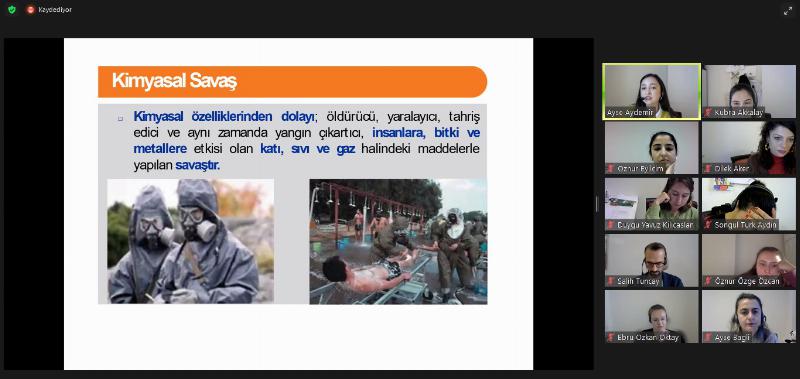
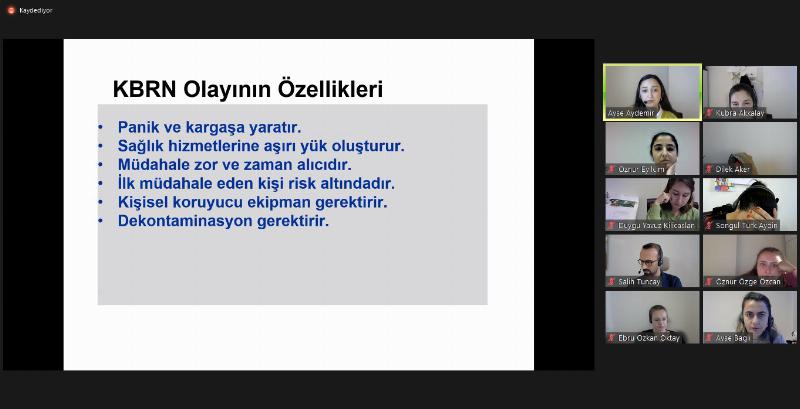
Lecturer Ayşe Aydemir from Üsküdar Üniversitesi Vocational School of Health Services, Emergency and Disaster Management, evaluated the general characteristics of ‘CBRN’ incidents. Aydemir stated, “With current developments in warfare, industry, and manufacturing, Chemical Biological Radiological Nuclear Threats (CBRN) have begun to increase. Consequently, the topic of ‘CBRN’ has become more important today. When we look at the general characteristics of CBRN incidents, they cause panic and chaos in the environment. They also place an excessive burden on healthcare services. We witnessed this during the Covid-19 pandemic, where healthcare services faced difficulties in many countries, including ours. CBRN incidents require special equipment.”
“The decontamination process is extremely important”
Aydemir emphasized that individuals must use personal protective equipment while working: “Intervention is quite challenging and time-consuming. The process begins with impact and needs analysis during the intervention phase and covers a long period up to the decontamination procedure. The first responder is highly at risk. Consequently, individuals must absolutely use personal protective equipment while working. In CBRN incidents, the decontamination process is very important. Decontamination means cleaning and purification. Here, not only the decontamination of individuals exposed to chemicals but also the decontamination of the teams intervening with them must be carried out. In CBRN, chemical warfare refers to warfare conducted with solid, liquid, or gaseous substances that are deadly, injurious, irritating, incendiary, and affect humans and other living beings due to their chemical properties.”
“There are many ‘Chemical Agents’”
Lecturer Ayşe Aydemir provided information about the physiological structures of chemical agents. Aydemir stated, “When we classify chemical agents according to their physiological structures, there are poisonous chemicals. These are chemicals that directly kill people, cause diseases, and injure. There are also incapacitating chemicals used to disable individuals. Generally, our first method of protection against chemical gases is to quickly move away from the environment where the gas is located, if possible. If we have protective equipment like masks, we should wear them; if contact occurs with the eyes, ensure decontamination with plenty of water, and individuals must seek medical attention.”
The event concluded after answering questions from the participating students.
Share
Update Date: March 01, 2026
Creation Date: November 03, 2022