

Psychiatrist Prof. Dr. Nevzat Tarhan stated that trust and loyalty are among the most important concepts in marriage, likening infidelity to a dagger plunged into a person's soul. Tarhan said, “Infidelity harms the feeling of trust and disrupts a secure relationship,” adding that in the scale of stress-inducing life events used in psychiatry, a spouse's infidelity ranks first, followed by the death of a spouse. Prof. Dr. Nevzat Tarhan said, “The most stressful and unbearable thing for a person is their spouse's infidelity. Being betrayed is a huge wound. It's like planting a bomb in the house.”
Content
Causes more stress than death…
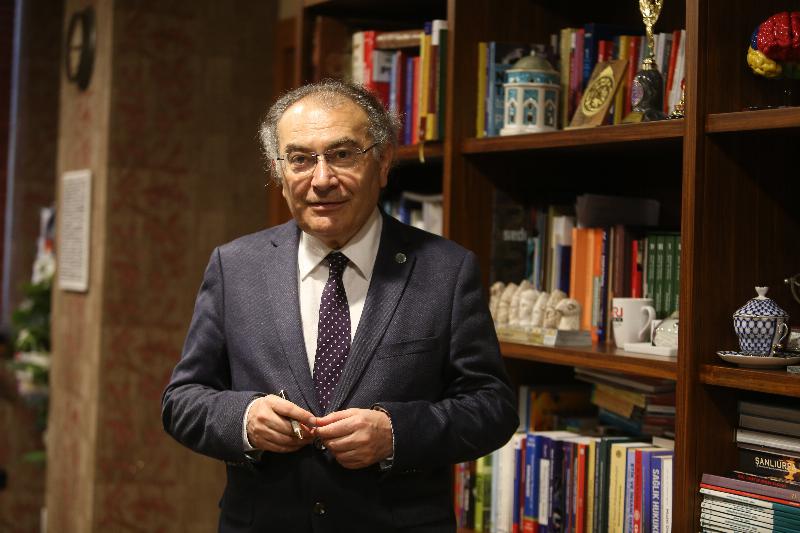
Founding Rector of Üsküdar University, Psychiatrist Prof. Dr. Nevzat Tarhan, made evaluations on the subject of loyalty in marriage.
Children pay the biggest price
Prof. Dr. Nevzat Tarhan noted that the issue of loyalty in marriage is a global concern, stating, “Currently, there are 'open marriages' widely used in the US against infidelity, but they have many disadvantages. In the open marriage model, both married partners have lovers. Both sides are aware of this. These marriages, which started in the 70s under the name of freedom, do not work.” Prof. Dr. Nevzat Tarhan added that in these types of marriages, children pay the biggest price, saying, “A safe environment is not created at home. Both parties appear together, but their minds and hearts are elsewhere. An atmosphere conducive to a child's development is not formed.”
We are in an age where individualization turns into selfishness
Prof. Dr. Nevzat Tarhan noted that in our current age, individualization has come to the forefront, leading to negative consequences, stating, “The current era is one where individualization turns into selfishness. Individualization is exaggerated. The dose is missed with statements like 'You are an individual, build your own life.' As a result, individualization has brought about human loneliness. As a result of individualization,
people strive to survive. They produce, and because they produce, they consume. As they consume, the system profits. In other words, individualization is a consequence of the capitalist system.” said.
Infidelity means a person lacks marital loyalty
Prof. Dr. Nevzat Tarhan pointed out that there is a double standard in the widespread segments of society regarding infidelity, stating, “The concept of honor applies to both women and men. To consider infidelity for a man as a 'slip-up' and for a woman as 'dishonorable' is a selfish double standard. This situation is one of the mistakes in our traditions. Wrongdoing applies to both parties. When you say a man can do it, but a woman cannot, that's a double standard. Postmodern life currently makes us question many things again. Therefore, infidelity means a person lacks marital loyalty.” he said.
Basic trust is important in marriage
Tarhan noted that the institution of marriage was previously called a 'nest of love,' but in recent years, it has been defined as a 'nest of trust.' He stated, “Marriage should be a safe haven; that is, when a person comes home, they should feel they are coming to a safe place to take refuge. That's why marriage has now become the last refuge. Family life needs to be secure. It must be secure so that when a person comes home, they know they have a spouse they can turn their back on and sleep safely with. No one can have a peaceful married life with a person who plots behind their back. There must be an atmosphere of trust at home. Basic trust is important in marriage.” he said.
Infidelity harms the feeling of trust
Prof. Dr. Tarhan emphasized the importance of trust and loyalty towards a spouse in marriage, stating, “Living with the fear that your spouse might be with someone else is very difficult. Can such a person be peaceful? If you harbor the thought that your spouse might cheat on you in marriage, your peace will be lost. Jealousy can become a pathology after a while. That's why infidelity is like a dagger plunged into a person's soul. Infidelity harms the feeling of trust and disrupts a secure relationship.” he said.
Prof. Dr. Nevzat Tarhan also noted that the feeling of trust is very important in a child's development, stating, “When we look at the stages of a child's development, the fundamental source of the mother concept is not providing love, but alleviating the child's fears, meaning providing trust. When a child cries, when you give love, love is like a fire, and when it burns, trust emerges from it. Where there is no love, trust does not form either. These two feelings are interconnected. Fear decreases, trust increases. The opposite of distrust is fear.” he said.
How does a mother's attitude affect a child's development?
Prof. Dr. Nevzat Tarhan noted that a steady, consistent, and continuous relationship is necessary to ensure secure attachment between mother and child, stating, “If motherhood is consistent, continuous, and steady, a basic sense of trust is formed. Because there is a basic sense of trust, the child perceives life as safe. Feeling safe, they begin to explore life. They start walking. They start touching. They start examining. However, if there is inconsistent discipline, what does the child do? In such situations, the child cries frequently. This is because they cannot predict when the mother will do what, and therefore do not perceive life as safe.” he said.
Prof. Dr. Nevzat Tarhan noted that for a secure family environment, parties must be sure that they will not betray each other, stating, “Trust in the family is established through open, transparent, and honest relationships. If there is an open, transparent, and honest relationship, there is no infidelity.” he said.
Virtual infidelity is the first step of cheating…
Tarhan stated that virtual infidelity is the first step of cheating, saying, “Infidelity in the virtual world is like, 'What will happen from a spark?' Big fires start with small sparks. Therefore, virtual infidelity should not be seen as innocent. The moment you say it's just a game, it finds a way from there and progresses.” he said.
Expectation level, physical avoidance, and mind reading…
Prof. Dr. Nevzat Tarhan noted that there are three main issues in marital relationship status scales used by mental health professionals, stating, “The first is the expectation level between couples. If the expectation level is not realistic, conflict arises. Second, is there physical avoidance towards each other? Do they avoid being together? The third is mind reading. If there is mind reading, when the other party says something, one believes what is in their own mind, not what the other party actually means. In close relationships, if someone reads intentions, that is, makes a prophecy, if they start saying, 'Their face is glum today, so they must be plotting something against me,' it becomes a self-fulfilling prophecy. People who are pathologically suspicious establish connections of meaning, draw conclusions from them, and believe in them. Because they believe, they react wrongly. And then they are left alone.” he said.
Infidelity feels heavier than death
Tarhan noted that in the scale of stress-inducing life events used in psychiatry, a spouse's infidelity ranks first, followed by the death of a spouse, stating, “The most stressful and unbearable thing for a person is their spouse's infidelity. Being betrayed is a huge wound. It's like planting a bomb in the house.” he said.
Emotional reactions emerge
Prof. Dr. Nevzat Tarhan noted that emotional reactions usually emerge from the betrayed party, stating, “In infidelity, there are generally emotional responses. 'If they cheat, I will cheat too,' meaning a feeling of revenge emerges. This is the first method. The second method is to end the marriage immediately. The person ends the marriage by saying, 'I won't be with someone who cheats on me.' In the third method, the person considers: Is this a planned and premeditated infidelity? Or did they fall into a trap? The person looks at these; if it is a planned and premeditated infidelity and this is an ongoing relationship, meaning they have invested their love in someone else, they must express their sadness very clearly. They absolutely will not approve of this relationship. The cheating party must pay a price. It is necessary to communicate that they will lose if it happens again.” he said.
Wise enough to forgive, smart enough not to trust…
Prof. Dr. Nevzat Tarhan noted that some things can be done in marriages experiencing negative situations like infidelity, stating, “If a person sees serious signs of remorse in such situations, they might forgive, but they should absolutely not forget the incident. One should be wise enough to forgive, but smart enough not to trust. If this can be done in such relationships, both parties can learn a lesson and improve the marriage. But if such a lesson cannot be learned, the marriage suffers. Generally, in these types of incidents in our culture, for the future of the children or due to economic reasons, the betrayed party grieves internally, suppresses their feelings, and doesn't confront their spouse. Then the spouse continues.” he said.
Share
Update Date: March 01, 2026
Creation Date: June 09, 2022
Request a Call
Other News
- Erasmus+ Orientation Week Completed at Üsküdar
- Prof. Nevzat Tarhan: “Brain Secretes ‘Dark Glue’ in Social Media Lynchers!”
- Prof. Nevzat Tarhan: “Every segment of society should be able to say, ‘This constitution is my constitution!’”
- OHS Releases Guide for Safe Operation of Industrial Robots
- Prof. Nevzat Tarhan: “Social media is digital fast food”