

A panel on "Business Life and Spirituality" was held with the support of Üsküdar University Institute of Sufi Studies and the Kerim Foundation. The panel, held at the Nermin Tarhan conference hall, was attended by Prof. Dr. Elif Erhan, Director of the Institute of Sufi Studies, Prof. Dr. Emine Yeniterzi, Assist. Prof. Dr. F. Cangüzel Güner Zülfikar, Deputy Directors of the Institute of Sufi Studies, and Prof. Dr. Reşat Öngören, a faculty member of the Institute. Panelists included Assist. Prof. Dr. Hatice Dilek Güldütuna, Dr. Yavuz Fahir Zülfikar, Oğuzhan Gürsoy, Emine Ebru Arslan, Yeliz Merdan, Ülkü Bozkurt, and Pınar Ersoy Özdoğru.
Content
A panel titled “Business Life and Spirituality” was held.
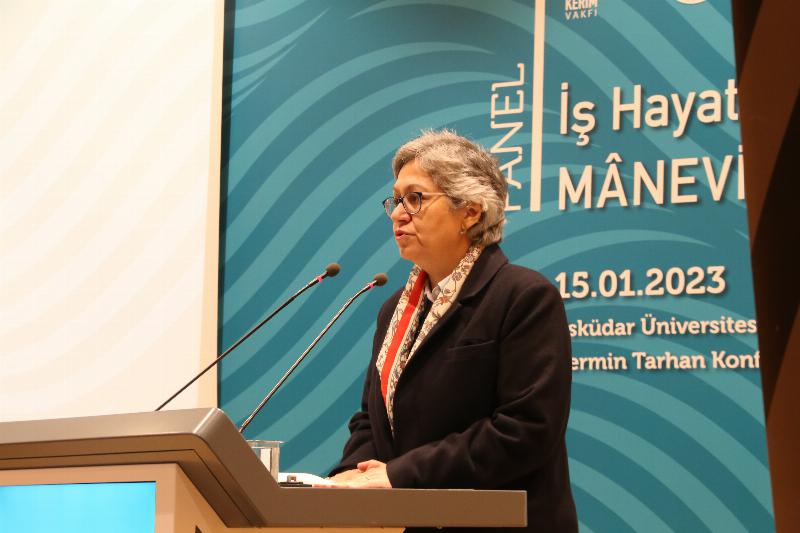
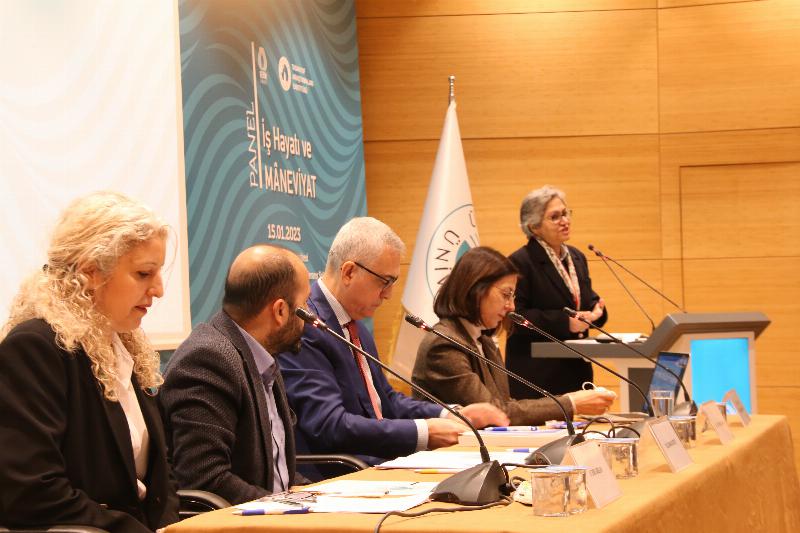
The opening speech of the panel was delivered by Assist. Prof. Dr. F. Cangüzel Güner Zülfikar, Deputy Director of the Institute of Sufi Studies. Zülfikar stated; "These studies are also carried out with great passion. We hope to publish them soon. We thank all of you for coming and participating." It was stated that the Institute was founded as an "ethics institute" by Ü.Ü. Founding Rector Prof. Dr. Nevzat Tarhan and Rector Advisor Cemalnur Sargut, and that the topic of business and work ethics was included in the Institute's program files from day one. In the panel, which focused on the studies gaining momentum with the establishment of the research group on Business and Work Ethics in the Spring semester of 2020, the fundamental concepts of business ethics were primarily evaluated. Four interdisciplinary thesis studies produced at the Institute of Sufi Studies, establishing connections between business life and Sufism, exploring the potential contributions of Sufi thought, and discussing business life and spirituality, were presented, and evaluations for the future business world were made. In the panel, striking insights were shared on 'servant leadership' as the trend of the future, 'being a good person' as a requirement of servant leadership, 'ethics' as a condition for being a good person, and the 'inevitability of ethics' for the world's sustainability.
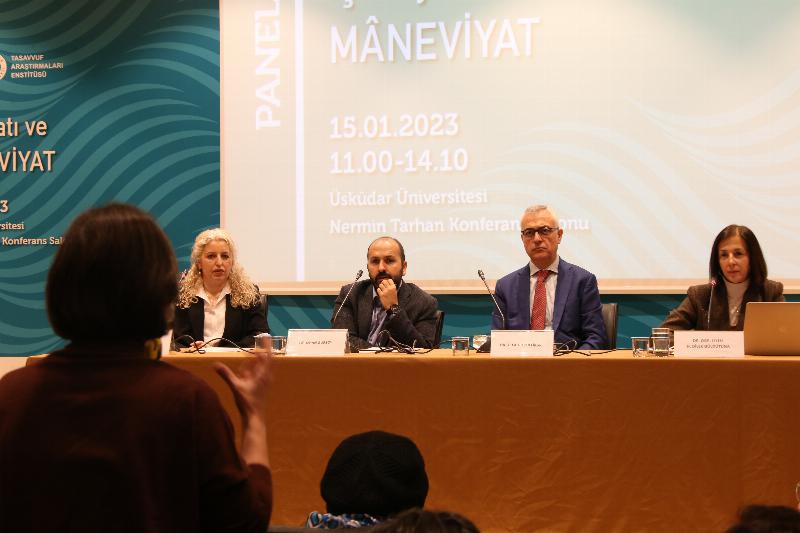
Assist. Prof. Dr. Hatice Dilek Güldütuna: “There is confusion when we talk about ethics and morality”
The first session of the panel was chaired by Assist. Prof. Dr. Hatice Dilek Güldütuna from Üsküdar University Institute of Sufi Studies. Güldütuna, who delivered a presentation titled "A Look at the Concepts of Morality and Ethics," stated: "In our daily language, there is confusion when we speak of ethics and morality, or values and norms. We use these words interchangeably in different areas of life. My intention here is not to dictate the correct usage, but to clarify their semantic fields and draw attention to different ways they are used in academia. Moral values are our internalized principles and standards that guide us and are integrated with us. These values influence our goals, the means we use to achieve those goals, and our choice of actions. They play an important role in bringing a society and its people together. We can express these values with the word virtue. Ethics provides guiding knowledge rather than knowledge about usage. When our subject is the business world, it is seen that the global capitalist system's relationship with these concepts is closely related to the trajectory of Western thought over the last few centuries; because this trajectory and process created all the institutions, norms, and values of the global market system. The modern era is a period where the understanding of morality changed, and the culture of capitalism emerged."
Dr. Yavuz Fahir Zülfikar: “Morality is about choices”
Panelist Dr. Yavuz Fahir Zülfikar, who delivered a presentation titled "Business Ethics: Fundamental Concepts," stated: "Morality is about choices. What kind of person should I be? What should I do? How should I act? We are always looking for answers to these questions. Socrates states the essence of a moral life by saying, 'The unexamined life is not worth living.' Every day we live, we encounter countless moral questions. It is impossible to avoid answering these questions. We spend our lives answering them either explicitly or implicitly through the choices we make. In Turkey, the gradual transition to a competitive economic system and opening to the West since 1980 brought some problems along with economic prosperity. Turkish society began to imitate Western consumption habits, but when production and national income could not meet this consumption, some unethical practices were observed at personal and corporate levels. This increased the necessity of implementing business ethics, popularizing it in the business world, and incorporating it into educational curricula. If we consider the foundations of business ethics, any business activity, being a human activity, can be evaluated from a moral perspective, just like all other human activities."
Oğuzhan Gürsoy: “A robust cultural structure with strong roots can only be achieved through hard work”
Oğuzhan Gürsoy provided information about his thesis in his presentation titled "Values at the Origin of Far Eastern Production Systems." Gürsoy stated: "Two striking questions triggered this study. One of them is how the extraordinary economic performance observed in some countries, especially in the Far East geography, emerged in the second half of the 20th century. We see that Japan's average per capita gross national product, which was around 500 dollars at the end of World War II, increased to approximately 40,000 dollars by the second half of the 1970s. While Japan is considered the most vibrant example of producer economic states, one of the key factors driving growth is the competitive advantage provided by its production systems. The second question is why efforts to transfer Far Eastern production systems to Western factories largely result in failure? Could one of the main reasons behind this failure be neglecting the fact that the system is nourished by environmental factors and social elements in the geography where it originated and developed, as well as neglecting the human factor?
Today's companies striving to be entrepreneurial, innovative, and agile should abandon the search for shortcuts and focus on creating a long-term climate of trust based on deeply rooted principles. A robust cultural structure with strong roots, nurtured by profound spiritual values, can only be achieved through patient hard work."
Emine Ebru Arslan: “Employees need to develop three skill groups by 2030”
Panelist Emine Ebru Arslan also delivered a presentation titled "The Future of the Business World and Approaching Future Competencies with Sufi Concepts." Arslan stated: "As a result of research, for 2022, we see six global trends emerging with the potential for continuous impact on both the business world and societies, under the headings of digital disruption, climate crisis, demographic changes, economic fluctuations, workforce contraction, and social movements. When we conduct a deep reading of the current and potential future effects of these trends, we foresee a transformation in all skill and competency needs in the business world, especially value sets. In a world where global capitalism's consumption-oriented lifestyle exhausts people and the pandemic acts as a catalyst, further increasing the demand for what is 'more meaningful,' all corporate structures and the templates dictated by them have begun to be questioned. The need for advanced cognitive skills such as critical thinking, creativity, and a holistic perspective, as well as social and emotional competencies that technology cannot yet imitate, such as ethical understanding, human touch, and emotional intelligence, is increasingly growing. Looking from today to the future, it will be a critical necessity for the people of the future to bear the responsibility of thinking and acting on behalf of their entire ecosystem and to operate from a higher level of comprehension. In this regard, we believe that Sufism carries timeless values suitable to be presented with a contemporaneity that aligns with the language, understanding, and perspectives of the new generation. The values representing the essence of Sufism can be integrated into the underlying operating system of business life in today's language, embracing all segments of belief in society, stripped of all religious terminology and references, and can form a reference point for a common behavioral pattern."
The second session of the panel, themed "Leadership," was chaired by Dr. Yavuz Fahir Zülfikar.
Yeliz Merdan: “Leadership is one of the important topics that is heavily emphasized”
Yeliz Merdan, who delivered her presentation titled "Important Concepts in the Depiction of the New Generation Leader," stated: "In today's world, dominated by technological change and development, humanity is grappling with epidemics, natural disasters, and the climate crisis, while also becoming increasingly isolated and unhappy due to a distorted balance between ambition and contentment in pursuit of material gains, drifting away from its essence. The question of how humanity will escape this spiral has become more frequently questioned recently. Triggered by changing needs and organizational structures, definitions and approaches to leadership have also taken their share from this process of change. Especially in today's business life, where the level of ambition and competition increases daily, there has arisen a need to reinterpret the characteristics of individuals who guide communities by uniting them around a common purpose. She stated that a 'new generation leader' model that can be concretized through behavioral indicators based on the fundamental motifs in our ancient tradition; and that these indicators are concentrated under two main values identified as 'humility and sacrifice/altruism,' gaining strength from these concepts. She pointed out the imperative of abandoning selfishness and prioritizing one's fellow human, serving the whole, realizing that this ultimately constitutes the greatest good and gain for oneself, and redefining the purpose and need for serving a higher aim for lasting success. ”
Ülkü Bozkurt: “Occupational safety culture and Sufi culture are not different from each other”
Panelist Ülkü Bozkurt delivered her presentation titled "Servant Leadership in Working Life." Bozkurt stated: "What we call safety culture is just like Sufi culture. It needs to become a way of life for you. What we call an accident can happen at home, on the road, or at work. Safety culture has no meaning until it becomes a habit, a way of life. When we look at how we can achieve this, many responsibilities emerge. Especially occupational safety specialists have very great responsibilities. In our profession, we are essentially walking around with a bomb in our hands. We try to establish this culture. When an occupational accident occurs, it is usually us who go to prison in a legal sense, and this is a bitter reality of Turkey. So what kind of problems lie behind these issues? The mindset factor, leadership factor, legal and economic factors – the most important thing affecting us, in my opinion, is the occurrence of moral degradation. Here, we realize the importance of a leader. For a leader to create a strong corporate culture, they need to be able to model their own behavior. In today's literature, a 'servant leadership school' has emerged, encompassing all leadership skills, but going beyond the standard understanding of leadership, based on the philosophy of 'people first' and 'service orientation.' Within this philosophy, servant leaders, with their communication skills, make the understanding of 'putting one's soul into the work done' a corporate culture. What did we do to create this culture: Firstly, the 'Askıda İyilik' (Goodness on Hold) Project. During the period when the pandemic gripped the whole world and its negative effects were most intensely felt, I initiated the 'Askıda İyilik' Project in my workplace and helped our surroundings in 12 different areas with people from different departments/characters. Secondly, I shared an example of applying my thesis on 'The Positive Impact of Sufi Science on the Creation of Occupational Safety Culture' to working life. Through projects we created by utilizing our positive national values, we transferred the positive values found in our ancient tradition to our colleagues. Our project is still ongoing."
Pınar Ersoy Özdoğru: “The dynamics of the system shape generations, and generations shape the dynamics of the system”
Pınar Ersoy Özdoğru, who presented on "Future Organizations and Leadership from the Perspective of Systemic and Human Dynamics," stated: "From the perspective of human dynamics, we must correctly interpret the characteristics of Generation Y, the most numerous generation in business life, and Generations Z and Alpha, who will have a say in the near future of business life, while remembering that these approaches are reductionist. From a systemic perspective, the motto of the 6th System Wave is undoubtedly sustainability, with humanity focusing on the sustainability of the ecosystem to guarantee its own sustainability, and new phenomena are expected to emerge in the near future with new developments in nano-technologies and bio-technologies. The incoming new generations and the new system wave bring us new sets of values or create the necessity to interpret the same values with a new, higher understanding. Therefore, it is clear from today that concepts of social company structures and spiritual leadership will be discussed and worked upon much more in the future within organizations, which are the intersection point of system and human."
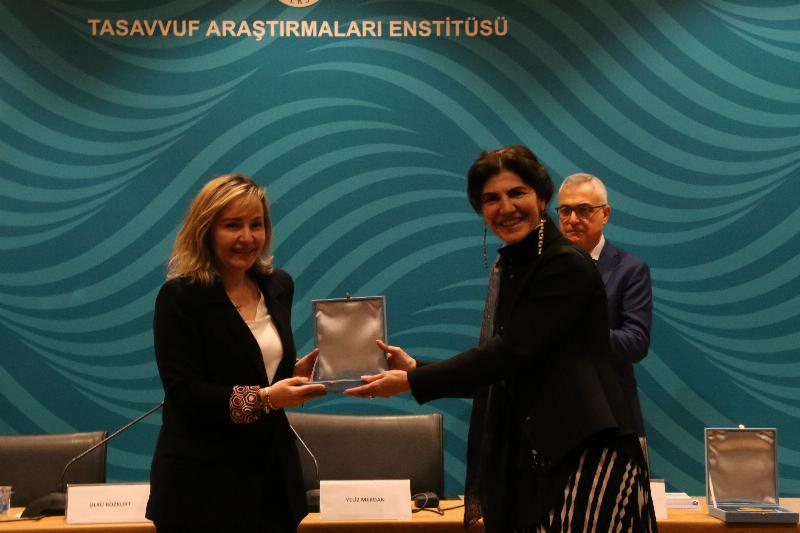
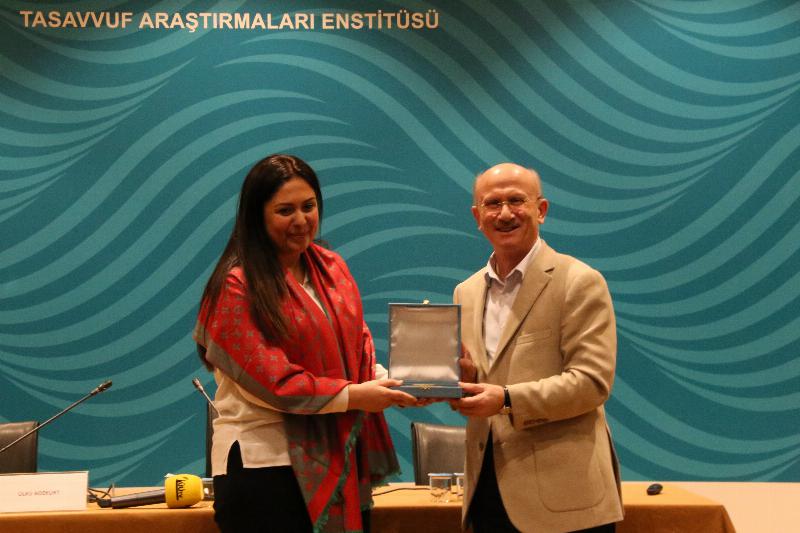
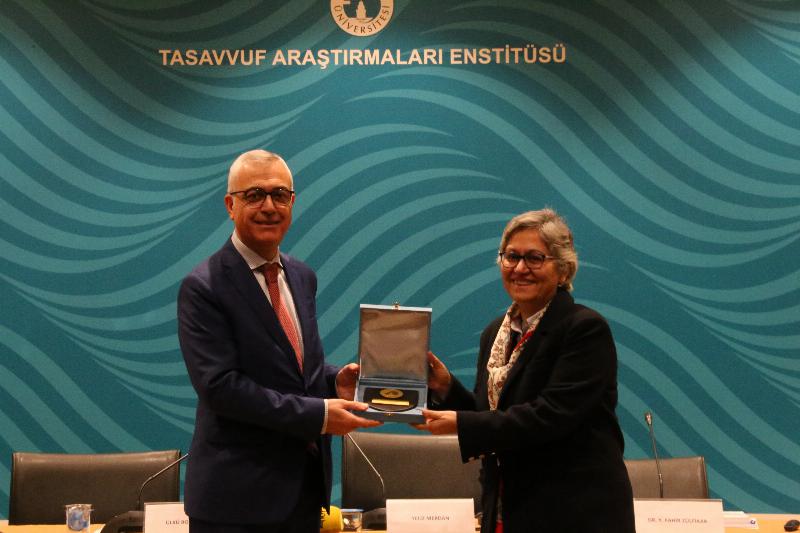
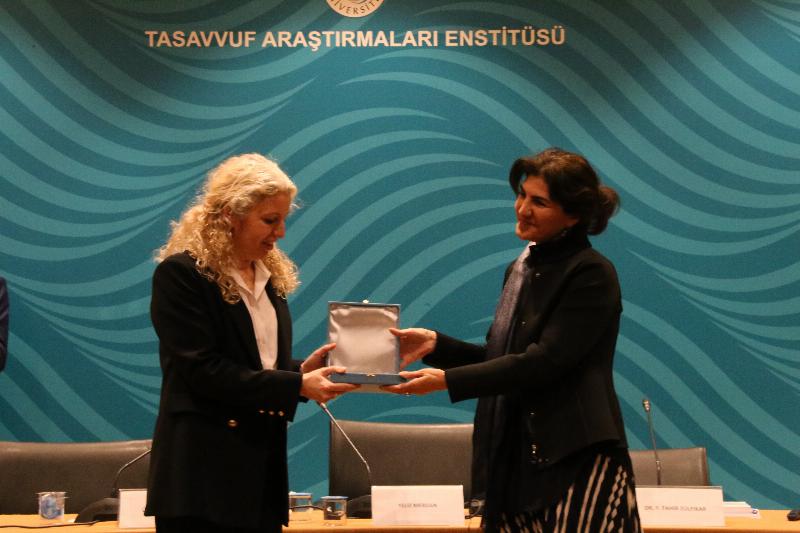
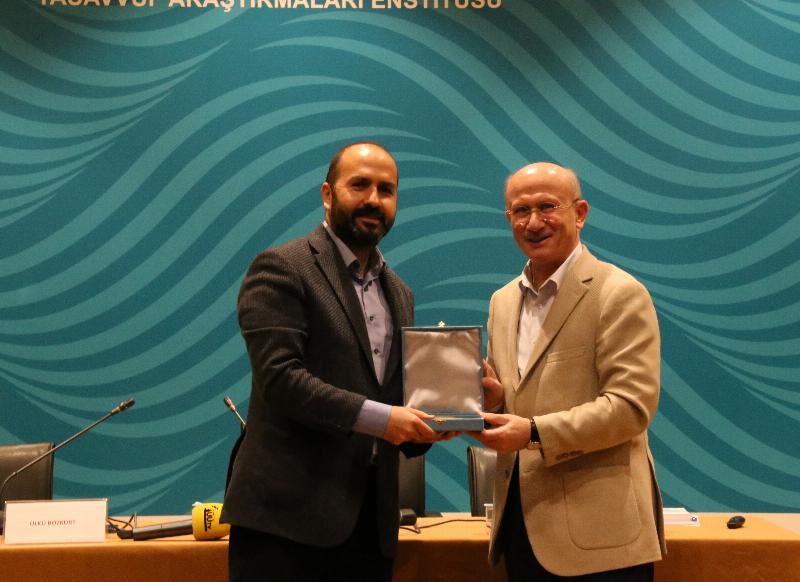
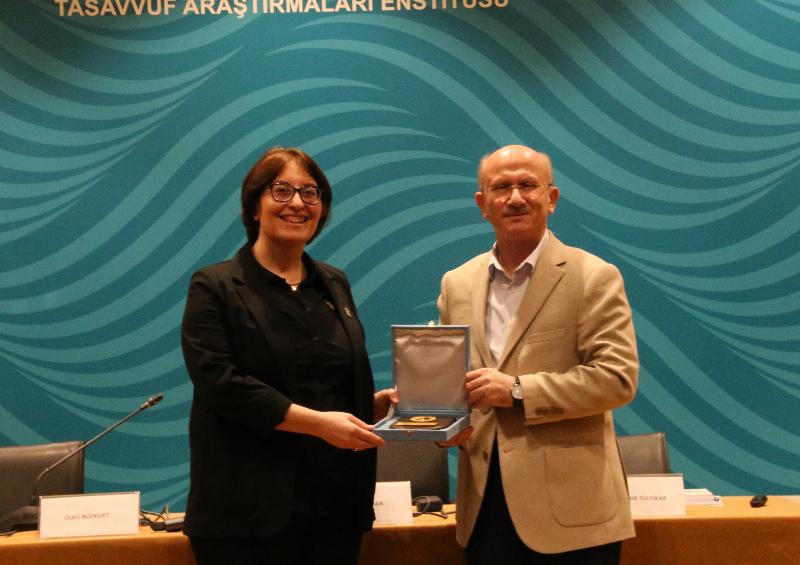
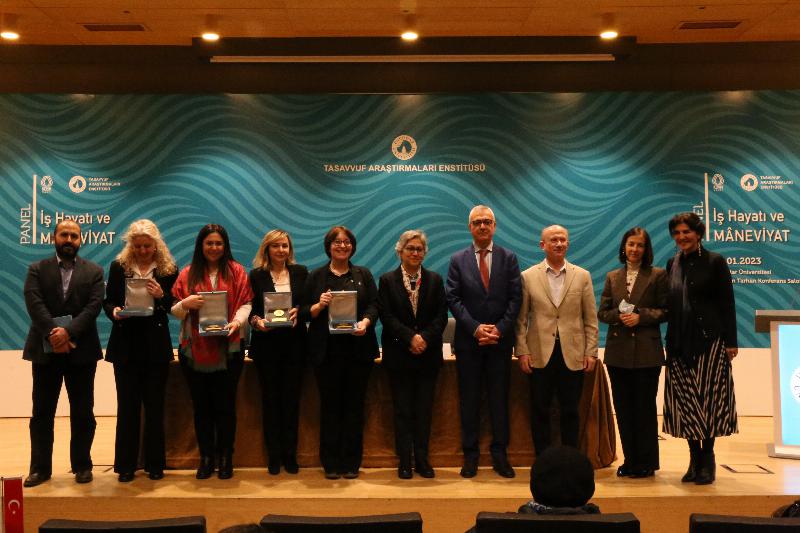
After the conclusion of the panel, plaques were presented to the panelists for their participation by Prof. Dr. Elif Erhan, Director of the Institute of Sufi Studies, Assist. Prof. Dr. F. Cangüzel Güner Zülfikar, Deputy Director of the Institute of Sufi Studies, and Prof. Dr. Reşat Öngören, Faculty Member of the Institute of Sufi Studies.
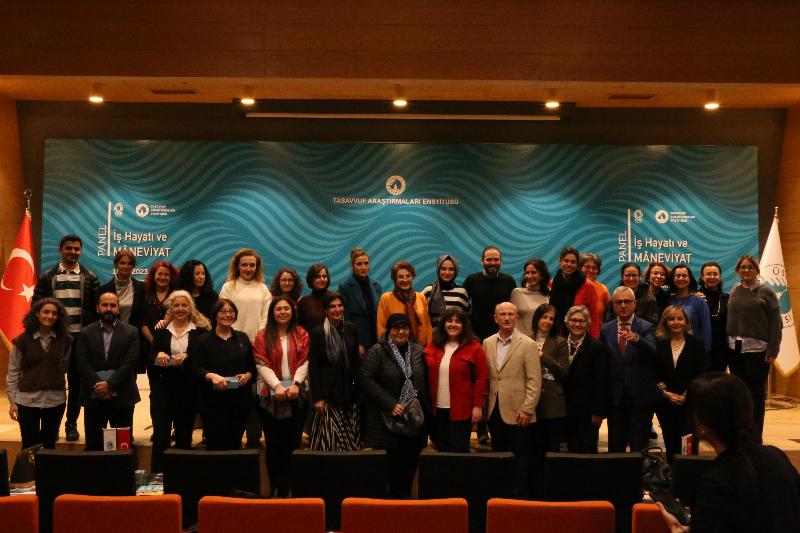
The event concluded after a group photo session.
Share
Update Date: March 01, 2026
Creation Date: January 17, 2023
Request a Call
Other News
- Prof. Nevzat Tarhan: “Those with a mental filter are not afraid of the digital”
- Artificial intelligence doesn't eliminate the translator, it transforms their expertise!
- Social responsibility courses moved to the field
- Erasmus+ Orientation Week completed at Üsküdar
- Prof. Nevzat Tarhan: “Brain secretes ‘dark glue’ in social media lynchers!”