

Within the scope of BOSİAD's Z Plan Project, very striking results emerged from the research conducted in collaboration with Üsküdar Üniversitesi in the Bursa Organized Industrial Zone, targeting Generation Z employees. According to the research, young people want a job that excites them, is fun, provides financial support, and where they are appreciated, to be motivated in their professional life.
Content
Striking Results from BOSİAD's Gen Z Research
What does the working Generation Z expect from professional life?
The Bursa Organized Industrial Zone Industrialists and Business People Association (BOSİAD), under the Z Plan Project, conducted research under the direction of Üsküdar Üniversitesi Founding Rector Prof. Dr. Nevzat Tarhan and Faculty of Communication, New Media and Journalism Lecturer Assoc. Prof. Dr. Aylin Tutgun Ünal, to understand Generation Z and build a connection between them and the business world. The research was carried out with 330 blue-collar and white-collar Generation Z employees, aged 18-25, with an average age of 23, in the Bursa Organized Industrial Zone.
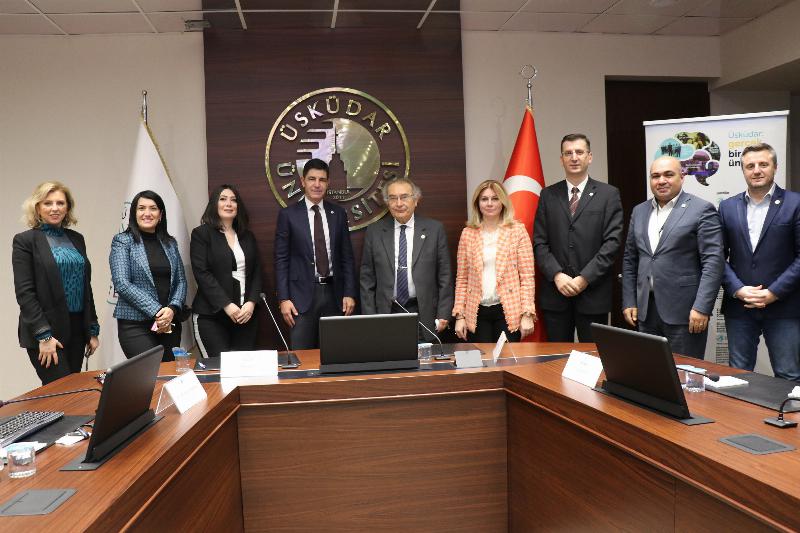
The research results were announced at a meeting held in the Üsküdar Üniversitesi Central Campus Senate Hall, attended by Üsküdar Üniversitesi Founding Rector Prof. Dr. Nevzat Tarhan, BOSİAD Chairman of the Board Rasim Çağan, BOSİAD Board Member Özgür Şahin, BOSİAD Board Assistant Güzin Özdemir, BOSİAD Secretary General Meltem Turan Koylu, BOSİAD Press Consultant Elif Sezgin, Üsküdar Üniversitesi Secretary General Selçuk Uysaler, Lecturer Assoc. Prof. Dr. Aylin Tutgun Ünal, and Üsküdar Üniversitesi Head of Corporate Communications Tahsin Aksu.
The striking results from the research are as follows:
Generation Z defines itself as “fun”
When Generation Z was asked how they define themselves in the research, "Fun" (%55.45) took the first place, "Logical" (%51) the second, and "Entrepreneurial" (%49) the third. Respectively; Free/Adventurous (%46), Pioneer (%31.5), Leader (%30), Democratic (%28), Mediator (%21) followed. At the last place was "Obedient" ().
They prefer a “positive and reliable” leader
When asked what kind of leader they want to work with in professional life; it was revealed that Generation Z wants to work with a "Positive and Reliable" (%57.6) leader. Their other preferences are "Intelligent" (,2), "Visionary" (,9), "Collaborative" (%9.1), and "Confident" (%4.2).
In the research; Generation Z was asked survey questions about professional life, along with questions from the social media usage scale, work-life scale, and acceptance of differences scale.
Generation Z is close to traditional values!
In the research; social media usage level was found to be moderate. When the Work Life Scale was analyzed, it was revealed that the working Generation Z adopts traditional values in their professional life. Traditional values indicated certain values such as fixed working hours and arrangements, working at the same workplace for a certain number of years to advance in seniority, job loyalty, and valuing the job. Valuing the job was found to be at a moderate level. Job loyalty was determined to be at a moderate level. Furthermore, it was observed that importance was given to working conditions. In terms of adherence to rules, Generation Z was found to be close to traditional values. It was revealed that they are not bothered by the existence of rules.
They approach differences with tolerance
According to the results of the Acceptance of Differences Scale, working Generation Z was found to adopt differences at a high level. When sub-dimensions were examined, acceptance levels for different religious/ethnic structures, different external appearances, and different opinions were found to be high. According to these results, Generation Z is not uncomfortable seeing people of different religious/ethnic backgrounds around them, doing business with them, or being friends with them.
Similarly, they are tolerant towards people with different external appearances, clothing styles, tattoos, or facial piercings, and are not uncomfortable with them. Acceptance levels for different thoughts and ideas were also found to be high. When the differentiation of measurements by gender was analyzed; the acceptance level of differences was found to be higher in women than in men. This means women can tolerate differences more.
Differences are normalized thanks to social networks
Research supervisor Assoc. Prof. Dr. Aylin Tutgun Ünal stated that Generation Z's immersion in social media from an early age and the integration of global diversities into their daily lives through social networks has led them to normalize differences; “Their ability to integrate cultural habits, music styles, or clothing styles from the other side of the world into their own lives by connecting to online networks allows them to tolerate differences.” she said.
According to the research results, as daily social media usage time increases, the level of social media usage is observed to rise. Those with the highest level are users who spend more than 7 hours a day (%4.8), followed by those who use it for 4-6 hours (,4). The same result was found in the dimensions of continuity and competence. As daily social media usage time increases, the perceived competence in social media usage also increases, and these groups show more continuity on social media. %60.6 of Generation Z uses social media for 1-3 hours a day, and ,4 uses it for 4-6 hours a day.
Social media is part of the job
Assoc. Prof. Dr. Aylin Tutgun Ünal stated that continuity in social media usage expresses the desire to use social media without interruption, adding, “Thus, for high-level social media users, doing all their work continuously connected on social media necessitates the continuation of social media usage in professional life. For Generation Z with social media usage continuity, social media must be a part of the job; otherwise, if it is not a part of the job, it is dangerous as it can disrupt work concentration and cause delays in tasks.” she said.
Blue-collar workers embrace traditional values
When differentiations between blue-collar and white-collar Generation Z were examined as types of work; it was observed that blue-collar workers embraced traditional values more in professional life than white-collar workers. In terms of valuing the job, white-collar workers were found to be at a higher level than blue-collar workers. Working conditions were found to be more important for white-collar workers. No difference was found in terms of adherence to rules.
The acceptance level of differences was found to be higher in white-collar workers. White-collar workers are more tolerant of different religious and ethnic structures, thoughts, and external appearances than blue-collar workers.
Social media usage level is high among those who prefer flexible work...
According to the type of motivation for applying for a job, social media usage level and acceptance level of differences varied. Accordingly, the social media usage level is high among those who prefer flexible work. The social media usage level of those who prefer a good salary financially is also higher than other preferred motivations. Those who say "I prefer a fun job" have a higher social media usage level than those who say "community/team work." The lowest social media level was found among those who prefer community/team work.
Thus, while it was revealed that those who use social media less exhibited a positive attitude towards teamwork, flexible work, a good salary, and a fun job were found to be working styles that Generation Z could maintain their social media usage.
Flexible work, good salary, fun job
The social media continuity of those who want flexible work and prefer a good salary is higher than other preference types. Flexible working style was found to be a motivation factor for social media continuity by working Generation Z. Similarly, those who want flexible work and prefer a good salary find themselves more competent on social media. Instead of working collaboratively, individual and flexible working styles with a good salary increase Generation Z's work motivation, along with social media continuity.
The level of acceptance of differences among Generation Z who stated they want to work flexibly was also found to be higher than other job preference motivations. The tolerance of those who want flexible work, especially towards different external appearances and different opinions, was found to be significantly high. The acceptance level of religious/ethnic structures was found to be significantly high among those who stated they would choose a job based on education and opportunities to learn new skills. Similarly, the level of adoption of different religious/ethnic structures was found to be high among those who chose a job based on the opportunity to innovate/create new products. Thus, a relationship was found between openness to innovation and tolerance for differences.
Social media continuity was found to be a motivation that positively affects Generation Z's desire for education and learning new skills.
The social media usage continuity of those who prefer community/team work was lower, and consequently, their acceptance levels for different religious/ethnic structures were also lower. Those who use social media less are less tolerant of differences in their teams.
Generation Z primarily wants their ideas to be valued
Work-life values differed according to whether they felt their ideas were valued at work. It was revealed that those who stated their ideas were not valued at work became alienated from their jobs and preferred to change jobs. %76 of Generation Z stated that they do not want to work in a workplace where they cannot freely express their ideas, despite a high salary.
When their ideas are valued, Generation Z's job loyalty increases
The social media usage level, continuity, and perceived competence of Generation Z who stated their ideas were not valued were found to be significantly high. It was concluded that those who stated their ideas were not valued at work used social media more frequently.
Hierarchy at work, comfort on social media
The acceptance level of differences, including different religious/ethnic structures and different external appearances, was found to be high for those who said hierarchy at work does not bother them (%49.7). It was observed that Generation Z, with high tolerance for differences, is also tolerant towards hierarchy. The acceptance/tolerance level of differences was found to be low for those who are bothered by hierarchy (,6). Accordingly, it can be said that those who do not accept differences around them also do not accept hierarchy. %30.6 stated that they did not think about this issue.
It was revealed that those who said hierarchy bothers them found themselves significantly competent on social media. Furthermore, the social media usage level of these individuals was found to be high. Generation Z, who does not want hierarchy, prefers the comfort found on social media.
Rules are less desired as education level increases
Examinations based on education level revealed that those with primary school education adopted traditional values in their professional lives, while those with university-level education were significantly distant from traditional values in their professional lives. Primary school-level Generation Z was found to adopt job loyalty and rules more. In terms of adherence to rules, university-level individuals scored high, moving away from traditional values, and were found to adopt flexible work rather than adhering to rules compared to primary school-level individuals.
When the acceptance level of differences was examined, it was found to increase as the education level increased. The acceptance level of differences for those with primary school education was found to be lower compared to those with high school and university education. The tolerance for differences among high school-level individuals was also lower than among university-level individuals. This situation indicated that an increase in education level increases tolerance for differences.
Home office or loyalty?
It was observed that the desire for a home office differentiated work-life attitudes. Accordingly, those who said "I want a home office in all circumstances," "I want it because it suits my profession," or "I want it in parallel with my workload" were found to be distant from traditional values in their professional lives, prioritizing working conditions more than job loyalty. It was understood that Generation Z wanting a home office would prioritize changing jobs if they found one with better conditions.
Social media in workplace communication
The social media usage level was found to be high among those who prefer communication via social media. For Generation Z who continuously use social media, their workplace communication preference is social media. Social media continuity was found to be significantly high among those who prefer social media communication. Those who find themselves competent on social media were observed to prefer email (e-mail) over face-to-face communication, social media over phone calls; in short, electronic environments were preferred. Generation Z who prefers communication in electronic environments such as email was found to have high tolerance for differences. On the other hand, Generation Z who embraces traditional values in the workplace prefers face-to-face meetings (%41.8).
Financial reward is desired for success
Differences were found according to how they most wanted to be rewarded when an original project was made. Those who wanted to be appreciated (%22) or promoted (%26) had higher loyalty compared to those who wanted financial gifts and additional salary (%34.6). Generation Z who wanted success to be rewarded with financial gifts or additional salary was found to prioritize flexible work and working conditions rather than job loyalty.
The social media usage level, continuity, and competence of the group desiring financial gifts and additional salary in professional life were found to be high. The social media usage level of the group wanting appreciation, promotion, and having high loyalty was lower. In this context, it was revealed that social media is a factor in moving away from traditional values in professional life/reducing job loyalty.
According to Gen Z, “flexible work reduces stress”
In response to the question of what can be done to reduce stress in professional life, those who suggested "flexible working hours" (,3) and "reducing workload" (,2) were found to differ significantly from others. Accordingly, it was revealed that those who made these suggestions did not adopt rules/were distant from traditional values in their work life. No significant differentiation was found among other suggestions (providing fun environments: %28.8, providing individual work environment: %5.8, engaging in non-work activities: %29).
I would go abroad
The acceptance level of differences was found to be high among Generation Z who said "I would settle and work abroad" and those who said "I would settle for a while." %45.5 of Generation Z stated that they could settle abroad if the opportunity arose. %29 stated that they could settle for a while. Thus, Generation Z who say they would go abroad constitutes %74.5. On the other hand, the rate of those who said "no" is ,1, and the rate of those who said "I'm undecided" is only %6.1, and the acceptance level of differences for both groups was found to be low.
Generation Z wants to work in their own business
When asked where they see themselves in the next three years; %37.3 of Generation Z said "working in a position requiring a university degree," while %32.1 said "working in my own business." Working in a family business is the least preferred (%4.8).
Generation Z's work motivation: “Excitement”
In the research, Generation Z expressed their primary source of motivation in the workplace as "having a job I'm excited about" (%30.3). Second, Generation Z finds "receiving financial support" (%23.6) motivating. "Being appreciated" () and "being fun" (%8.5) are then listed as motivation sources. The factors that will motivate Generation Z in professional life; having an exciting job, being fun, receiving financial support, and being appreciated, together constitute %77.6.
Generation Z uses Instagram
The primary social media preference of Generation Z participating in the research was found to be Instagram (%69.4). In second place was Youtube (), and in third place was Twitter with %7. The Facebook usage rate of Generation Z was found to be low (%6.4).
What do managers think?
The research also included 243 managers in the Bursa Organized Industrial Zone, aged 25-65, with an average age of 41.8. The results from their answers to the questions are as follows:
When social media usage levels were examined; the social media usage level of managers was found to be moderate. The social media usage level of working Generation Z and managers is consistent with each other and at a moderate level.
When the Work Life Scale was analyzed, it was revealed that working managers adopted traditional values in professional life, but were close to a moderate level. Managers placed equal importance on working conditions and job loyalty.
In terms of adherence to rules, managers were found to be close to traditional values. According to managers; there should be fixed working hours and order. According to the results of the Acceptance of Differences Scale, managers were found to adopt differences at a high level.
Tolerance for differences
Acceptance levels for different religious/ethnic structures, different external appearances, and different opinions were found to be high. Managers are not uncomfortable seeing people of different religious/ethnic backgrounds around them, doing business with them, or being friends with them. Similarly, they are tolerant towards people with different external appearances, clothing styles, tattoos, or facial piercings, and are not uncomfortable with them. Acceptance levels for different thoughts and ideas were also found to be high. However, the acceptance level for different external appearances was found to be lower among managers over 45 years old.
Working conditions are a priority for postgraduate managers
According to the research, the work-life values of postgraduate managers differ from those of university graduates. Postgraduate graduates were found to be further away from traditional values in their professional lives. Accordingly, for postgraduate managers, the importance of working conditions comes before job loyalty.
We “value” our employees
%65.4 of managers stated that they ensure employee retention by "valuing" them. This was followed by improving working environment and opportunities (,8), offering financial opportunities (%5.3), supporting their development (%4.9), and doing nothing (%4.5).
Considering that valuing Generation Z's ideas is a job preference motivation, managers stating that they value their employees indicates a positive role in Generation Z's job retention.
Individual offices, rule-bound management...
It is revealed that managers who prefer individual offices as their work environment at the workplace adopt rules in their professional lives. Managers who prefer open offices opt for flexible work in their professional lives. Accordingly, managers' workplace office type preferences were %40.3 open offices, %26.7 group offices, % individual offices, and ,9 "doesn't matter." On the other hand, the rate of managers who do not support flexible work is %56.8, while the rate of those who do is %41.6.
Verbal appreciation for success
When asked, "What methods do you use to motivate your employees when they show success?" %74.8 of managers said, "I give verbal appreciation." Second was "I prioritize them for promotion" (%22.2), third was "I provide additional salary support" (,9), followed by; "I don't do anything extra" (), "I give the person the job they prefer" (,3), "I give financial rewards, such as a phone, car" (%6.5).
While the rate of Generation Z wanting success to be recognized with financial rewards or additional salary was %34.6, the participation rate of managers in this idea was found to be %6.5. The verbal appreciation method for celebrating success was preferred by %74.8 of managers, while this rate was %22 among working Generation Z. Managers who said "I prioritize for promotion" (%22.2) and working Gen Z (%22) were found to be close to each other.
Although valuing Generation Z's ideas is the primary source of motivation in job preferences despite high salaries, they want their achievements to be recognized with a financial reward when they complete an original project. The rate of managers giving verbal appreciation for success is observed to be %74.8. It can be said that the salary increase provided with status by the %22.2 of managers who say they prioritize successful employees for promotion meets the expectations of Generation Z. Thus, the combined rate of additional salary and promotion priority rises to %41.1.
Intimate communication and hierarchical communication are close
Work-life values differ according to the style of relationship with subordinates. Those who establish intimate communication with their subordinates (%49.8) had work-life values that were moderately traditional, described as neither traditional nor non-traditional; whereas those who communicate "in line with superior-subordinate relations" (%42.4) were found to be more traditional. %4.5 stated that they are distant.
The social media usage level and continuity were found to be significantly higher among managers who prefer online meetings and group discussions, compared to those who prefer face-to-face or phone meetings. This situation was found to be consistent with working Generation Z who prefer electronic communication. %53.9 prefer face-to-face communication, and the fact that %41.8 of Generation Z also prefer face-to-face communication indicates that they meet at a common point.
Radio generation managers found to have low social media competence
In the research, a social media usage scale was applied to managers grouped as 25-35 (Social Media Generation), 36-45 (Television Generation), and 46 and above (Radio Generation). The social media competence of managers over 45 years old was found to be lower compared to other generations. The social media usage level of Social Media Generation and Television Generation managers was found to be moderate.
Regarding the research results, Üsküdar Üniversitesi Secretary General Selçuk Uysaler and Head of Corporate Communications Tahsin Aksu also made the following evaluations:
Selçuk Uysaler: “Every employee wants their success to be appreciated…”
Uysaler stated; “Considering that a promotion also entails a financial salary increase, the preference for a financial reward system is seen to rise to %60.6. Financially rewarding the success of Generation Z who completes an original project will play a positive role in increasing their work motivation. This is generally the case; every employee, regardless of age, wants project success to be financially rewarded, but this generation stands out as one that also expects appreciation and for their ideas to be valued.” he said.
Tahsin Aksu: “A common language with Generation Z is a necessity of the era”
Tahsin Aksu, stating that social media is the most preferred communication environment for the young generation in the digital age, said; “We also saw this at the 'Social Media Awards Turkey 2021' awards ceremony, where the social media performance of brands and agencies was evaluated. At this ceremony, Üsküdar Üniversitesi was also awarded in the foundation universities category. Providing information flow to young people via social media is important for the information to reach the young generation and to be reliable along with corporate belonging. To speak a common language with Generation Z in our era, social media management must also be done correctly. This is a necessity.” he said.
Share
Update Date: February 28, 2026
Creation Date: December 31, 2021
Request a Call
Other News
- Social responsibility courses moved to the field
- Erasmus+ Orientation Week completed at Üsküdar
- Prof. Nevzat Tarhan: “Brain secretes ‘dark glue’ in social media lynchers!”
- Prof. Nevzat Tarhan: “Every segment of society should be able to say, ‘This constitution is my constitution!’”
- OHS releases guide for safe operation of industrial robots