

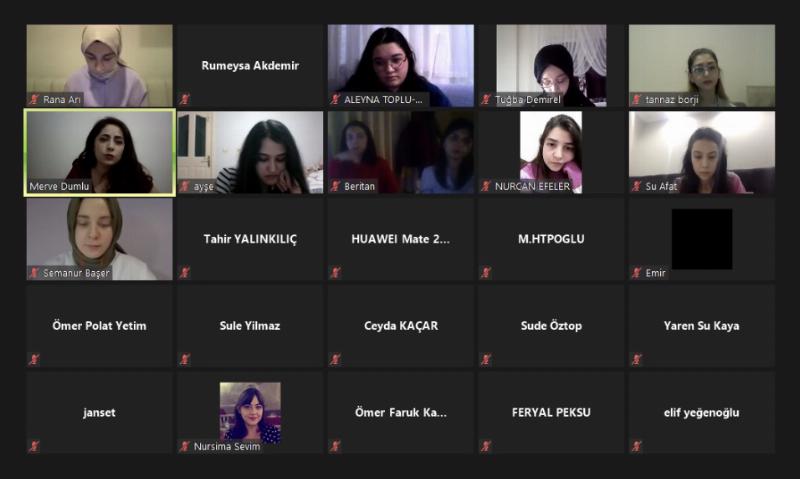
Üsküdar Üniversitesi Health Culture and Sports Directorate and the Medical Students' Association Club organized a symposium titled “The Place of Women in Surgery.” Dr. Merve Dumlu, a Neurosurgery resident who participated as a speaker in the symposium, shared her experiences of being a woman in the field of surgery. Dumlu stated that in the early days of her profession, some people did not see her as a doctor, but now there are those who come specifically for her.
Content
Being a Female Surgeon Discussed…
“Surgery has psychological difficulties as much as physical ones”
Dumlu, speaking about the professional difficulties in the field of surgery, said; “I cannot say that surgery is an easy profession. If you have prejudices, things you say you cannot do, or issues where you lack confidence, I advise you to quit at the beginning and find branches suitable for you. Once you advance, you cannot quit. There are times when you stand for 12 hours a day performing surgery. Besides this, there are also very difficult psychological aspects. It is very difficult to give a family the news of a family member's or relative's death, or to tell them they will die, that they have a brain tumor, and only have a few months left to live. Sometimes I deliver this news to 3-4 people in a single day. This situation inevitably normalizes over time. In the early years of my profession, I often cried in my room after delivering the news. However, as required by the profession, you must cope with these situations and control yourself. Surgery is not a profession done or to be done for money. It cannot be said that surgeons earn high salaries despite having a very busy work life. Surgery is not a suitable profession for those with such dreams and expectations.” She said.
“As we show ourselves, we will break prejudices”
Dumlu also touched upon the difficulties of being a female surgeon; “Not just in surgery, but in every field, men are perceived as more superior and skillful. This exists in our society, but the situation is not like that. They will understand and learn this by seeing it over time. In the early days of my profession, there were people who didn't see me as a doctor. Now, there are those who come specifically for me. Why shouldn't we women choose neurosurgery? Women tend to choose dermatology or physiotherapy more often. Changing this is in our hands. As we appear more on the stage, as we show ourselves more, people will get used to it, and prejudices will be broken.” She said.
Share
Update Date: February 27, 2026
Creation Date: March 15, 2021
Request a Call
Other News
- Üsküdar University became a member of the International Association of Universities (IAU)!
- Prof. Nevzat Tarhan: “Protecting a child is not just about putting an obstacle in front of them on the screen!”
- Prof. Deniz Ülke Kaynak: “We are still in the conflict management phase!”
- Residual current device saved a life!
- Can violence be prevented in schools?