

Experts state that the phenomenon of 'bad news addiction,' used to describe continuously reading bad news on social media, became prominent particularly during the coronavirus pandemic, emphasizing that this behavior is fundamentally rooted in the need to be aware of dangers beforehand, as a requirement of the survival mechanism. However, in some individuals, news avoidance behavior emerges, contrary to this situation, noted Assoc. Dr. Gül Esra Atalay, who added that both situations pose obstacles to the right to receive accurate news and must be combated.
Content
Bad news addiction or news avoidance behavior?
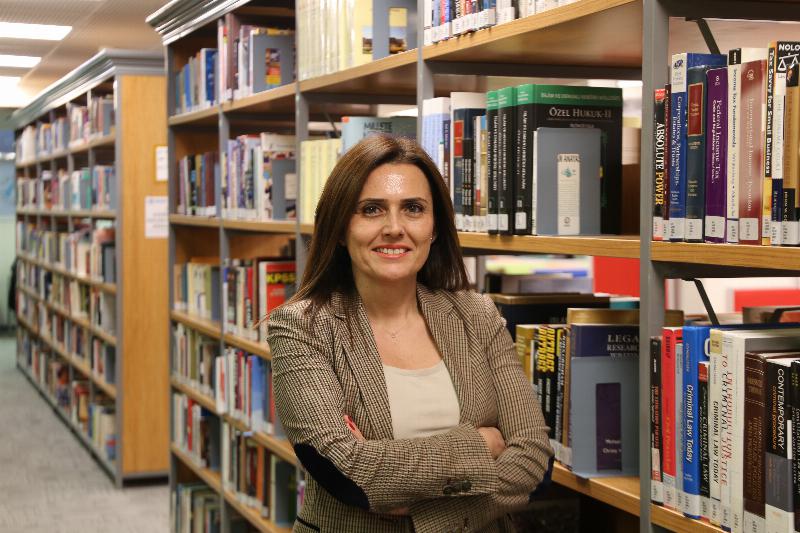
Assoc. Dr. Gül Esra Atalay, a faculty member of the Department of Journalism at Üsküdar Üniversitesi's Faculty of Communication, made evaluations regarding bad news addiction.
“Bad news addiction” became prominent during the pandemic process
Assoc. Dr. Gül Esra Atalay noted that the concept of bad news addiction is used to describe “continuously reading bad news on social media,” and stated that this concept became particularly topical during the coronavirus pandemic. Assoc. Dr. Gül Esra Atalay stated that bad news addiction is not actually a new phenomenon, adding, “There is a well-known saying in journalism: ‘If it bleeds, it leads.’ This saying is used to explain that news involving horrifying, bad, or dangerous topics always attracts attention. The term ‘doomscrolling,’ which has started to be used in Turkish as ‘Kötü haber bağımlılığı’ (bad news addiction) or ‘felaket kaydırması’ (disaster scrolling), is actually related to the same phenomenon.”
Constant bad news can increase anxiety and worry…
Emphasizing that our need to be informed of dangers beforehand increases, especially during periods of anxiety, fear, and panic, as a necessity of our survival mechanism, Assoc. Dr. Gül Esra Atalay said, “Therefore, we use social media to gather as much information as we can about topics causing anxiety, fear, or panic, and to prepare ourselves. This behavior has two possible outcomes: By reading bad news, we can be glad that we and our loved ones are well and safe, thus finding pleasure in seeing our advantageous position through comparison. On the other hand, by constantly reading bad news, we can increase our worries and anxiety.”
Negative news is widely covered because it attracts attention
Stating that negative news is used to attract attention when considered from the perspective of news organizations, Assoc. Dr. Gül Esra Atalay said, “Because news organizations are essentially entities driven by the motive to make a profit, they prefer to use as many stories as possible that can attract more reader interest and generate more clicks. Presenting any news in as sensational, alarming, and fear-inducing a way as possible is also used to attract readers' attention. A reader experiencing bad news addiction might specifically seek out such news or find themselves unable to stop reading when encountering it.”
Social media algorithms also play a role
Assoc. Dr. Gül Esra Atalay stated that the most important reason for the widespread nature of this phenomenon today, in particular, should be sought in the technological infrastructure on which social media platforms are based, adding, “The algorithms on social media platforms, in order to improve user experience and keep users on platforms for longer, constantly present us with content similar to what we are interested in and read, thereby trapping us in filter bubbles. Therefore, it is not difficult to predict that algorithms will prefer negative news, which no one can ignore, over more positive news. Bad news addiction is also fueled by this algorithmic preference and takes individuals under its influence.”
News avoidance behavior can also emerge
Assoc. Dr. Gül Esra Atalay noted that continuous exposure to bad news also leads to “mean world syndrome,” as described by George Gerbner, and added that some individuals exhibit news avoidance behavior, contrary to bad news addiction. Assoc. Dr. Gül Esra Atalay continued: “Due to bad news addiction, individuals may perceive the world they live in as a worse place than it is, and their anxiety and worries may increase. However, of course, being addicted to bad news is not the only reaction individuals have to worrying events like pandemics, terrorism, or war. The exact opposite can also occur. There is another reaction conceptualized as ‘news avoidance behavior.’ As seen in the Reuters Institute for the Study of Journalism's 2022 Digital News Report, readers in many different countries specifically avoid news about negative topics such as war or pandemics. With the decrease in trust in news organizations, an increase in this avoidance behavior is observed. This is another way of coping with fear and anxiety: essentially closing our eyes and retreating into our shells…”
Both situations need to be combated
Emphasizing that neither bad news addiction nor news avoidance behavior are healthy ways of relating to news, which serves to inform us about what is happening in the world we live in, acquire knowledge, and organize our lives in light of this information, Assoc. Dr. Gül Esra Atalay warned: “Therefore, they pose obstacles to our right to receive accurate news. For this reason, these situations must be combated.”
Awareness is important in bad news addiction
Assoc. Dr. Gül Esra Atalay, also touching upon what needs to be done when engaging in this struggle, said, “If we believe we have become addicted to bad news, unable to stop ourselves from reading negative news on social media, even realizing this is quite important. Acting with this awareness every time we engage in this behavior, knowing that it will increase our anxieties and not benefit us, is an important first step to overcome this addiction.”
Developments can be followed on news organizations' websites
Assoc. Dr. Gül Esra Atalay concluded her recommendations as follows:
“When consuming news on social media, instead of always clicking on posts about similar topics, try to turn to news regarding multiple topics related to the agenda; if necessary, consume digital news from news organizations' websites instead of social media platforms, thereby accessing news on a wider variety of topics, is another measure we can take. If we cannot stop continuously scrolling our screens to read bad news while on social media platforms, limiting the time we spend there by setting screen time limits for social media platforms on our mobile devices, and thus breaking free from the chain of disaster news fed by algorithms, can enable us to see the world more realistically.”
Share
Update Date: March 01, 2026
Creation Date: January 04, 2023
Request a Call
Other News
- The book that read today's digital threats in 2014: Being a Conscious Family
- Experts warn: 'Instead of memorizing letters, teach pencil grip, scissor use, and coloring'
- School fear and school love both start in the family!
- Family is not merely transforming, it is being battered under a serious assault
- Artificial intelligence opens the door to early diagnosis in autism!