

With the widespread adoption of social media, authorship has also interacted with digital platforms. Stating that people have found new ways to express themselves as social media platforms have become very popular, Assoc. Dr. Gül Esra Atalay states that when examining written content, grammar rules are not followed, and young people, in particular, do not care about spelling rules. Atalay emphasized that new media has changed reading and writing habits, noting that concepts such as e-reading or screen reading have started to be used.
Content
Authorship has also undergone a transformation!
New media has changed reading and writing habits…
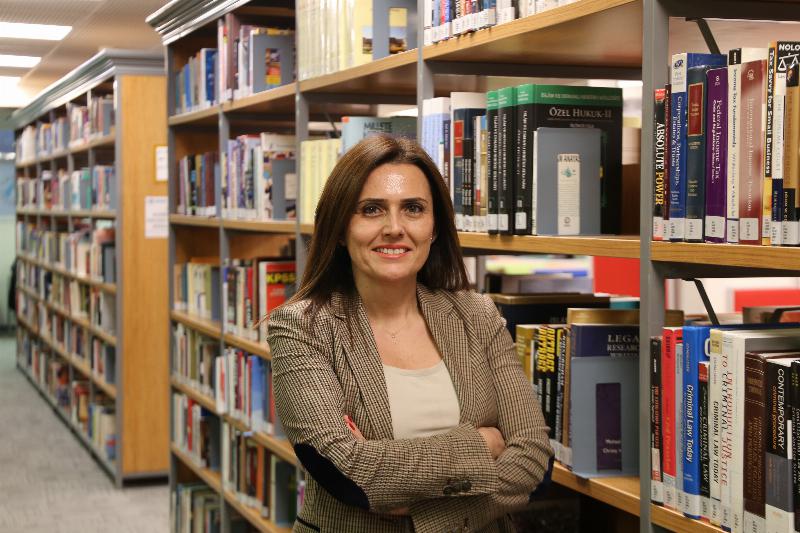
Assoc. Dr. Gül Esra Atalay from Üsküdar University Faculty of Communication, Department of Journalism, shared her views on how authorship has transformed with social media.
Writing became a form of self-presentation
Assoc. Dr. Gül Esra Atalay stated that with the widespread adoption of social media, authorship, like many other cultural fields, has interacted with digital platforms. She said, “In recent years, as social media platforms have become very popular, people have found new ways to express themselves and present their identity. Therefore, writing on these platforms has also become a form of self-presentation.”
A participatory culture emerged on social media
Assoc. Dr. Gül Esra Atalay stated that digital texts are not singular and independent structures like classical texts, but rather constantly changing collages, open to degradation, innovation, and change due to their creation methods, and continued:
“Due to the sharing economy on the internet and social media, it is not possible to address poetry or other literary genres independently of the communities and platforms that create and read them. With the circulation of content shared on social media platforms, a ‘participatory culture’ has emerged. Social media users have moved from being passive consumers who receive pre-shaped messages, as in previous mass communication tools like books, to an active position contributing to and shaping media content through their shares, comments, and likes. Therefore, we participate in social media platforms as both readers and writers.”
Young people do not care about spelling rules
Assoc. Dr. Gül Esra Atalay stated that the language commonly used, accepted, and considered normal on social media is also used in publications claiming to be literature. She said, “When we look at the content shared on social media, we see that the classical rules of written language are ignored, not cared about, and punctuation or grammar rules are not followed. Young people, in particular, think that these rules are not important when writing on social media. In previous years, we conducted a study at Üsküdar University comparing high school and university students regarding compliance with ‘netiquette,’ which are internet behavior rules, and the results of this study also showed that young people consider spelling rules unimportant on social media.”
Writer and reader interaction made easier
Highlighting that a new type of writer has emerged with digital technologies and new media, Assoc. Dr. Gül Esra Atalay said, “This writer can reflect their interaction with the reader in their work, and update their work with comments and feedback received from readers. New media has changed reading and writing habits. Concepts such as e-reading or screen reading have started to be used. It is now possible to read books on a screen instead of reading a printed book, and this is becoming increasingly widespread. In new media, writer-reader interaction has become much easier.”
Social media language relies on clichés
Emphasizing that new media technologies have made it easier for new writers to make their voices heard and even freely write and deliver their works to audiences, Assoc. Dr. Gül Esra Atalay said, “Writing and distributing books on free platforms provides an economic advantage. Today, bookstore shelves are filled with books written in the language of social media, lacking depth and care. Social media platforms have a unique structure and a corresponding language usage culture. This is a culture that feeds more from oral culture than written culture, thus rendering traditional writing aspects like grammar and spelling rules unimportant. Social media language relies on clichés, lawlessness, and repetition. The popularity and intense use of social media cause these habits to influence books as well.”
New media excluded publishers and editors from the process
Assoc. Dr. Gül Esra Atalay stated that everyone can write, and the value of the written text is determined by the reader. She said, “New media platforms, in particular, have allowed individuals to write with the freedom they desire by removing decision-makers like publishers and editors from the process. Therefore, anyone who wishes can define themselves as an ‘author.’ Whether the written texts gain a significant readership is the other side of the coin.”
Texts lack meticulousness
Assoc. Dr. Gül Esra Atalay stated that digital platforms offer a world of possibilities where poems, stories, and novels can be visualized and structured as transmedia in relation to different forms. She said, “Platforms like Wattpad are digital spaces where this experience takes place. These are also social media platforms. Both stories and books can be written, and existing ones can be read. These platforms can also have a democratizing function for publishing activities by eliminating the dominance of traditional publishers over authors and their gatekeeper roles. However, these texts, which do not go through any editorial process, lack the meticulousness, care, and requirements inherent in literature.”
Good writers who create their own style will emerge
Assoc. Dr. Gül Esra Atalay said that there are also books that were published after gaining the attention of publishing houses following their release on Wattpad, and concluded her remarks as follows:
“Their target audience is young people. They appeal to a specific generation. We can say that they are the products of a generation born into the digital age, raised with digital media and social media culture. These texts reflect the language and style of social media, consisting of texts suitable for easy consumption. On the other hand, this is a generational issue. Young people always reject old forms and introduce their own styles. Therefore, good writers who reflect their own styles will undoubtedly emerge from this generation.”
Share
Update Date: March 01, 2026
Creation Date: August 23, 2022
Request a Call
Other News
- The book that read today's digital threats in 2014: Being a Conscious Family
- Experts warn: 'Instead of memorizing letters, teach pencil grip, scissor use, and coloring'
- School fear and school love both start in the family!
- Family is not merely transforming, it is being battered under a serious assault
- Artificial intelligence opens the door to early diagnosis in autism!