

Üsküdar Üniversitesi Faculty of Communication Faculty Member Assoc. Prof. Dr. Aylin Tutgun Ünal participated in the panel "Methods of Combating Disinformation in the Age of Artificial Intelligence" organized by the Presidency's Directorate of Communications Disinformation Combat Center. During the panel, topics such as "The Use of Technology in Combating Disinformation", "Artificial Intelligence and OSINT", "Journalism, Fake News, and Disinformation", and "Social Media, Algorithms, and Disinformation" were addressed.
Content
Assoc. Prof. Dr. Aylin Tutgun Ünal Participated in the Panel 'Methods of Combating Disinformation in the Age of Artificial Intelligence'
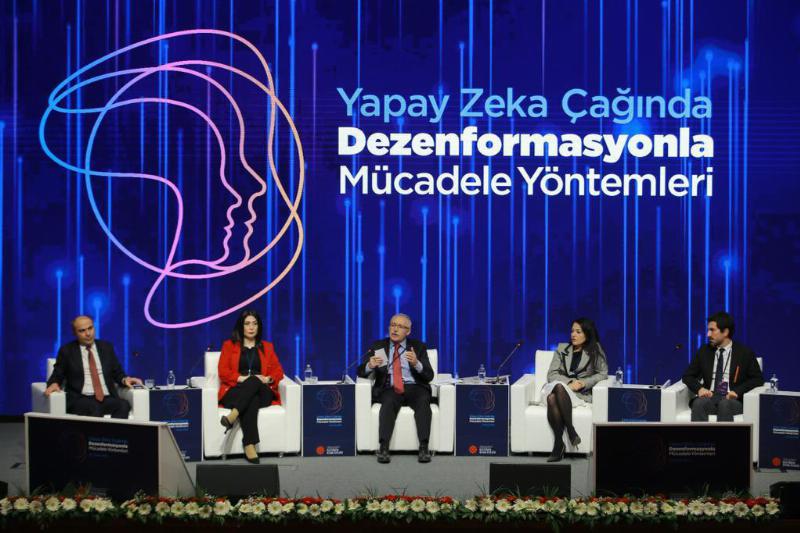
The opening speeches of the panel themed "Methods of Combating Disinformation in the Age of Artificial Intelligence," held at the Directorate of Communications, were delivered by Fahrettin Altun, Head of the Presidency's Directorate of Communications.
Following the opening speeches, İdris Kardaş, Coordinator of the Disinformation Combat Center, in his speech regarding the panel, stated: "How can we use technology in the fight against disinformation? Can artificial intelligence be effective for this purpose? How do social media algorithms spread disinformation? As the Directorate of Communications, we are discussing these questions."
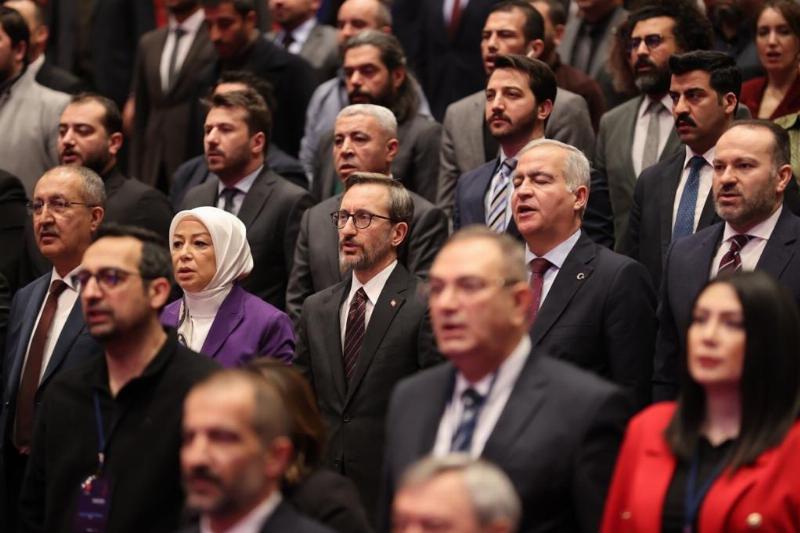
Under the moderation of İdris Kardaş, journalists and academics discussed professional ethics, perception operations, fake news, and disinformation in the second session.
Among the panelists were Üsküdar Üniversitesi Faculty of Communication Faculty Member Assoc. Prof. Dr. Aylin Tutgun Ünal, academician Assoc. Prof. Dr. Başak Gezmen, and journalists Abdülkadir Selvi and Ömer Faruk Gökçin.
While the role of social media and algorithms in the spread of disinformation was discussed during the panel, Assoc. Prof. Dr. Aylin Tutgun Ünal made important evaluations regarding the topic of "Fake News".
Legal regulations concerning social media have been implemented in many countries
In her speech at the panel, Assoc. Prof. Dr. Aylin Tutgun Ünal said: "Legal regulations covering social media platforms were enacted in previous years in countries such as Germany, the UK, Australia, Russia, and China, and penal sanctions are currently being applied. In cases of non-compliance with legal regulations that include issues such as taking into account complaint notifications made by individuals on social media, removing illegal content from social media within 24 hours, and considering personality violations in defamatory or unauthorized published content, individuals or institutions can be fined."
Ünal stated, "Thanks to the law that came into force in Germany in 2018, the first penalty was imposed on Facebook in 2019. The government fined Facebook 2 million euros for not providing sufficient notification regarding illegal activities present on its platforms in Germany. Under this law, the maximum fine for individuals was set at 5 million euros, and for companies, 50 million euros."
Stalking is a crime!
Assoc. Prof. Dr. Aylin Tutgun Ünal stated that "Stalking," or covert pursuit, was accepted as a crime in Germany in 2017, even before the social media law, and said, "According to Article 238 of the German Penal Code, stalking is a crime. A stalker who follows, observes, persistently tries to contact a person by phone or other means, significantly restricts and harms the life of the person they harass, is subject to a fine or imprisonment for up to three years, and in cases constituting a serious crime, imprisonment for up to five years, according to Article 238 of the Penal Code."
Disinformation law came into agenda in the UK following violent content
Recalling that the disinformation law came onto the agenda in the UK after the incident of a 14-year-old girl who ended her life after watching violent videos, Assoc. Prof. Dr. Aylin Tutgun Ünal noted, "Although the government announced that the supervisory authority of the media regulator Ofcom over social media platforms could be increased, work on regulations is ongoing. Regulators demand the rapid removal of content that could fall into categories such as violent, terror-related, cyberbullying, and child abuse. Penalties for companies that do not comply are also among the plans."
Social media law came into force earlier in Australia
Assoc. Prof. Dr. Aylin Tutgun Ünal said, "Australia introduced two separate legal regulations in 2015 and 2019, defining the responsibilities of social media companies regarding the content they produce and including punitive sanctions. These regulations came onto the agenda following a suicide case in 2014. The first legal regulation was made one year after a television presenter ended her life following cyberbullying she experienced on Twitter. The eSafety Commissioner, established under the law, was given the authority to demand social media platforms remove content that includes insults or defamation against others. Companies that do not remove this content within 48 hours face fines of up to 300,000 euros; individuals publishing the content face fines of up to 60,000 euros."
Disinformation-containing news is a complete enemy of truth
Assoc. Prof. Dr. Aylin Tutgun Ünal said, "When we look for an answer to the question 'Why is disinformation resorted to?', motivations such as 'attracting attention,' 'influencing others,' and 'for entertainment' emerge. Today, in many news pieces presented on digital platforms, disinformation is resorted to for purposes such as attracting attention, gaining more clicks, and managing perception. Disinformation-containing news, which aims to discredit individuals or institutions or to gain advertising revenue, is a complete enemy of truth. Since the social impacts of these truth-hostile news items shared on social media are strong, they harm individuals, institutions, and in the larger picture, the country, even casting a shadow over the country's worldwide reputation."
Ünal stated that search engines like Google have managed to become a part of perception management thanks to the algorithms they contain, and continued:
"As a result of the searched keywords, it presents what it has been taught. Today, both search engines and social media platforms play a role in the country's global standing. In this sense, the function of artificial intelligence algorithms can be used for good or for ill. Not only social media, but also search engines and algorithms are among the reasons that highlight the need for taking precautions. As with legal measures in other countries, disinformation will be overcome in our country both by continuing to develop and implement social media law regulations and by expanding digital media literacy training."
Share
Update Date: March 01, 2026
Creation Date: January 27, 2023
Request a Call
Other News
- Social responsibility courses moved to the field
- Erasmus+ Orientation Week completed at Üsküdar
- Prof. Nevzat Tarhan: “Brain secretes ‘dark glue’ in social media lynchers!”
- Prof. Nevzat Tarhan: “Every segment of society should be able to say, ‘This constitution is my constitution!’”
- OHS releases guide for safe operation of industrial robots