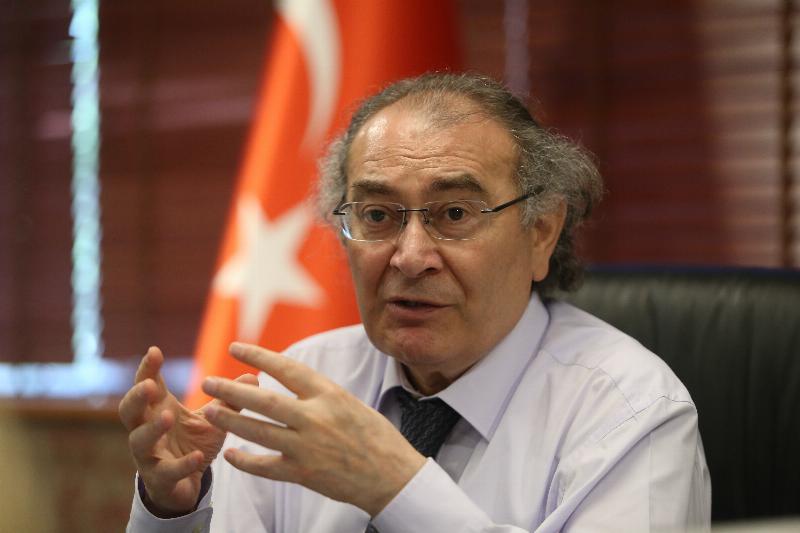
“Some fears are genetic, a large portion is learned later”
Prof. Dr. Nevzat Tarhan, noting that some fears are genetic, said; “Some fears are genetic, a large portion is learned later. Genetic fears are like fear of snakes or fear of heights. Fear of heights was genetically coded. A person without fear of heights would walk fearlessly on the walls of a ten-story building. This fear is genetically coded in our biological nature. Humans, with a survival motivation, fear what they perceive as a threat to survive. These are generally security-related fears. Living beings feel a tremendous fear if they feel threatened in life. In animals, fears are clearly genetically coded; the fear of a cat, the fear of a chicken, the fear of a lion – perhaps the lion is the bravest among living creatures. But even a lion has certain fears. Its bravery wanes when it comes to its cubs due to maternal instincts. Genetically, to protect its offspring, maternal instincts make it less resistant to fear. But most human fears are related to childhood traumas, upbringing, and parenting styles. And there are different types of fear.”
“In human life, trust should be the rule, fear the exception”
Tarhan, noting that some people make decisions throughout their lives based on fear, stated; “Some people make decisions in life based on fear. However, in human life, trust should be the rule, and fear should be the exception. A person needs self-confidence to undertake initiatives, make moves, and dare. For example, a turtle extending its head from its shell and walking is an act of courage. It must do this to feed itself. If it remains constantly in its shell out of fear, it cannot survive. The biggest enemy of the general principles of entrepreneurship is fears. For example, fear of freedom. Especially in Eastern societies, the prevalence of neophobia towards new things stems from the fear of freedom regarding new things.”
“Fears in parents affect children”
Underlining that fears in parents affect children, Tarhan said; “A child models their parents. Children adopt their parents' fears, accepting them as truth. Especially in the 0-6 age range, a child's sense of reality has not yet developed. While learning the sense of reality, what is beneficial, what is harmful, what is good, what is bad, what provides safety? The frontal lobe of the brain decides these questions. The child cannot learn these on their own. They look around. The first person a child identifies with is the mother, followed by the father. During this identification process, children take their parents' fears as their own truths. That's why parental roles are important for the child. Parents should manage their children's fears well. We need to explain the reasons for their fears to children. Today's children are not easily convinced without an explanation.”
“Body language is more effective in communication with children”
Tarhan, drawing attention to the importance of emotional transfer in parent-child communication, said; “20% of communication is verbal transfer, 80% is emotional transfer. We need to communicate effectively with children using tone of voice, subtle emphases, facial expressions, and gestures. For example, in the event of an earthquake or accident, if the parents remain calm, the child will feel safe. If the mother is anxious or panicking, the child will experience more panic. We set an example for children through our body language. It is important to know that body language is more effective than verbal language. But children also need to learn the fears of life. We need to progress by recognizing fears. A child who does not learn what fear is and how to manage it will start to fear fear itself. Their hands will be tied. Fears affect a person's life.”
“There are rational and irrational fears”
Tarhan noted that the frontal lobe in the anterior region of the human brain is the area that manages a person's fears; “To manage fears, our brain's frontal lobe needs training. There's a rule: ‘Stop, think, act.’ Being able to do this is related to the training of the frontal lobe. When there's a fear, one shouldn't immediately embrace it. Because fear is contagious. There are rational fears and irrational fears. Fears with a probability higher than one in ten are not considered rational. When we go into traffic, there's always a possibility of an accident. But it's a one in a hundred thousand, or one in ten thousand chance. For such a low probability, one doesn't avoid going into traffic or boarding a plane. But if the probability is one in ten or lower, then you are justified in fearing such situations. For example, if there's been an earthquake, you are justified in not staying at home at night. We currently live in a universe of possibilities, probabilities, and enduring reality. There is a possibility of an earthquake in Istanbul. But it's not possible in the immediate future, so we don't need to sleep on the streets, but the possibility exists. The probability is high, so we will take our precautions and then continue with our lives.”
“Courage should not be perceived as fearlessness”
Tarhan, referring to the fight-or-flight response in moments of fear, said; “The human mind perceives fear in moments of fear. A person encountering fear will flee if the danger is great, or fight if it's a controllable situation. What we need to learn here is to identify our fears, whether they are controllable or not. This is where courage comes in. Courage should not be perceived as fearlessness. Courage is using one's mind in a moment of danger. Using one's mind in a moment of threat is a characteristic of humans. A person can choose to use their mind here. Whether it is valid or not is also learned somewhat in childhood. People who are open to learning and developing their personality know where and how to act against fears. They take the right position. In fact, sometimes they even turn that fear into an advantage.”
“The human body gives biological responses to fear”
Tarhan stated that the human body gives biological responses to sudden fears; “Certain hormones are secreted in moments of fear. Such as noradrenaline, adrenaline, dopamine. In a moment of fear, the brain floods these hormones. Noradrenaline increases vascular resistance, dopamine increases attention. In a moment of fear, our pupils dilate, our brain gathers all the dopamine in our frontal region, our attention increases, muscles tense, our strength increases. We give a fight response against danger. If we are to give a flight response, then hormones that lower blood pressure come into play. The person falls and faints. This situation is entirely related to how the person interprets fear. The body is controlled by the brain. Previously, the autonomic nervous system was called the self-operating nervous system. Recent information has revealed that it is not self-operating, but a system that receives chemical commands from the brain and operates accordingly.”
To Listen to the Radio Broadcast:

