An event titled “Forensic Evidence and Case Management” was organized under the leadership of Ayşe Bağlı, Lecturer and Head of the First and Emergency Aid Department at Üsküdar Üniversitesi Vocational School of Health Services. Emergency Medical Technician Anıl Can Gürgen took part as a speaker in the event organized within the scope of University Culture. Drawing attention to the detection of murder, Gürgen emphasized that every murder inevitably leaves a trace behind. Gürgen said: “The killer invariably leaves evidence at the crime scene that we cannot see with the naked eye, and a swab trace is found in the hand of the person he killed by crime scene investigation.”
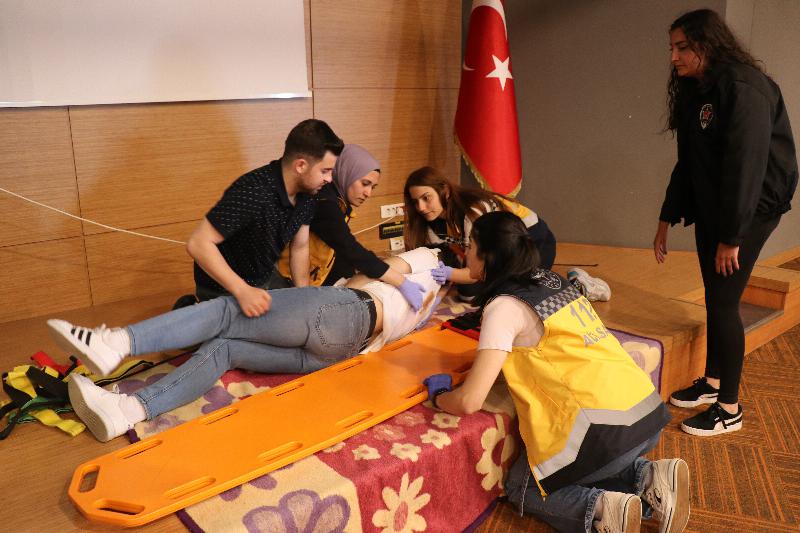
Ayşe Bağlı, Lecturer and Head of the First and Emergency Aid Department, stated that scenario applications were specifically included in the event organized for students to better grasp the subject of “Forensic Evidence and Case Management.”
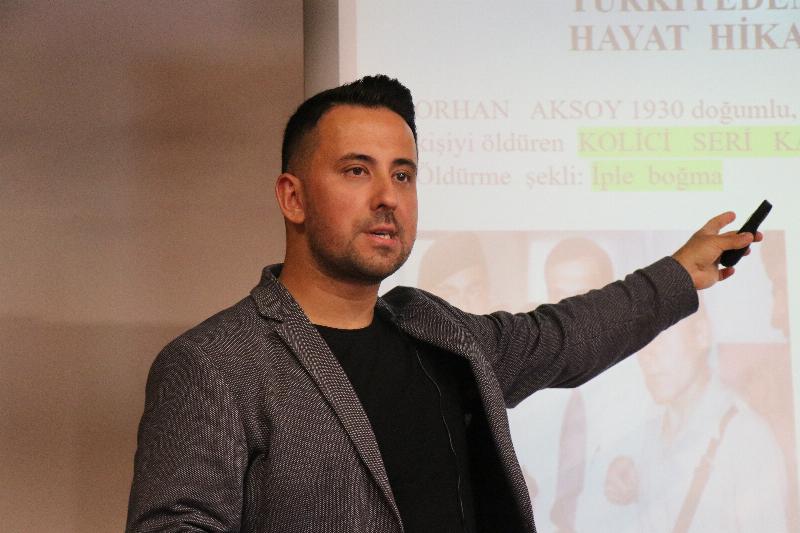
“There is evidence at every crime scene, the important thing is to be able to find them”
Emergency Medical Technician Gürgen stated that even if the killer leaves the crime scene, they inevitably leave a trace, and these traces can be examined under a microscope. Gürgen said: “A crime scene consists of 3 elements. The first element is the perpetrator who committed the crime, the second is the victim affected by the crime, and finally, the person found at the crime scene. Evidence is the incident that allows us to resolve a contradiction in a case. Any biological material, from human fingerprints, hair strands, and nail clippers, is considered evidence left at the crime scene. As 112 teams, we have recently encountered a significant number of firearm injuries. It is important to solve these. The killer invariably leaves evidence at the crime scene that we cannot see with the naked eye, and a swab trace is found in the hand of the person he killed by crime scene investigation. If there is an empty medicine box at the crime scene, we can assume that this person committed suicide by taking medication, or that they were intentionally given medication and killed. Social media posts are also accepted as evidence. It may not be sufficient on its own, but it is proof. There is always evidence; the important thing is to be able to find them.”
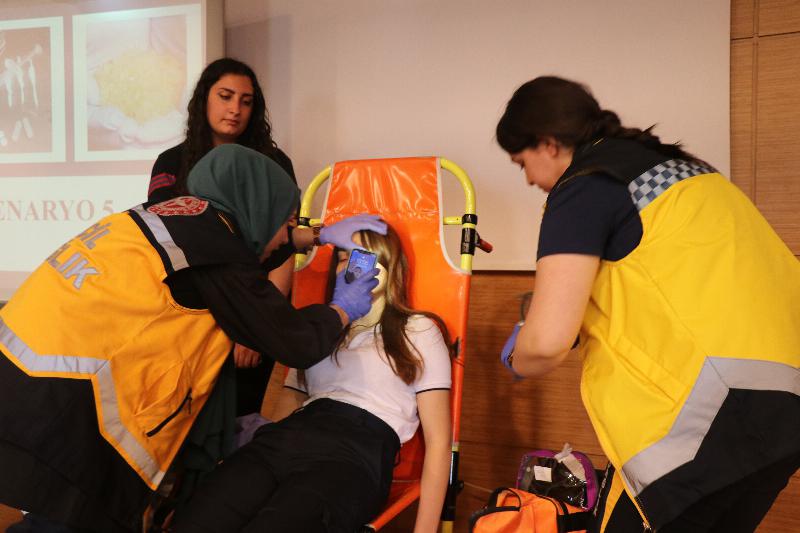
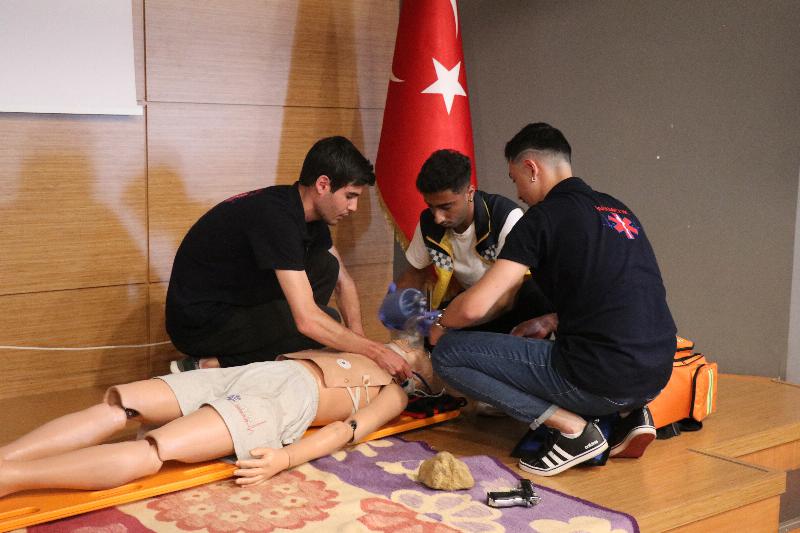
“There is no perfect murder, but there are near-perfect murders”
Gürgen, pointing out that DNA alone is not sufficient when a murder is committed, said: “Murder involves one person deliberately killing another. However, beyond the definition, the tangible, visible physical evidence we encounter at the crime scene is the most important evidence needed to shed light on the incident. For example, if a bloodstain at the crime scene was cleaned. 5-10 days have passed since the incident. We cannot see it with the naked eye, but crime scene investigation teams have Luminol solution. Let's say there is a bloodstain here; the moment we drop Luminol solution on it, a bluish glow appears. This indicates that there was bleeding there. Therefore, we can say that there is no perfect murder, but there are near-perfect murders. DNA alone is not sufficient when a murder is committed.”
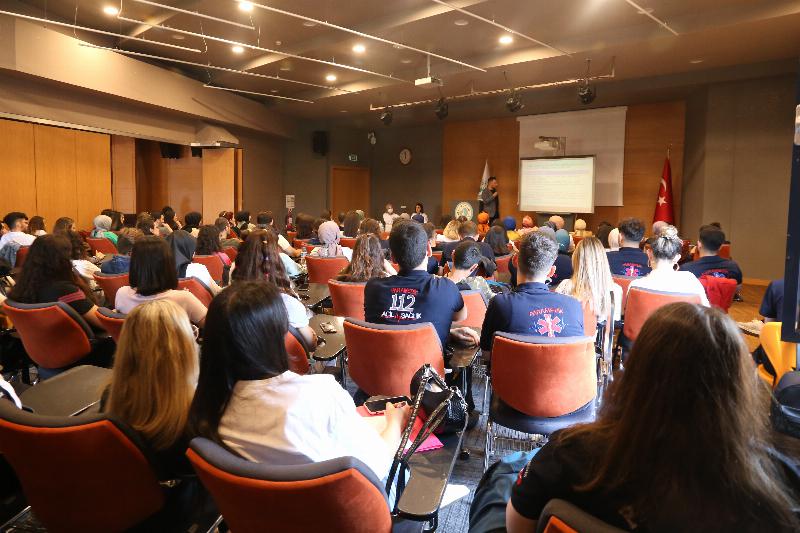
“If there is a contradiction in an incident, that incident is suspicious”
Gürgen made statements about suspicious deaths: “If there is a contradiction in an incident, we call that incident a suspicious death. That death is not normal and requires an autopsy. If there is no witness at the scene of a person's death, if the death occurred alone, in desolate, secluded places, outside residential areas, or in hotels, these types of deaths are suspicious and require an autopsy. If there are inconsistent statements that contradict each other in incidents, we consider the possibility of a suspicious death. It creates a question mark in our minds. Generally, we encounter these types of cases as 'ex'. When we investigate, 80% of them turn out to be 'ex' cases.”
In the event, which took place in three sessions, students directed their questions to Gürgen.

