

Under the umbrella of the United Nations Environment Programme (UNEP) Faith for Earth Initiative, the collaborative working text, Al Mizan: The Global Covenant on Environment, to which Muslim thought leaders worldwide contributed, has been completed. The Covenant reminds people, especially Muslim communities, of their responsibilities regarding the protection of natural resources and biodiversity, which are the common heritage of the world, and climate change, while emphasizing that respecting the natural balance is a sacred goal, stemming from the fundamental values of Islam. At the Covenant's launch meeting, Prof. Dr. İbrahim Özdemir, Dean of the Faculty of Humanities and Social Sciences at Üsküdar Üniversitesi, who was part of the committee that prepared the Covenant, provided information about it; and Prof. Dr. Nevzat Tarhan, Founding Rector of Üsküdar Üniversitesi, drew attention to nature as a natural healer, stating, 'Nature is the most natural psychologist. Nature heals our hearts, calms our souls, and also empties our minds.'
Content
Al Mizan: The Global Covenant on Environment was introduced
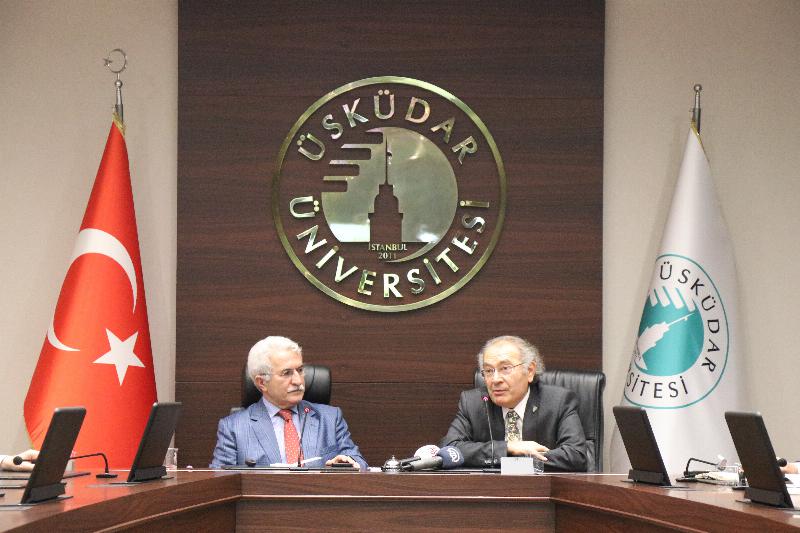
A call to humanity from the Islamic world: We must take responsibility for the natural balance disrupted by climate change and take action!
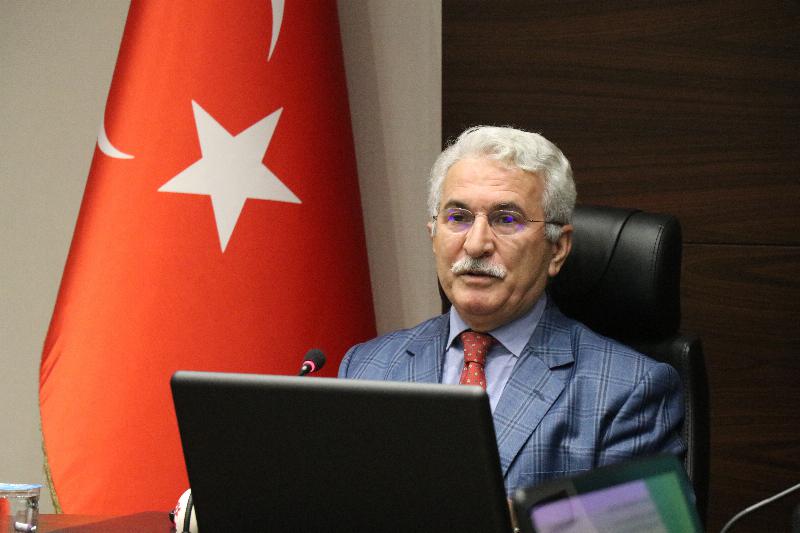
Al Mizan: The Global Covenant on Environment is being introduced worldwide under the leadership of UNEP's Faith for Earth Initiative. The Covenant's launch in Turkey took place at Üsküdar Üniversitesi on September 26, 2022. At the meeting, attended by representatives from the public, academia, civil society, and the press, Prof. Dr. Nevzat Tarhan, Founding Rector of Üsküdar Üniversitesi, and Prof. Dr. İbrahim Özdemir, Dean of the Faculty of Humanities and Social Sciences and Director of the Environmental Ethics Forum at Üsküdar Üniversitesi, who was part of the committee that prepared the Covenant, spoke.
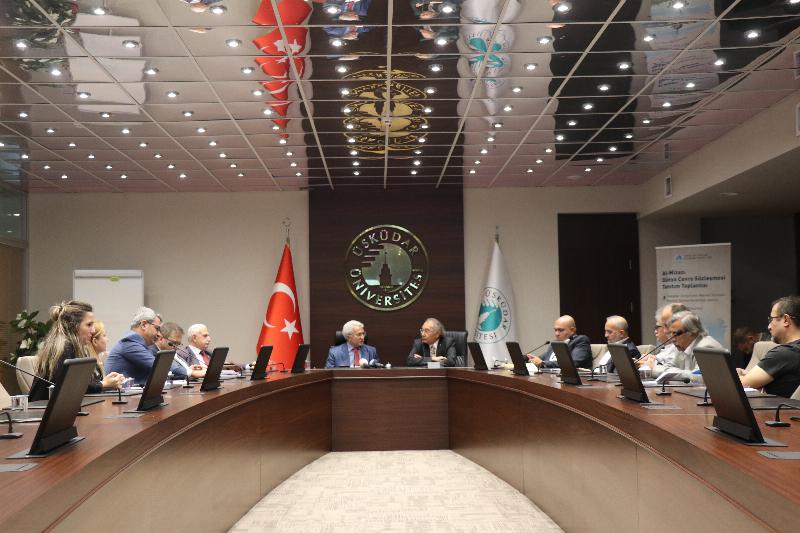
Prof. Dr. Nevzat Tarhan: “Al-Mizan will contribute to mental transformation”
Prof. Dr. Nevzat Tarhan stated that the value of the project known as Al-Mizan: The Global Covenant on Environment will be understood in the future. “Currently, we are not fully aware of its importance. We must say that it is a project that will contribute to mental transformation. Without mental transformation, there will be no societal transformation, and without societal transformation, expecting economic and political transformation would not be very healthy. Al-Mizan is a medium to long-term project. This project was launched to manage some future needs. Its importance has been realized only in the last 1-2 years. Some things are like health; their value is understood only after they are lost.” he said.
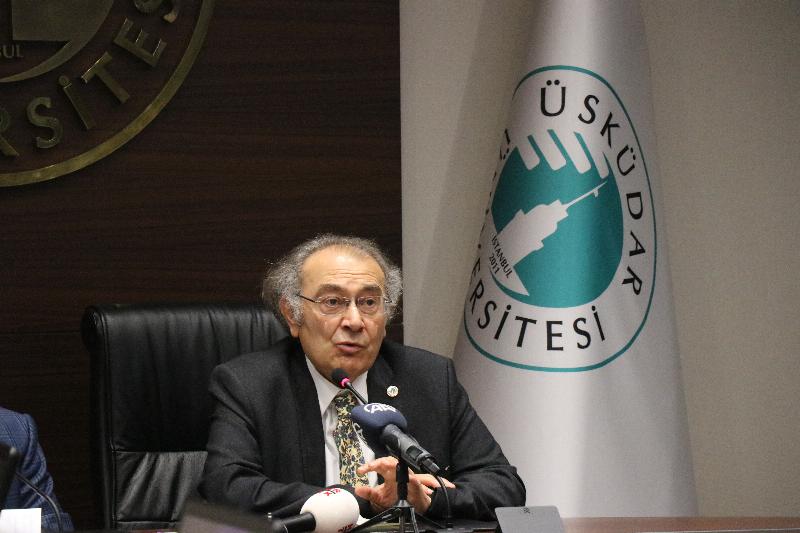
Prof. Dr. Nevzat Tarhan: “Nature is the most natural psychologist”
Prof. Dr. Nevzat Tarhan stated that nature is like the world's immune system. “Even if we are not aware, nature performs many activities. If nature had a voice, it could tell us that it protects us from pollution, purifies water, cleans the air, and protects coasts. Nature and all its elements are our silent friends. When our hearts are wounded, when we are hurt and saddened, when we experience disappointment, we unknowingly find ourselves in nature. It provides us with therapy. Nature is a natural healer. Nature is the most natural psychologist. Nature heals our hearts, calms our souls, and also empties our minds.” he said.
Prof. Dr. Nevzat Tarhan: “We understood modernization as concrete-ization”
Emphasizing that we are losing nature with petrification, urbanization, and concrete-ization, Prof. Dr. Nevzat Tarhan said, “Unfortunately, we understood modernization as concrete-ization. We rapidly moved towards losing urban architecture. We started to see nature not as a silent friend but as our rival. Modernism also plays a role in this.”
Prof. Dr. Nevzat Tarhan: “The future of the world depends on the future of green”
Prof. Dr. Nevzat Tarhan, pointing out the increase in carbon emissions, concluded his words as follows:
“The warming of the planet is another danger. Heavy rain in one nearby area and drought in another is an effect of global warming. We are disrupting the ecosystem. Nature does not need us; we need nature. Water needs to be renewed, and soil needs to be stabilized. The future of the world depends on the future of green. The project also shows that our religion, culture, and belief system are environmentally friendly.”
Prof. Dr. İbrahim Özdemir stated that science provides evidence for the disruption of natural balance over the years and as a result of human activities, and that increasing cooperation has begun to emerge among religious organizations, scientific research groups, civil society, and international organizations. Prof. Dr. Özdemir continued as follows:
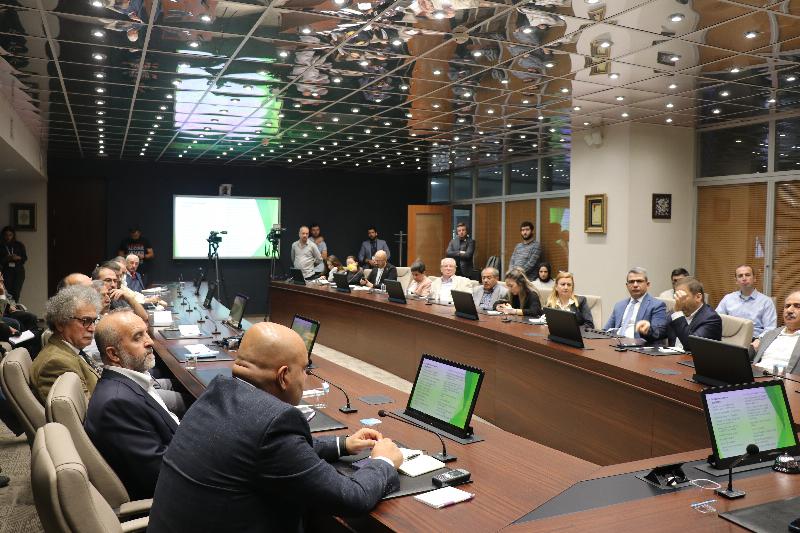
“The Islamic World Educational, Scientific and Cultural Organization (ICESCO), the Islamic Foundation for Ecology and Environmental Sciences (IFEES), Üsküdar Üniversitesi, Qatar Quranic Botanic Garden, the Faculty of Islamic Studies at Hamad Bin Khalifa University in Qatar, and the Faith for Earth Initiative came together to outline Islam's teachings on the environment to encourage the world's 1.8 billion Muslims to adopt sustainability as part of their daily lives. The text, named after 'al-mizan,' which appears in Surah Ar-Rahman, the 55th Surah of the Quran, and is one of the fundamental concepts of the Quran, is an agreement made by Muslims with the world. Therefore, it has been named 'Al-Mizan: The Global Covenant on Environment.' We hope that this covenant will establish competencies and partnership networks among those working on religion, environment, and sustainable development, as well as scientists and research centers, within the Islamic world and beyond.”
Prof. Dr. İbrahim Özdemir, providing information on the Al Mizan Global Covenant on Environment, elaborated on the planned activities within the framework of the action plan envisioned to be implemented under the covenant. Prof. Dr. İbrahim Özdemir stated that all humanity must work hand in hand to solve environmental problems.
The Covenant, referring to Islamic principles under the headings of common heritage of humanity, global climate change, biodiversity loss, and political economy, provides an assessment of the world's condition according to Islamic values and points to the establishment of balance for a solution.
Some of the headings from the text, drawing attention to the consequences of global climate change in the context of human heritage, are as follows:
Signs in the Cosmos and on Earth: An Integrated Approach, Tawhid as the Cornerstone of Islamic Faith and Ethics; Cosmic Balance; Al-Mizan: Balance and Reciprocity; Fitra: The Primordial Nature and Responsibility of Humanity; The Meaning of Being Allah's Vicegerent on Earth; Working for Ultimate Good Towards Everyone: Ethos and Ethics; Ethical Dimensions of Tawhid: The Oneness of Allah; Taqwa: Reverence, Care, and Conscious Conduct; Ihsan: The Best Possible; Mercy, Gratitude, and Thankfulness; Understanding the Signs of Ar-Rahman and Responding to the Signs of Ar-Rahman; Equality and Justice: Rethinking Prosperity; Development and Lifestyle; Resources of Life, Accountability in Using the Resources of Life; Do No Harm; Rights to Water and Other Life Resources; The World as a Vessel, The Ultimate Goals of Religion; Animal Welfare and Animal Rights.
The emergence of Al Mizan: The Global Covenant on Environment
Following the publication of the UNEP Faith for Earth Initiative (Faith-Based Organizations) strategy document in 2018, the Faith for Earth Coalition was formed in October 2020. Muslim thought leaders, who enabled the formation of the Covenant, continued their work to address the Sustainable Development Goals (SDGs) and common environmental priorities. Subsequently, the idea of an Islamic Environmental Covenant, later to be named “Al-Mizan: The Global Covenant on Environment,” was born at the 8th Islamic Conference of Environment Ministers held in Rabat with the UNEP Faith for Earth Initiative and the Islamic World Educational, Scientific and Cultural Organization.
The first draft of the Covenant was shared with over 300 Islamic institutions worldwide for feedback and consultation. The text of the Covenant will first be presented to the Islamic Conference of Environment Ministers, and then to the United Nations Secretariat.
Those who prepared the Covenant:
Dr. Iyad Abumoghli: Founder and Director of the UNEP Faith for Earth Initiative, Kenya.
Prof. Dr. Abdelmajid Tribak: Chief Advisor, Islamic World Educational, Scientific and Cultural Organization (ICESCO), Morocco.
Prof. Dr. İbrahim Özdemir: Dean of the Faculty of Humanities and Social Sciences, Üsküdar Üniversitesi, Director of the Environmental Ethics Forum, Turkey.
Aishah Ali Abdallah: Member of the Commission on Wildlife, Education and Communication, Saudi Arabia.
Assoc. Prof. Dr. Evren Tok: Assistant Dean for Innovation and Community Development. Faculty of Islamic Studies, Hamad Bin Khalifa University, Qatar.
Sidi Fazlun Khalid: Founder of the Islamic Foundation for Ecology and Environmental Sciences (IFEES)/EcoIslam, UK.
Othman Abd-ar-Rahman Llewellyn: Member of the World Commission on Protected Areas (IUCN) and the World Commission on Environmental Law, Ecological Planner at the National Wildlife Centre of the Kingdom of Saudi Arabia, Saudi Arabia.
Kamran Shezad: Co-Director of the Islamic Foundation for Ecology and Environmental Sciences (IFEES)/EcoIslam and Sustainability Lead for the Bahu Trust, UK.
- Editor's Notes:
- “Al-Mizan” is one of the main concepts of the Quran. Mizan, a noun derived from the root 'wazn' meaning 'to estimate the weight of something, to measure, to weigh' in the dictionary, means 'weighing instrument, weight used in weighing; justice'.
- For the Turkish text of the Al-Mizan Global Covenant on Environment: https://al-mizan.uskudar.edu.tr/
- United Nations Faith for Earth Initiative https://www.unep.org/al-mizan-covenant-earth
- The Covenant has been translated into Turkish, Arabic, German, and French. Translations into other languages are ongoing.
Share
Request a Call
Other News
- Prof. Nevzat Tarhan: “Those with a mental filter are not afraid of the digital”
- Artificial intelligence doesn't eliminate the translator, it transforms their expertise!
- Social responsibility courses moved to the field
- Erasmus+ Orientation Week completed at Üsküdar
- Prof. Nevzat Tarhan: “Brain secretes ‘dark glue’ in social media lynchers!”