

The AIDS Awareness Conference, organized with the contributions of Üsküdar University Faculty of Health Sciences Department of Midwifery, Faculty of Medicine, and the Turkish Family Health and Planning Foundation (TAPV), was held at the Ibn-i Sina Auditorium. The opening speeches of the event, which was part of the university culture course, were delivered by Prof. Dr. Güler Cimete, Head of Üsküdar University Faculty of Health Sciences Department of Midwifery, Prof. Dr. Arif Aktuğ Ertekin, Dean of the Faculty of Health Sciences, and Prof. Dr. Haydar Sur, Dean of the Faculty of Health Sciences.
Content
AIDS Awareness Discussed…
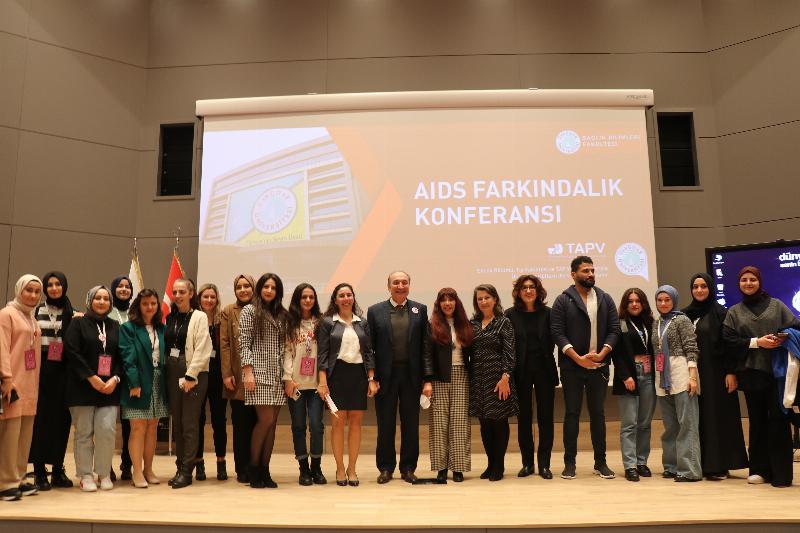
Infectious Diseases Specialist Dr. Dilek Manço, Member of HIV and Epidemiology; Arda Karapınar, Chairman of the Board of Directors of the Red Ribbon Association; and Nurşen Kanbur, Sexual and Reproductive Health Educator at the Turkish Family Health and Planning Foundation (TAPV), attended the conference as speakers.
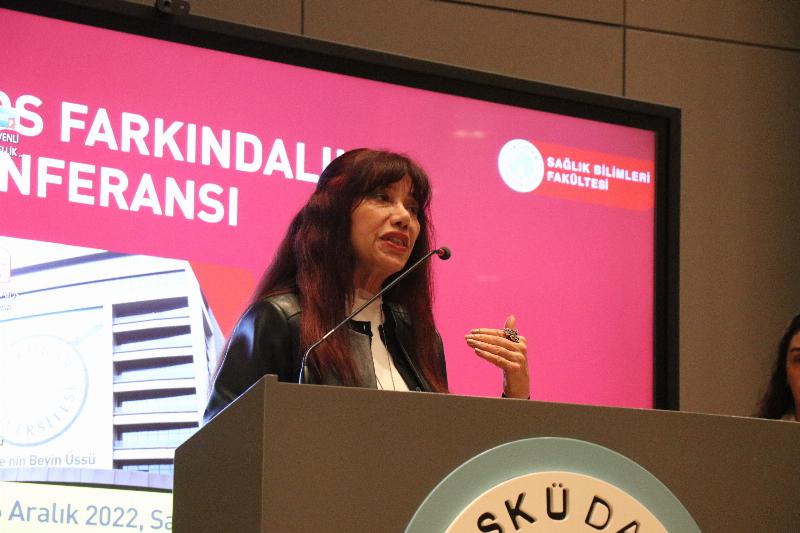
Prof. Dr. Güler Cimete: “Sexuality is a sensitive issue”
Prof. Dr. Güler Cimete, Head of Üsküdar University Faculty of Health Sciences Department of Midwifery, who gave the opening speech, emphasized the importance of the mental aspect of sexuality in addition to its physical side. Cimete said; “It is a great pleasure to be here with you. I attach great importance to coming together from time to time, especially on issues related to sexuality. Every year, in the first week of December, we organize an event, especially with the Turkish Family Planning Foundation, to raise awareness about both AIDS and sexually transmitted diseases, which we have been doing for years. Sexuality is a sensitive issue. Since it is an area that is still considered a taboo in our country, with certain limitations in discussing, approaching, and presenting it, passed down through culture, people can also be influenced by judgments. Just as sexuality has a physical aspect, more importantly, it has mental, social, emotional, and spiritual aspects. Therefore, it is an area that we should consider together with these dimensions, and if we make it a taboo, if we fail to recognize this area, if we remain ignorant, then certain health problems arise, and we cannot both live our right to healthy sexuality and, by hindering others' right to sexual health, we can also pave the way for many sexuality-related problems. We will overcome these with knowledge and by eliminating our judgments. We will maintain, prepare an environment for, and develop our sexual health so that we can convey similar things to the people we serve. For this reason, we are truly sensitive to every issue related to sexual and reproductive health, and we want to create as many opportunities as possible and enlighten you in the context of the services you will provide to society, in addition to your own sexual health.”
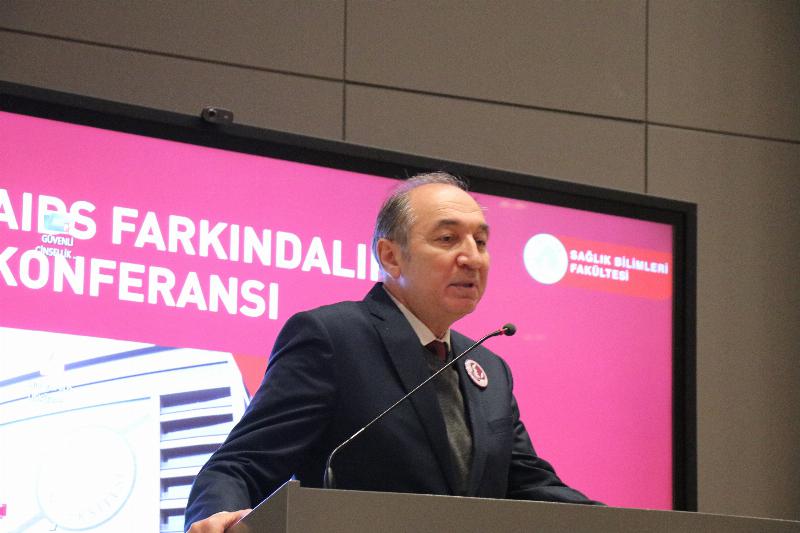
Prof. Dr. Arif Aktuğ Ertekin: “If we ignore something that is inherent in our nature, it does not conform to nature”
Prof. Dr. Arif Aktuğ Ertekin, Dean of the Faculty of Health Sciences, emphasized the importance of providing correct information about sexuality to society and the need to address its significance; “When you impose prohibitions on certain things in societies, and there are issues that people naturally need to know about, they cannot get this information from the right source. When they start getting it from wrong places, things shift in very different directions. And when they shift in very different directions, people can use it for various purposes, easily and comfortably, from exploitation to marketing to making money, to committing crimes. If we ignore something that is inherent in our nature, it does not conform to nature. It needs to be known and learned. The AIDS disease, HIV virus, was first identified in the USA in the 1980s. Approximately 40 million people have died to date, but if you look, a very large majority of those who died are in developing or underdeveloped countries, especially in the Saharan regions of Africa. When you look at the difference, developed societies with good economic conditions have informed their people. It has been seen less there. Today, it has started to emerge from death. It's like a chronic illness, but to reach this stage, we need to receive regular lifelong treatment. Unfortunately, developing countries cannot access this, and because they cannot provide education, there are losses. Sexuality is a natural part of our lives. You are in a profession where living this in a healthy and correct way is both personal for us and an example to society, where we need to provide information.” he said.
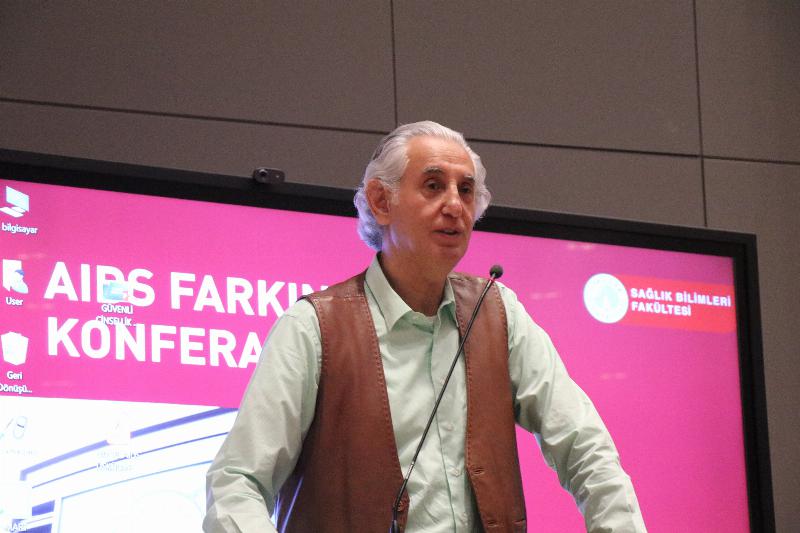
Prof. Dr. Haydar Sur: “The biggest difference between civilized people and undeveloped people is their ability to organize in civil societies”
Prof. Dr. Haydar Sur, Dean of the Faculty of Health Sciences, stated that policy should not be abandoned regarding HIV. Sur said; “We are talking about a problem that needs to be addressed with perspectives far beyond a narrow view like just an infectious disease and its spread. Today, the HIV virus is known to be transmitted through breast milk. The World Health Organization is conducting a discussion; ‘Should mothers in the African region who are known to carry the virus breastfeed their children?’ This discussion was not held in developed countries because instead, they managed to protect the baby with artificial feeding. The issue that emerged from this official meeting was; ‘These babies will be exposed to the HIV virus when breastfed. However, if the mother does not feed these babies, their chances of surviving to five years due to malnutrition are so low that by at least acquiring the virus, their chances of living with AIDS can extend to 15-20 years. That's why they should breastfeed.’ When I first read this, I felt like crying. We are talking about a disease called AIDS. Therefore, without neglecting its social dimension, yes, it has a sexual side, and the biggest factor in its spread is unsafe sexual relations. After this, the strongest of our measures will be achieved by ensuring safe sexual life, but when we know well what we are fighting, we are ultimately still political. We must never forget that it is based on international injustices. The biggest difference between civilized, developed people and undeveloped people is that they have gained the ability to organize in civil societies. With this awareness, I extend my endless thanks to everyone who contributes.”
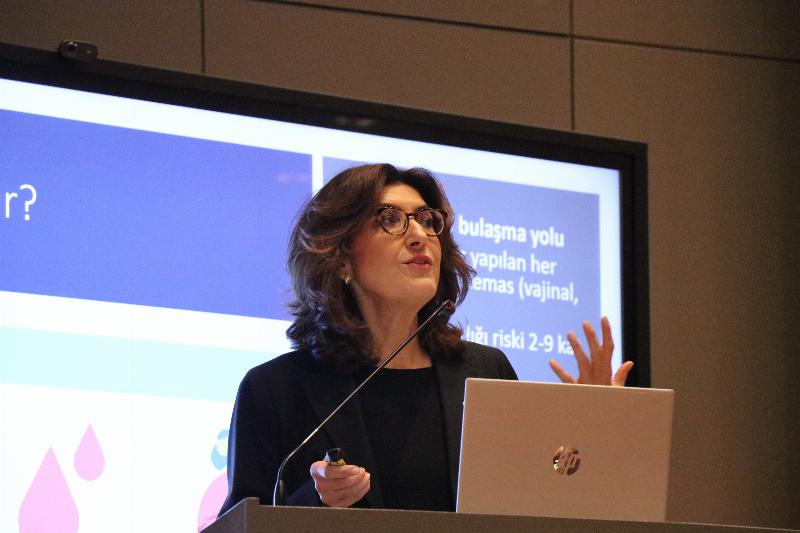
Dr. Dilek Manço: “HIV/AIDS continues to spread in the geography our country is located in”
Infectious Diseases Specialist Dr. Dilek Manço, Member of HIV and Epidemiology, who addressed the transmission routes of HIV/AIDS, said; “Although HIV/AIDS, which has been in our lives for more than 40 years, has started to decrease in some countries worldwide, it continues to spread in our country and the geography our country is located in. While fighting the disease and diagnosis, we also struggled with the difficult situations patients faced. In the future, you will not only be a healthcare professional but also a community leader. HIV is transmitted from person to person. The virus is found in the blood, sperm, vaginal secretions, and breast milk of HIV-positive individuals. It can be transmitted by both women and men. The transmission routes of HIV are: Sexual contact, blood products, and mother-to-child transmission. The presence of a sexually transmitted disease can increase transmission up to 9 times. After the identification of cases and the discovery of the virus, with the detection of antibodies against the virus, transmission through blood and blood products has significantly decreased. If the mother is HIV-positive and not receiving any treatment, the chance of transmitting it to her baby during pregnancy, childbirth, or breastfeeding is 30%. But if she uses the treatment regularly, the viral load will decrease.”
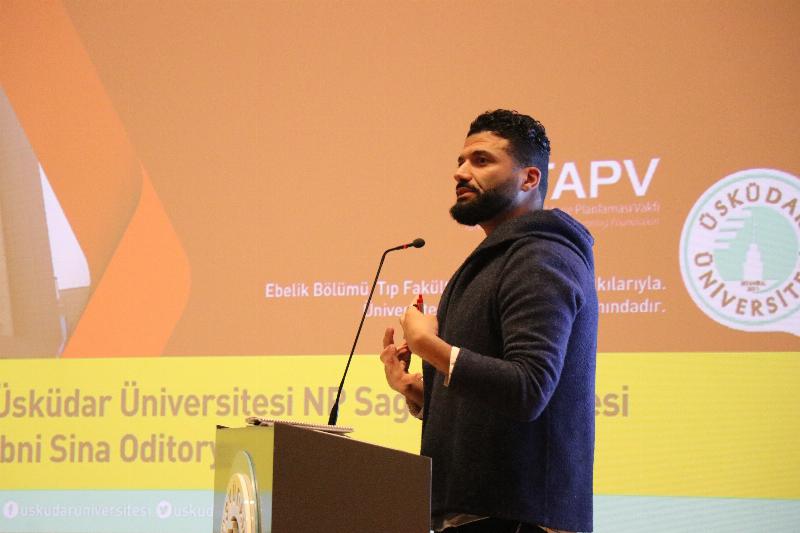
Arda Karapınar: “We attribute the technology that enabled us to find Covid vaccines to HIV”
Arda Karapınar, Chairman of the Board of Directors of the Red Ribbon Association, drew a connection between Covid and AIDS; “AIDS is one of the main reasons we currently have Covid vaccines. Studies on AIDS, methods tried during ongoing HIV vaccine research, and even abandoned after a while, are linked. Because this method was found to be very expensive. Then, when the scientific opportunity arose, these were utilized, and we actually attribute the technology that enabled us to find Covid vaccines to HIV.” he said.
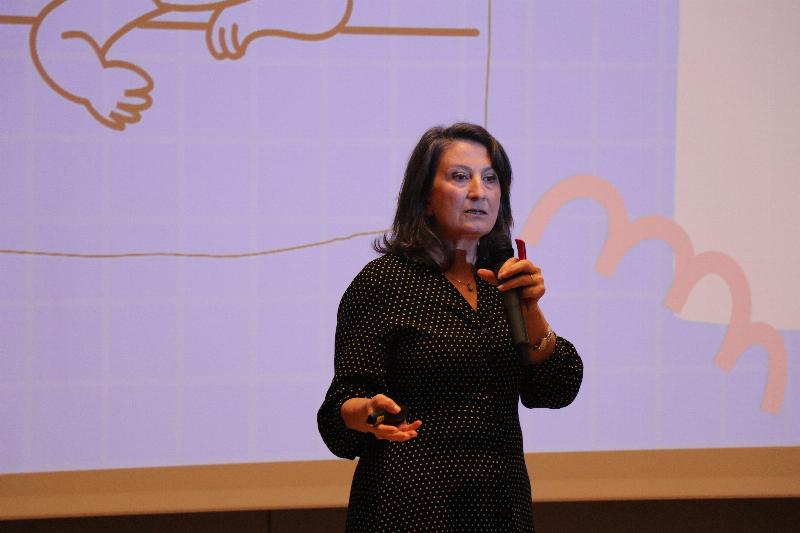
Nurşen Kanbur: “We cannot talk about sexual health if we are not in a safe relationship”
Nurşen Kanbur, Sexual and Reproductive Health Educator at the Turkish Family Health and Planning Foundation (TAPV), emphasized the importance of safe sexuality and touched upon cancers caused by sexually transmitted infections; “Young people, in particular, often only think that if they use a condom during sex, they will be protected from pregnancy and sexually transmitted infections, and thus be safe. No, it is not safe. Equally important, if we are subjected to discrimination, humiliation, marginalization, oppression, or violence due to the relationship we are in, then we cannot speak of safety in that relationship. We cannot talk about sexual health if we are not in a safe relationship. Sexually transmitted infections are infections transmitted through sexual fluids and blood. The causes can be viruses, parasites, or bacteria; various such agents. Why are sexually transmitted infections important? Our country has a population of nearly 84 million according to the latest census, and we know that approximately 1/4 of them are young. The HPV virus, as we call it, has over 200 types. 18 of these types cause cervical cancer, testicular cancer, penile cancer, and base-of-tongue cancer. And in recent years, base-of-tongue cancer is almost catching up with cervical cancer.” she stated.
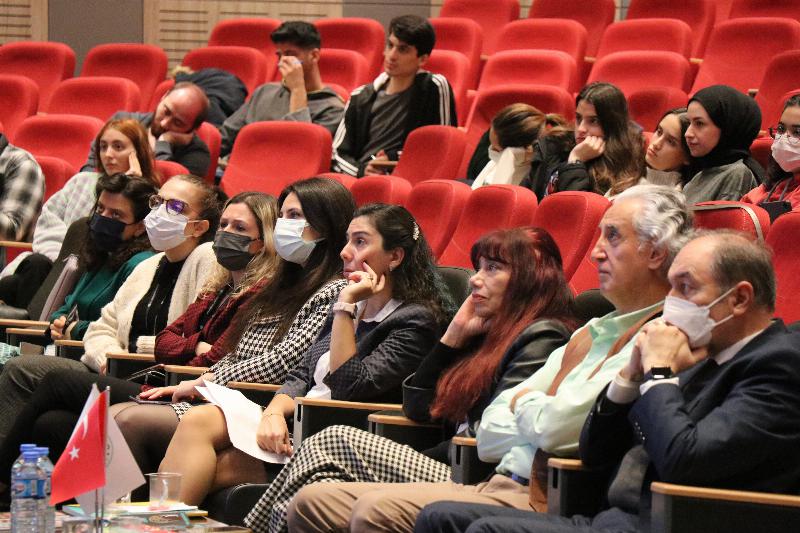
The AIDS Awareness Conference concluded after commemorative photos were taken.
Photo: Elifnur Öztürk / ÜHA
Share
Update Date: February 26, 2026
Creation Date: December 08, 2022
Request a Call
Other News
- The book that read today's digital threats in 2014: Being a Conscious Family
- Experts warn: 'Instead of memorizing letters, teach pencil grip, scissor use, and coloring'
- School fear and school love both start in the family!
- Family is not merely transforming, it is being battered under a serious assault
- Artificial intelligence opens the door to early diagnosis in autism!