

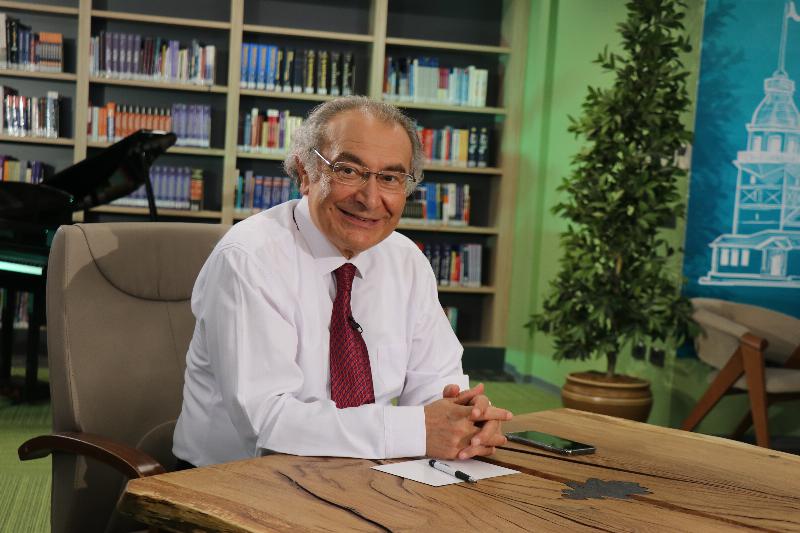
Psychiatrist Prof. Dr. Nevzat Tarhan, stating that there is an important relationship between school adjustment and academic success, points out that a child's willingness and desire to go to school is effective on their success. Prof. Dr. Nevzat Tarhan notes that the root causes underlying academic failure must be investigated and these problems solved, adding, “Academic failure is not just about the child. Problems arising from family attitudes and school should also be identified and resolved.” Tarhan reminds that motivational statements like ‘You can do it, you will succeed’ can also have drawbacks…
Content
Academic failure can have multiple causes!
Root causes must be identified and addressed!
Üsküdar Üniversitesi Founding Rector, Psychiatrist Prof. Dr. Nevzat Tarhan, made evaluations regarding the relationship between school adjustment and academic success. Prof. Dr. Nevzat Tarhan reminded that students attending primary, middle, and high schools were on mid-term break and would restart school on Monday, November 21, and said that academic success was being re-evaluated during this process.
Does the child go to school willingly and with desire?
Prof. Dr. Nevzat Tarhan stated that there are many factors affecting academic success and school adjustment, and that parents' attitudes are the most important determinants of the student's attachment to school. Prof. Dr. Nevzat Tarhan said, “Does the child go to school willingly, is their attachment to school high or not? Knowing this is important for academic success and school adjustment. If the child loves school but has some fears, the reasons for this need to be investigated. If the child goes to school feeling as if there are many problems or as if they are going to a court, instead of forcing them, we need to find the reason.”
If there are problems at home, the child may not want to go to school
Prof. Dr. Nevzat Tarhan, drawing attention to the fact that existing problems at home can create such negative thoughts in the child, said, “For example, there might be a problem at home, and the child's mind stays at home. They might worry, ‘Something will happen to my mother, my mother is sick.’ Or there is no warm, peaceful environment at home, or they are too attached to their mother. This becomes what we call school anxiety or school phobia. In fact, it's not school phobia; they see school as a foreign planet and feel alone there. Children attached to their mothers also have difficulty adjusting to school and struggle with academic success. We observe this in some parent models. Especially in the first grade, parents act too soft-hearted, go to school with the child, and wait for the child at the door. If this situation prolongs, it is a serious problem. Once the child has adjusted to school, parents should withdraw. The child should be told that they need to go to school, gently and persuasively.”
The “root” causes of academic failure must be identified
Prof. Dr. Nevzat Tarhan, stating that if a child has academic failure, the reasons for it should also be investigated, said, “There are many assessment and evaluation systems related to determining the causes of academic failure. In the survey conducted by guidance counselors, the causes of failure are attempted to be determined. Whether there are individual reasons for failure, family reasons, or reasons stemming from the school or the teacher, all these are investigated, and a solution is sought accordingly. For example, to test the student's reason for getting low grades in lessons, it is said that a survey has been prepared to help them, and the student is asked to answer the questions. The student will mark items such as ‘My family is very crowded’ or ‘I am separated from my family’, ‘I don’t understand what my teacher explains’, ‘I can’t focus on the lesson’, ‘I learn in class but forget quickly’, or ‘I am not interested in these lessons’, ‘The information given in this lesson is not useful to me’, ‘I love playing at school’. Guidance counselors evaluate and find the root cause.”
The causes of the problem must be resolved
Tarhan stated that after identifying the root causes, solutions can be produced according to the source of the problem, adding, “If the problem stems from the school, the school administration and the relevant teacher make the necessary corrections. If it concerns the family, the family is informed. Pressuring the child without finding the root causes is not enough to solve the problem.” He warned.
A perfectionist approach can make the child give up
Prof. Dr. Nevzat Tarhan noted that providing private lessons just by thinking it's the child's deficiency, and constantly giving positive motivation to the child with statements like ‘You can do it or you will succeed’ can also have drawbacks, adding, “This situation can lead to the child becoming fed up after a while. Sometimes high motivation also backfires. If the child has a high sense of responsibility, there are perfectionist mothers or teachers who ask, ‘Why didn't you get a 100?’ when the child gets a 97. In such situations, the child says, ‘Anyway, I’m not listening to my teacher or my mother,’ and gives up. If there are parents or teachers who don't even consider a 97 important, the child's motivation is broken. Because of high motivation, the tendency to do nothing at all, which we call black and white thinking, a dualistic thought, emerges. However, there are also gray areas.”
Social and emotional success comes to the forefront
Prof. Dr. Nevzat Tarhan emphasized that in addition to academic success, social and emotional success are also coming to the forefront today, adding, “School adjustment and academic success were 20th-century skills; technical and academic success were paramount. 21st-century skills have changed. For life success, in addition to academic success, social and emotional success are coming to the forefront. Social and emotional success involves effort and motivation. One has skills in attitude and behavior, strategy development, goal setting, and self-control. There are qualities such as setting personal goals, developing emotional intelligence, and learning to make decisions. If one cannot learn these, if one cannot learn human relations, one cannot be successful. It is extremely problematic to say whether a person is successful or unsuccessful in life merely by measuring their knowledge level. School truancy and dropouts are increasing. Incidents of violence are increasing, and suicide attempts are increasing.” He warned.
The social environment at school also contributes to development
Prof. Dr. Nevzat Tarhan stated that the school environment also affects school attachment, adding, “All teacher-peer relationships in the school environment are important. For example, extracurricular activities increase school attachment. Team sports and various competitions significantly affect a child's attachment to school. For a child to learn other social skills in addition to academic skills, they must be in a social environment. They will be among friends, learn by making mistakes here, and learn by discussing. When we constantly protect a child, raising them almost in a bubble, that child continuously feels the need to connect to a higher power. They prefer to survive by taking refuge in someone. In this age, individuality without selfishness is necessary. On the other hand, they need to learn to say no. Being able to say no is an intellectual skill. When necessary, a child should be able to say no to their parents with a reason.”
The child's motivation must be ensured
Prof. Dr. Nevzat Tarhan noted that academic success and school adjustment are not solely dependent on the child, adding, “Here, there is the student aspect, the family aspect, and the teacher aspect, and all these aspects are important. The most important thing is to ensure the student loves the lesson and is motivated. Family attitudes are also very important here. A positive role model should be set for the child, and their individual needs should be well determined.”
Share
Update Date: February 26, 2026
Creation Date: November 18, 2022
Request a Call
Other News
- The book that read today's digital threats in 2014: Being a Conscious Family
- Experts warn: 'Instead of memorizing letters, teach pencil grip, scissor use, and coloring'
- School fear and school love both start in the family!
- Family is not merely transforming, it is being battered under a serious assault
- Artificial intelligence opens the door to early diagnosis in autism!