

Üsküdar Üniversitesi Faculty of Medicine Head of the Department of Neurology and Faculty Member in the Department of Speech and Language Therapy at the Faculty of Health Sciences, Prof. Dr. Oğuz Tanrıdağ's book 'I Believe, Therefore I Am' is gaining readers' appreciation. Stating that human thought does not only consist of mathematical and logical thinking, but also shows that the brain is activated through emotions and beliefs, Tanrıdağ unites neuroscience and social behavior in his book…
Content
A Book Uniting Neuroscience and Social Behavior…
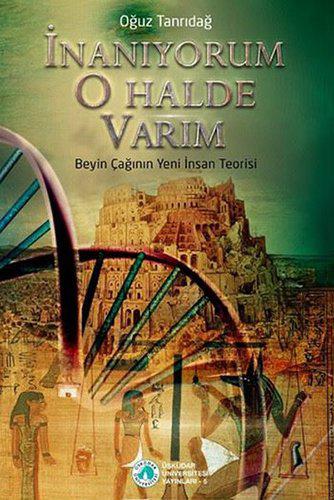
Human beings are different and more complex entities than their physiological structure. They question their existence, search for the meaning of life, and wonder about eternity. During their thousands of years of evolution, they have undergone different journeys of existence, which we can call situations, thoughts, emotions, and behaviors. During these journeys, two literatures emerged: one examining behaviors based on the brain, and the other commenting on the brain based on behaviors, but both disregarding each other.
Of these, the biological approach, by prioritizing the brain, accepted humans as merely genes, said Tanrıdağ; "The other, with a dynamic approach, prioritized behaviors and saw humans as merely behaviors. The disconnection between these two literatures led to a conclusion such as 'The Brain Cannot Be Known, Discovered, or Understood.' Brain research that began in the 21st century made these erroneous ideas debatable," he said.
Tanrıdağ pointed out that researchers in various fields of social sciences no longer find their knowledge of human behavior sufficient and have turned to comprehensive education on brain information, and noted that this interest has led to a new field of knowledge called sociobiology.
"Human beings feel their existence in line with what they believe"
Author Tanrıdağ made the following remarks regarding the purpose of writing the book, published by Üsküdar Üniversitesi:
"As can be understood from its name, the book carries a different message. Although there are views that human existence, its physical presence, can be perceived through logic and mathematical thinking in the mind, many people feel their existence in line with what they believe. Therefore, this idea of existence has diversified. Since recent brain research has also shown a region in the brain, activated by belief, called the reward and pleasure mechanism, it demonstrates that human thought does not only consist of mathematical and logical thinking, but also that the brain is activated through emotions and beliefs. This book was written to incorporate these developments into today's understanding of the brain, as it shows a synthesis between logical thought and emotional and belief-based thought."
A resource uniting neuroscience and social behavior…
The book 'I Believe, Therefore I Am' is a concise history of how a biological narrative took on a cultural form, and how a material shaping that lasted for hundreds of thousands of years gained identity in the last ten thousand years. Within this brief history, the human story of gaining identity encompasses thinking, creating culture, socializing, having morals, asserting identity, and relearning. This work, which offers readers a different perspective by uniting neuroscience and social behavior, will be an excellent resource for those who want to learn that the view 'Human beings are social creatures' can be moved beyond observation and experimentally tested.
VIDEO:
Share
Update Date: February 27, 2026
Creation Date: February 09, 2021
Request a Call
Other News
- Social responsibility courses moved to the field
- Erasmus+ Orientation Week completed at Üsküdar
- Prof. Nevzat Tarhan: “Brain secretes ‘dark glue’ in social media lynchers!”
- Prof. Nevzat Tarhan: “Every segment of society should be able to say, ‘This constitution is my constitution!’”
- OHS releases guide for safe operation of industrial robots