

Stating that anger is a human emotion and everyone has anger within them, Prof. Dr. Nevzat Tarhan said that what is important is to process anger. Tarhan noted that individuals who succeed in processing anger can turn this situation into gain and energy, reminding that taking a 10-second break during anger is also a good method for anger management. Tarhan added that anger management training is important in violence against women, stating, ‘Imprisonment should be the last resort here. These individuals especially need to be educated on empathy. Imprisonment is not the solution; healing is the solution.’
Content
A 10-second break for anger!
Anger that can be processed can be turned into gain, energy…
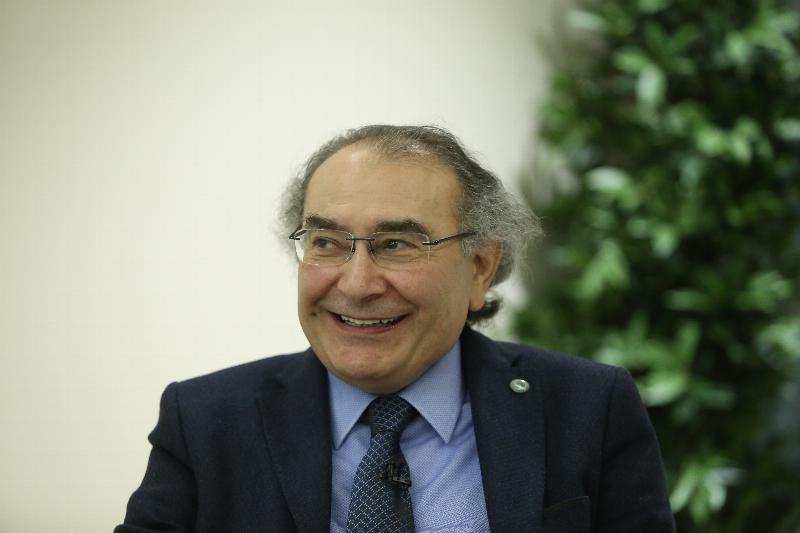
Üsküdar Üniversitesi Founding Rector, Psychiatrist Prof. Dr. Nevzat Tarhan made important evaluations regarding the emotion of anger and its management and control.
Reason takes a backseat during anger!
Stating that anger control disorder lies in the background of issues related to violence, Prof. Dr. Nevzat Tarhan said that the foundations of this problem are laid in childhood. Likening anger to fire, Prof. Dr. Nevzat Tarhan said, “When a fire breaks out, you immediately intervene. You don't first ask, ‘Why did the fire start and why is this place burning?’ You extinguish the fire as soon as possible. The cause of the fire is investigated later. Measures are taken immediately. A similar behavior should be displayed with anger.” Tarhan stated that the brain's upper control is disrupted in anger, adding, “During anger, reason takes a backseat. The use of reason is blocked; some even call this madness. The best remedy for anger is to be able to push that emotion aside at that moment.”
Why does anger arise?
Noting that some people are calm, some are anger-free, some are irritable, and some are very angry, Prof. Dr. Nevzat Tarhan said, “The importance of personality structure is evident here. In anger management, reasons such as deterioration in human relations, legal problems, and financial losses are most commonly observed. We can see people damaging their belongings due to anger. Anger affects one's work and productivity. It harms health and, most importantly, evokes feelings of guilt.”
Stating that the emotion of anger leads a person to violent behavior, Prof. Dr. Nevzat Tarhan said, “It is generally seen in the form of violence against animals, self-harm by punching walls. Then, violence against other people emerges.”
In anger management problems, the past is examined
Prof. Dr. Nevzat Tarhan said that the past of individuals who cannot control their anger is examined, stating, “Does the person have a history of violent behavior? Is there a situation of dangerous driving? Do they see violence as a method of problem-solving and seeking rights? Is there a victim, and if so, is it always the same person? These are the questions researched.”
Discipline cannot be achieved with violence!
Stating that unfortunately, violence has a sometimes approved aspect in the world and our country, Prof. Dr. Nevzat Tarhan said, “In England, there was a tradition of ‘whipping boys’. When their own children in the royal family made a mistake, they would go and beat the poor children kept as whipping boys. This was how the child was supposed to learn from their mistake. The term ‘whipping boy’ comes from there. It's a wrong method used in education. Later, this method was abolished as it violated human rights. We have a cultural side that approves of violence. There are proverbs like ‘He who doesn't beat his daughter beats his knee’. These are situations that do not conform to the traditions of our time. Attempting to discipline a child with violence is now an invalid method.”
Mockery, humiliation are also violence…
Prof. Dr. Nevzat Tarhan stated that violence can be both physical and emotional, saying, “A person subjected to violence feels humiliated and worthless. They feel that injustice has been done to them. Mocking behaviors and words are also a type of violence. Humiliation in front of everyone is a type of violence. A child who is constantly mocked grows up thinking that hostility is harbored against them by their surroundings. They see everyone as an enemy and always act with fear. A judgment automatically forms here.”
If there is no justice in the family, violence emerges
Emphasizing the importance of the concept of justice in the family, Prof. Dr. Nevzat Tarhan said, “If a child is subjected to injustice in an unfair home environment, if they are treated badly while their sibling is treated well, they perceive discrimination. The child's sense of justice is harmed. In such situations, the person feels excluded and humiliated. Their sense of trust weakens. They believe they are not loved and are ignored in that home. Anger develops towards their parents. Expecting violence in families where there is no justice is not a surprise. One of the reasons why violence is so widespread in our society, unfortunately, is that we do not care about intra-family justice at all.”
Attention! Children learn violence at home.
Stating that violence is learned at home, Prof. Dr. Nevzat Tarhan warned, “The most impactful live violence for a child is the violence between parents. If the father says, ‘You hit them and they will sit down’ when something happens, the child models this. They learn violence by seeing it.”
Parents should be generous with love
Noting that parents should first give love to their child, Prof. Dr. Nevzat Tarhan said, “Parents need to be generous with love. They need to have experiences and stories. We had a patient. We asked him to talk about positive things from his childhood. Unfortunately, he couldn't describe a single positive experience. The person always remembers negative experiences. He said, ‘I didn't have any positive experiences with my family. I was always criticized. There was no physical violence, but there was verbal violence.’ Unfair criticism is the greatest violence. If you break a child's or a person's dignity and they lack verbal expression skills, they will resort to violence,” he warned.
Global justice is needed for social peace
Noting that there are many causes of violence, Prof. Dr. Nevzat Tarhan said, “Income inequality in society is a cause of violence. Social turmoil is a cause of violence. A basic sense of trust does not form. Poverty is not a direct cause of violence, but income distribution inequality is a cause of violence. Discrimination in the family or society strongly supports violence. If we do not want violence, we must uphold justice as a high value in the family and society. Therefore, global justice is also needed for social peace.”
Depression may be behind anger management issues
Noting that female and male brains react differently under stress, Prof. Dr. Nevzat Tarhan said, “The female brain reacts by crying under stress. The male brain, on the other hand, reacts with anger under stress. Depression can be behind a man's anger management issues. Angry individuals can have hidden depression and masked depression. When antidepressant treatment is applied to these individuals, they stop using violence.”
A 10-second break for anger…
Stating that they recommend applying certain methods in anger management, Prof. Dr. Nevzat Tarhan said, “We can suggest the ‘time-out’ method. We recommend counting to 10. Anger is a visible and outwardly expressed emotion. The emotion in the background of anger is exclusion, humiliation. The person projects it outwards as anger.”
Anger should be processed and converted into gain
Noting that anger is not suppressed or destroyed, Prof. Dr. Nevzat Tarhan said, “Anger is processed. You take anger, process it, and convert it into gain. There is no one without anger. Everyone has anger within them. Some process that anger, some convert it into energy. For example, one can nicely say no to the person they are angry with. They say, ‘I don't think like you on this matter.’ If a person develops a mental strategy as a problem-solving style, succeeds in expressing emotions, and can express themselves verbally in this regard, why would they resort to anger?” Prof. Dr. Nevzat Tarhan also stated that a lack of empathy can cause anger, adding, “A person first needs to apply the mental paradigm of ‘stop, think, and act’. Because in anger, people usually act first and then think. Meaning, it's too late. Lack of empathy is also very important in anger.”
Not imprisonment, but healing is the solution…
Underlining the need to provide anger management training in violence against women, Prof. Dr. Nevzat Tarhan said, “This is how violence has been dealt with in the world. Here, we are trying to find solutions with imprisonments. Imprisonment should be the last resort here. These individuals especially need to be educated on empathy. Imprisonment is not the solution; healing is the solution. Their empathy aspects need to be strengthened, and they need to receive treatment as a group.”
Share
Update Date: February 28, 2026
Creation Date: March 29, 2022
Request a Call
Other News
- The book that read today's digital threats in 2014: Being a Conscious Family
- Experts warn: 'Instead of memorizing letters, teach pencil grip, scissor use, and coloring'
- School fear and school love both start in the family!
- Family is not merely transforming, it is being battered under a serious assault
- Artificial intelligence opens the door to early diagnosis in autism!