

Emphasizing the importance of explaining the concept of true happiness correctly from childhood, Prof. Dr. Nevzat Tarhan stated that the five parameters constituting happiness are; intelligence, diligence, being successful, and acting well and rightly. Tarhan said, “We need to teach children the concepts of good and evil, benevolent and malevolent emotions and values, right and wrong.”
Content
5 Parameters Leading to True Happiness
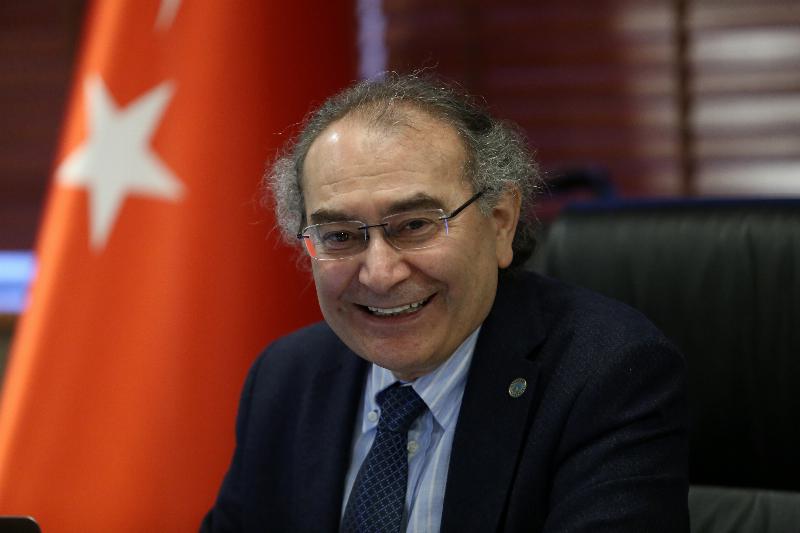
Üsküdar Üniversitesi Founding Rector, Psychiatrist Prof. Dr. Nevzat Tarhan, evaluated the 5 parameters required for happiness.
Stating that the concepts of true happiness should be explained correctly from childhood, Prof. Dr. Nevzat Tarhan said, “Being intelligent, diligent, and successful is not enough for true happiness. We raise children according to these three parameters. We need fourth and fifth parameters to add to these. We need to teach children the concepts of good and evil, benevolent and malevolent emotions and values, right and wrong. The child should question themselves with ethical values, asking 'Is what I did right or wrong?' They should think with both human values and higher values. A child raised this way will be spiritually happy. They will become a being who pursues meaning, not happiness.” he said.
Balance is very important for the mental jury
Noting that happiness emerges from the combination of five parameters, Prof. Dr. Nevzat Tarhan stated that a person leading a virtuous life would look at life more meaningfully, and said:
“Intelligence, diligence, being successful, acting well and rightly. A person who can establish balance within these five parameters can form a mental jury. One who can create conscientious norms, an inner conscientious voice, will achieve happiness. This is a happiness that even death cannot change. Socrates is an example of this. When he was condemned to death, his wife said, 'You will be executed unjustly.' Socrates' answer was: 'Should I have been executed justly?' His life's purpose was a virtuous life. They asked him, 'Why are you not afraid of death?' He replied, 'Why should someone who lives every day of their life as if it were their last day be afraid of death?' This is a tremendous meaning. Socrates found a meaning that death cannot change.”
There is a tendency to find the Creator in our souls and genetic codes
Prof. Dr. Nevzat Tarhan stated that a virtuous life means living in accordance with human existence and factory settings, along with the soul's belief, and said, “Our factory settings were given when the soul was first created. ‘And [mention] when your Lord took from the children of Adam – from their loins – their descendants and made them testify of themselves, [saying to them], “Am I not your Lord?” They said, “Yes, we have testified.” [This was] lest you should say on the Day of Resurrection, “Indeed, we were of this unaware.”’ Allahu Teala gave a teaching to the souls in 'Qalu Bala' and had every human and soul confirm it. That is why no one can say, ‘I did not know this, I was not taught religion.’ In our souls and genetic codes, there is a spiritual quest, a tendency to find the Creator. Socrates and Plato found it, many Buddhists found it at first, perhaps Confucius found it at the initial stage.” he said.
Pursuing meaning is happiness
Prof. Dr. Nevzat Tarhan said, “Happiness is a person's pursuit of meaning in life,” and added, “Where is there a meaning that death cannot change? In heavenly teachings. When you ask, 'What is religion?' many theologians, among others, say, 'It is a social reality.' Yes, it is a social reality, a social value, that is true, but more importantly, it is an existential value. The first surah in the Holy Quran is Surah Al-Fatiha. In Surah Al-Fatiha, 'yawm al-din' is mentioned, meaning 'the Day of Religion' or 'the Day of Judgment'. Its dictionary meaning is 'the Day of Reckoning.' Religion means accountability. In fact, religion means a sense of responsibility towards Allah. If a person has a sense of responsibility towards Allah, they grasp the essence of religion. A person who does not have a sense of responsibility towards Allah, even if they are religious, cannot grasp the essence of religion and does not experience the feeling of accountability.” he said.
To achieve true meaning, one must be a good and righteous person
Prof. Dr. Nevzat Tarhan stated that true character emerges after power, money, and dominance are achieved, and said, “A person who wins the test of scarcity can lose the test of abundance. Life is a test. From the perspective of life philosophy, the capitalist ethic reduces 'right-wrong,' 'good-evil' to a measure of profit. A person with this ethic, even if religious, has a capitalist ethic. Therefore, to achieve true meaning, being intelligent, diligent, and successful is not enough; one needs to be a good and righteous person.” he said.
Share
Update Date: March 01, 2026
Creation Date: December 27, 2022
Request a Call
Other News
- The book that read today's digital threats in 2014: Being a Conscious Family
- Experts warn: 'Instead of memorizing letters, teach pencil grip, scissor use, and coloring'
- School fear and school love both start in the family!
- Family is not merely transforming, it is being battered under a serious assault
- Artificial intelligence opens the door to early diagnosis in autism!