

Üsküdar University Psychology Club's 4th Psychology Days brought together students studying in this field with expert names. Üsküdar University Founding Rector, Psychiatrist Prof. Dr. Nevzat Tarhan, in his opening conference, pointed out that the period of adolescence has lengthened due to the influence of popular culture. Tarhan said, “Being open to new experiences and learning new information has a protective effect against Alzheimer’s. People who actively use their minds and are open to development and novelty may not develop Alzheimer’s, even if they carry the Alzheimer’s gene.” Psychologist Prof. Dr. Acar Baltaş also participated in the program with his speech titled “Making the Most of Life,” where Baltaş stated that the most fundamental characteristic supporting life success is resilience and perseverance. Baltaş said, “People can prepare for life by struggling. The most fundamental characteristic supporting life success is resilience and perseverance. It is falling and getting back up. It is being unsuccessful. Failure should not be seen as something that diminishes or devalues a person. A person who does not push the limits of their potential will not fail, but they will not develop. That’s why success gives a person pride, and failure develops them,” he said.
Content
4th Psychology Days brought psychology candidates together with experts
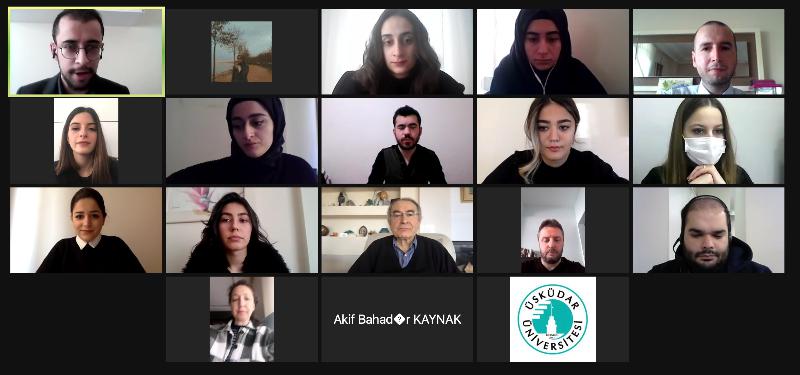
The 4th Psychology Days, organized online due to pandemic conditions, brought together young people studying in this field with expert names.
Assoc. Prof. Dr. Asil Özdoğru: “18 speakers will take part in 12 sessions”
Üsküdar University Psychology (English) Department Head Assoc. Prof. Dr. Asil Özdoğru, who gave the opening speech for the program realized with the support of the Psychology Club, stated that they had paused the Psychology Days, which they first held in 2017, last year due to the pandemic. He mentioned that they had prepared various contents for this year's two-day event and said, “We have a total of 12 sessions. It consists of 10 conferences and 2 panels. A total of 18 different speakers will participate, and we started registration on March 1st, and approximately 780 participants registered within 10-12 days. Therefore, we are very happy.” Psychology Club President Dilara Yeniköylü also thanked all participants who showed interest in the 4th Psychology Days in her opening speech.
Prof. Dr. Nevzat Tarhan: “Voluntary learning becomes permanent”
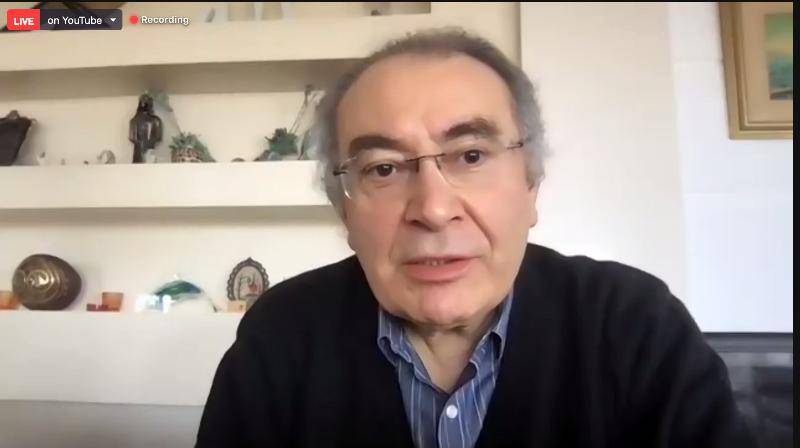
Üsküdar University Founding Rector, Psychiatrist Prof. Dr. Nevzat Tarhan, delivered an opening conference titled “Psychoanalysis.”
Stating that voluntariness is very important in learning science, Prof. Dr. Nevzat Tarhan thanked the students who organized this program and said, “Information and learning done compulsorily or as a duty do not become permanent. It only helps a person to survive. All studies based on voluntariness play a very important role in human development and in creating a difference and vision. These voluntary efforts show high energy and motivation.”
Prof. Dr. Nevzat Tarhan: “The world is currently making efforts to unify sciences”
Prof. Dr. Nevzat Tarhan noted that he would talk about Neuropsychoanalysis, a new window in science, in his opening conference, and said, “When we first brought the brain-based therapy system, measuring brain functions in psychiatry, to Turkey in 1997-98, it was a groundbreaking application. Later, while researching the literature, we saw that we were still late in discussing Neuropsychoanalysis in Turkey. The World Neuropsychoanalysis Society was founded in New York in 2000. It is currently in an effort to unify sciences. It is moving towards the holism of sciences instead of the singularity of sciences. All sciences and scientific disciplines come together, not saying 'my discipline is the best, my method is the best,' and they all focus on the patient's highest benefit. Whichever technique is beneficial for the patient is pursued. Here, the psychoanalysis technique is one of the important methods in discovering the subconscious, or rather, the unconscious. In my student years, psychoanalysis was a peak of knowledge. We experienced all its details and methods with our own experiences. We attended meetings and groups. Later, the two synthesized.”
Prof. Dr. Nevzat Tarhan: “Evidence-based treatment is important”
Prof. Dr. Nevzat Tarhan stated that being able to look at sciences holistically and from multiple perspectives is very important for a person to find the truth, and said, “In therapy, in treatment, it is necessary to proceed with evidence-based treatment. Scientific methodology is important for us to avoid straying into unnecessary topics on the path to truth. The evidence-based treatment method has three pillars. First, clinical judgments. The conclusions we reach clinically. Second, relevant scientific evidence. Third, the patient's values and choices. These are also important in evidence-based treatment. When all of these combine, evidence-based treatment emerges.”
Prof. Dr. Nevzat Tarhan: “It is necessary to strike a balance between emotion and logic”
Prof. Dr. Nevzat Tarhan stated that as specialists working in the field of mental health, they aim to correct the disrupted network in the brain during therapies, and said, “During the hearing, seeing, speaking, and formation of words in the brain, all parts of the brain work in an integrated manner. Until recently, our brain was considered a silent organ. We know that our brain is not a silent organ and works even during sleep. The left, or masculine brain, is related to logic, reasoning, analysis, speech, and calculation. The right, or feminine brain, is related to emotions, excitements, music, art, and aesthetics. When we look at it within this framework, the prefrontal cortex is the part that establishes balance. If a man does not develop his prefrontal cortex, he remains 'Mr. Logic.' If a woman does not develop her prefrontal cortex, she remains 'Ms. Emotion.' To bring these two together, we need to strike a balance between emotion and logic.”
Prof. Dr. Nevzat Tarhan: “Adolescence extended due to the influence of popular trends”
Prof. Dr. Nevzat Tarhan stated that maturation occurs with the development of the frontal region of the brain and said, “In some men, adolescence sometimes does not end, extending up to the age of 40. Clinically, we call it prolonged adolescence. When the frontal region of the brain does not develop, some men do not have marriage maturity. The idea of being married and living as I please is not possible. These were not innate; families and society taught them later. But currently, since the influence of popular culture on people is greater than that of family and society, we can say that adolescence has extended under the influence of popular trends.”
Prof. Dr. Nevzat Tarhan: “If there were no frontal lobe of the brain, there would be no civilization”
Prof. Dr. Nevzat Tarhan gave examples from brain imaging studies conducted on addiction and psychiatric illnesses and said, “In major depression, before treatment, brain activities show that the frontal region is not being used. Glucose metabolism has slowed down. After treatment, it has become active. The frontal region of the brain is again deactivated. In a normal brain, all parts work equally. In a schizophrenic brain, the frontal region is not active either. If there were no frontal lobe of the brain, there would be no civilization. In the brain of an antisocial person, the frontal region cannot be used, just like in a schizophrenic person. But within their own fake world, there is no mental control, they just live for their pleasure.”
Prof. Dr. Nevzat Tarhan: “Being open to new experiences has a protective effect against Alzheimer’s”
Prof. Dr. Nevzat Tarhan stated that being open to new experiences and learning new information has a protective effect on the brain, and said, “There is a growth factor in the brain. If a person has high motivation, love, excitement, desire, and eagerness, the hypothalamus region of the brain, in particular, produces new cells from stem cells. If the person continues with that excitement, desire, and love of learning, the brain is a neuroplastic organ, constantly renewing itself. Being open to new experiences and learning new information has a protective effect against Alzheimer’s. People who actively use their minds and are open to development and novelty may not develop Alzheimer’s, even if they carry the Alzheimer’s gene.”
Prof. Dr. Nevzat Tarhan: “Positive and negative emotions also shape our brain”
Prof. Dr. Nevzat Tarhan stated that a person's perceptions and beliefs can change realities, and said, “There is a placebo effect in the brain. In placebo, if a person knows that what they are taking is medicine, it has a 40% healing effect. There is also nocebo. Negative thinking also produces a nocebo effect. That is, if someone believes that what they are drinking will harm them, if they believe they will get sick, negative thoughts trigger the symptoms of that illness in the person. Because the brain perceives it that way, it reacts accordingly. Therefore, both positive and negative thoughts shape our brain. We need to pay attention to our perceptions and it says that genetics is not destiny. No one should say, 'My genes are like this, I'm born this way.' Genetics is not destiny, biology, our perceptions and beliefs, the human brain… What did Descartes say? He said, 'I think, therefore I am.' Later, emotions, emotional regulation came to the forefront. Now, the human brain is actually a brain of reason, emotion, plus belief… Whatever we believe, our brain is shaped accordingly. Therefore, our beliefs must be rational beliefs. They must be reasonable beliefs. Belief is also truth, because if we form our beliefs with reasonable methods on the path to truth, we will not make wrong decisions with wrong beliefs,” he said.

Psychologist Prof. Dr. Acar Baltaş: “The child should solve their own problems at school”
Psychologist Prof. Dr. Acar Baltaş also gave important advice to future psychologists in his speech titled “Making the Most of Life.”
“Success is hidden in doing small things well that are done regularly every day. This is called a ritual. Ritual comes from the Latin 'ritus'. It means a regular action. The negative experiences people have in their lives enable them to develop. When these negativities are prevented and protected by parents and those around them, the child's psychological immune system does not develop. Today we know that most private schools are managed by mothers' WhatsApp groups, with a customer mentality. If children encounter a problem on the school bus, their parents intervene. If they experience a problem in the classroom, the parents solve it. How will these children learn negotiation skills?”
Psychologist Prof. Dr. Acar Baltaş: “Success gives a person pride, failure develops them”
Prof. Dr. Acar Baltaş, pointing to the importance of life success, stated that the characteristics supporting life success are resilience/perseverance and self-efficacy. Prof. Dr. Acar Baltaş said, “People can prepare for life by struggling. A young man going for paid military service has his shoes tied by his mother. It is not possible for these children to develop their psychological immune systems and struggle with the difficulties of life. Therefore, the most fundamental characteristic supporting life success is resilience and perseverance. It is falling and getting back up. It is being unsuccessful. Failure should not be seen as something that diminishes or devalues a person. A person who does not push the limits of their potential will not fail, but they will not develop. That’s why success gives a person pride, and failure develops them,” he said.
Psychologist Prof. Dr. Acar Baltaş: “Success is something that can be achieved with others”
Prof. Dr. Acar Baltaş stated that people should be convinced that success is not something to be achieved by getting ahead of others, but by working together with others, and said, “You are the people who will guide society. Being a psychologist places a great responsibility. You must live up to the trust people place in you. Therefore, just as much as helping young people succeed, it is necessary to contribute to raising young people and children in a way that prevents them from thinking they are the center of the world. That is possible not only by asking 'What grade did you get?', 'What rank were you?', 'You need to study more' at the dinner table, but also by asking these questions: 'Which friend did you help today?' 'Whom did you ask for help?' 'Whose success did you contribute to this week?' And most importantly, these two questions: 'What do you feel lucky/happy to have?' 'What do you plan to do for less fortunate people who don’t have these things?' Because most children and young people bargain over what they don’t have, rather than what they do have, and they feel no responsibility towards those who are less fortunate than themselves,” he said.
The 4th Psychology Days continued with presentations by Assoc. Prof. Dr. Elif Çelebi titled “Dialectical Behavior Therapy and Emotion Regulation”; and Dr. Lecturer Burcu Türk titled “Dating Violence.”
The Political Psychology of the Pandemic was discussed
The Alumni Panel took place with the participation of Psychologist Elif Özovacık, Psychologist Hilal Akyüz, Psychologist Nurefşan Necipoğlu, and Psychologist Seher Sav.
Following this panel, a panel titled "The Political Psychology of the Pandemic" took place. Üsküdar University Rector's Advisor, Dean of the Faculty of Humanities and Social Sciences Prof. Dr. Deniz Ülke Arıboğan, Vice Dean of the Faculty of Humanities and Social Sciences Assoc. Prof. Dr. Hadiye Yılmaz Odabaşı, Head of the Philosophy Department, Faculty of Humanities and Social Sciences, and Director of the Turkish World Philosophy Research Application and Research Center Dr. Lecturer Ömer Osmanoğlu, and Dr. Lecturer Akif Bahadır Kaynak participated as panelists.
On the second day of the panel, Sunday, March 14, 2021, a presentation titled “The Place of Gender in the Formation of Mentality” was given by Psychologist Dr. Meltem Narter, Head of the Psychology Department, Faculty of Humanities and Social Sciences, Üsküdar University.
Psychologist Psychodramatist Ezgi Başaran contributed with her presentation titled “The Silent Scream of Our Emotions: Taboos and Feelings”, Specialist Psychologist Counselor Binnaz Ülke with “Awareness – Human Resources Practices”, Psychologist Counselor Duygu Çataltaş Sığçıkoğlu with “Foundations of Psychological Resilience in Children”, Specialist Psychologist Ceyda Demirbaşoğlu with “Career in Non-Governmental Organizations”, and Specialist Psychologist Senem Eke Yıldız with “Nutrition Psychology.”
The 4th Psychology Days continued with presentations by Assoc. Prof. Dr. Elif Çelebi titled “Dialectical Behavior Therapy and Emotion Regulation” and Dr. Lecturer Burcu Türk titled “Dating Violence.”
Assoc. Prof. Dr. Elif Çelebi: “Suppressing emotions is not effective in the long run”
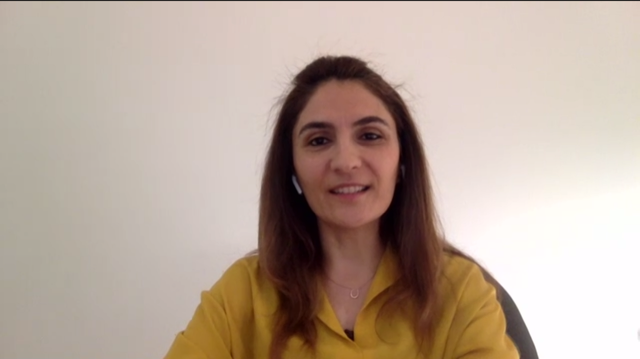
Assoc. Prof. Dr. Elif Çelebi, in her speech titled “Dialectical Behavior Therapy and Emotion Regulation,” said, “It is not possible for us to suppress emotions. Many psychological studies show that suppressing emotions makes the situation even more difficult. Judging or suppressing them is not effective in the long run. One of our goals in emotion regulation is to reduce our vulnerability to the emotional mind. This is a topic specific to Dialectical Therapy, which is not present in other Cognitive Behavioral Therapy approaches. There is a state called Emotional Mind. This means that in some situations, individuals are more prone, more fragile, and at higher risk of experiencing negative emotions. For example, if you have hormonal changes, such as women's monthly menstrual periods, or if you have not taken your regularly used medications, and if you have experienced a series of risky situations consecutively, these cause situations that make you feel more emotional physically, making you fragile. In Dialectical Therapy, we analyze these one by one according to the client.” She said.
Dr. Lecturer Burcu Türk: “To prevent violence, we must first pay attention to the language we use”
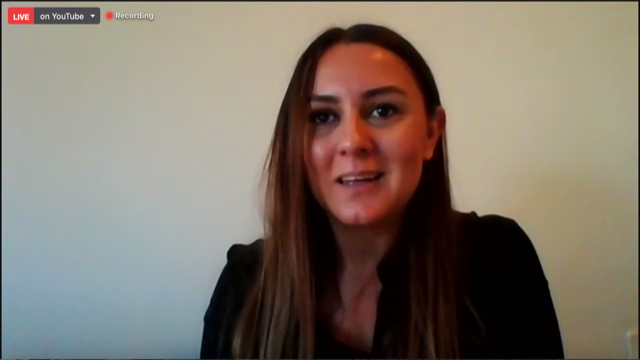
Dr. Lecturer Burcu Türk, in her speech titled “Dating Violence,” addressed the causes of dating violence and what can be done to prevent it. Türk stated; “Violence is a situation directed at a person, community, or group that causes physical or psychological harm to the person. We can list the main causes of dating violence as a person experiencing any violence or harassment within or outside the family, the person's perspective and attitude towards violence, alcohol, substance addiction, and gender inequality. How violence is transmitted, experiencing violence, and every situation that reinforces violence are among these causes. Violence can result in consequences such as depression, anxiety, eating disorders, post-traumatic stress disorder, and suicide. To prevent violence, we must first pay attention to the language we use. Problem-solving skills should be taught to students in schools, and program contents should be frequently audited.” She used the expressions.
In the Alumni Panel, Psychology department graduates gave the following advice to students; “Having a companion with whom you can support each other and experience are very important. Getting to know the field helps you better understand the information you read and identify your shortcomings.”
In the last session of the 4th Psychology Days, the panel titled “The Political Psychology of the Pandemic,” Üsküdar University Dean of the Faculty of Humanities and Social Sciences Prof. Dr. Deniz Ülke Arıboğan, Vice Dean of the Faculty of Humanities and Social Sciences Assoc. Prof. Dr. Hadiye Yılmaz Odabaşı, Head of the Philosophy Department, Faculty of Humanities and Social Sciences, and Director of the Turkish World Philosophy Research Application and Research Center Dr. Lecturer Ömer Osmanoğlu, and Dr. Lecturer Akif Bahadır Kaynak participated as panelists.
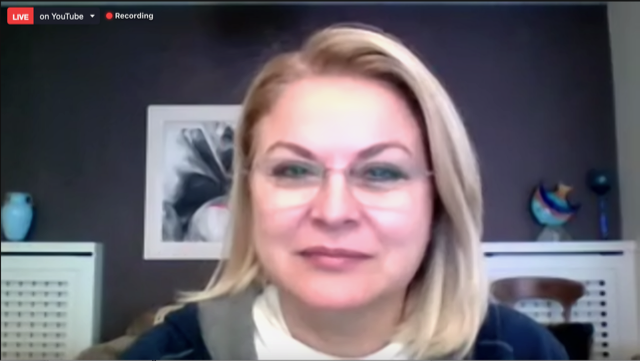
Prof. Dr. Arıboğan: “We found ourselves in a situation that can happen once in a hundred years”
Prof. Dr. Deniz Ülke Arıboğan stated that the pandemic has created very serious global effects worldwide; “The pandemic has touched everyone’s lives. This issue contains not only physical health problems but also very intense psychological problems. It is a highly traumatic event. We found ourselves in something that can happen once in a hundred years. This is not something every generation can see, which is why it shook the entire world. Such an epidemic, since 1918, had never crossed our minds or imaginations, and although we talked about it from time to time, it was not an issue we had internalized. It is such a traumatic thing that it entered people’s homes through their loved ones. We faced a period where not only touching a friend or colleague, or spending time with them, but even our closest ones at home could pose a vital threat to us, forcing us to remain very cautious.” She said.
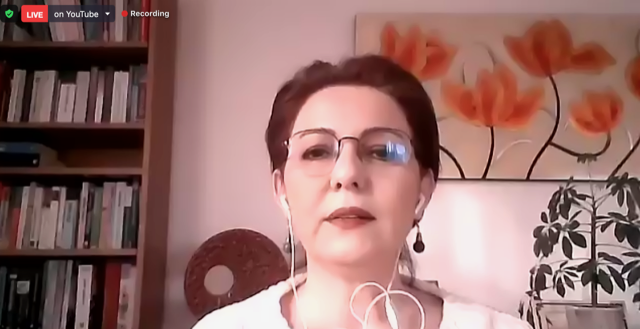
Assoc. Prof. Dr. Odabaşı: “Epidemics have affected society and the political perspective”
Assoc. Prof. Dr. Hadiye Yılmaz Odabaşı said, “If you look at the last periods of the Ottoman Empire, it was said that epidemics would affect the destiny of nations. Epidemics have largely affected society and the political perspective.” She said.
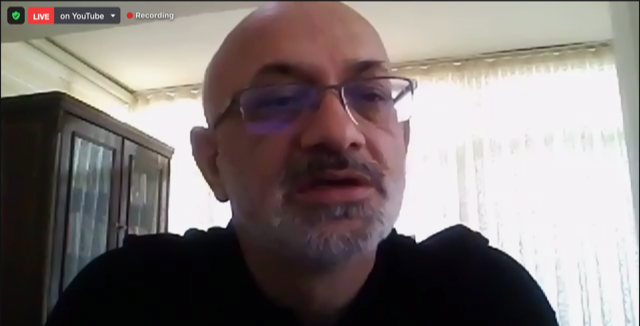
Dr. Lecturer Osmanoğlu: “The Renaissance and Reformation processes were seriously affected by the Black Death”
Director of the Turkish World Philosophy Research Application and Research Center, Ömer Osmanoğlu, stated that important historical figures and eras were also affected by epidemics; “There have been similarities in developments arising from epidemics. For example, the philosophical approaches of Socrates, Aristotle, and Plato were seriously affected by the Athens plague. On the other hand, developments in the modern age, the Renaissance and Reformation processes, were seriously affected by the Black Death.” He spoke.
Dr. Lecturer Akif Bahadır Kaynak, evaluating the economic impact of the epidemic, said; “When we try to create a historical background, the epidemic deals with epidemics as old as human history. On the other hand, what we call the global capitalist system is the child of the Industrial Revolution. Therefore, we may not have many historical examples to analyze epidemics and the global capitalist system together.” He said.
Share
Request a Call
Other News
- The book that read today's digital threats in 2014: Being a Conscious Family
- Experts warn: 'Instead of memorizing letters, teach pencil grip, scissor use, and coloring'
- School fear and school love both start in the family!
- Family is not merely transforming, it is being battered under a serious assault
- Artificial intelligence opens the door to early diagnosis in autism!