

The theme of this year's International Congress of Positive Psychology, the 4th of which was organized by Üsküdar Üniversitesi, was determined as “Psychological Resilience.” In the opening ceremony of the congress, which was held in a fi-jital format and brought together prominent figures in this field from around the world and our country, a Loyalty and Gratitude Award was presented in memory of Prof. Dr. Doğan Cüceloğlu. Üsküdar Üniversitesi Founding Rector Prof. Dr. Nevzat Tarhan stated that the basis of positive psychology is to see both the positive and the negative, and then focus on the positive. Tarhan said, “Positive psychotherapy is a method of treatment without causing wounds. If non-surgical treatment is the primary option in the medical field, in therapy, when a person's positive character strengths are empowered, the body overcomes the illness itself.”
Content
“Psychological Resilience” discussed at the 4th International Congress of Positive Psychology
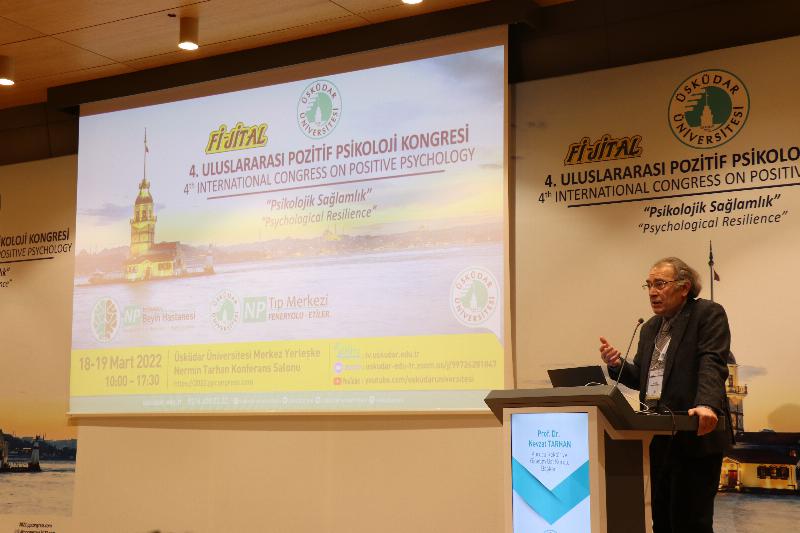
The Üsküdar Üniversitesi 4th International Congress of Positive Psychology brings together international experts working in this field. The congress, which will continue for two days at Üsküdar Üniversitesi Central Campus, is being held in a fi-jital format within the scope of pandemic measures.
Psychological resilience discussed in all its aspects
With the impact of the pandemic, which has been part of our lives for the last two years and caused us to make changes in many areas of our lives, this year's theme of the congress was determined as “Psychological Resilience.” The congress hosts national and international competent names who work in the field of positive psychology and make significant contributions to the field.
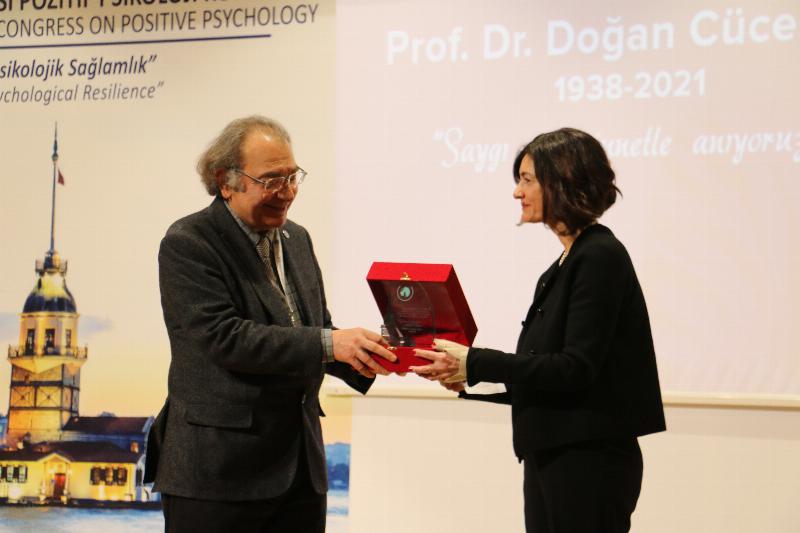
Loyalty and Gratitude Award presented in memory of Prof. Dr. Doğan Cüceloğlu
At the congress, a Loyalty and Gratitude Award ceremony was held in memory of the late Prof. Dr. Doğan Cüceloğlu. The loyalty and gratitude award was presented to Cüceloğlu’s wife, Psychotherapist Yıldız Hacıevliyagil Cüceloğlu. Thanking Üsküdar Üniversitesi for the award, Yıldız Hacıevliyagil Cüceloğlu said, “My dear husband dedicated his life to creating awareness for the positive development of our society and contributing to it, so that our children’s potential in family and school environments could develop like a free tree, rather than being pruned like a bonsai. He worked tirelessly for this. As he always said and suggested, he did his best with enthusiasm. He used to tell my bird and bagel story. He would say, ‘Having just the bagel is not enough; there is also a need for birds.’ I see it now. His students are not just our colleagues, but also parents, teachers, and students who believe in his ideal that our children should live their childhoods to the fullest and become the best people they can be. This gives me hope for the future.”
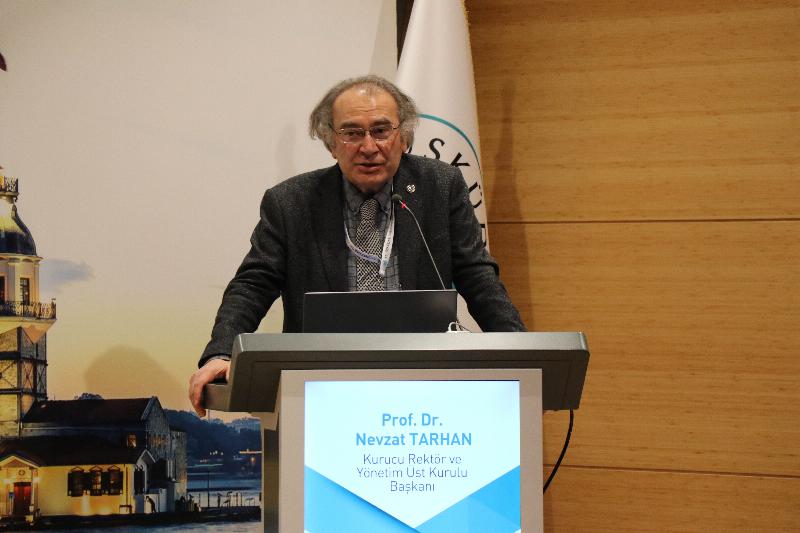
Prof. Dr. Nevzat Tarhan: “Classical psychology also has a field dealing with improvement”
In his opening speech, Üsküdar Üniversitesi Founding Rector Prof. Dr. Nevzat Tarhan stated that the duty of universities is to produce science, generate ideas, and strive for the happiness and well-being of humanity, adding, “We continue with congresses to contribute to the development of science and to help humanity be happier with new developments in the world. Martin Seligman, known as the founder of positive psychology, is a philosopher by training. He later became interested in psychology and advanced in that direction academically. He saw that, besides the field of classical psychology dealing with the negative, there was also a field dealing with improvement, and he expressed that he should work on that too.”
Prof. Dr. Nevzat Tarhan: “We first expressed this in Turkey”
Stating that positive psychology received a lot of criticism when its theoretical foundations were first put forward, Prof. Dr. Nevzat Tarhan continued his words:
“There were many objections, saying that its theoretical foundations were a repackaged version of humanistic psychology. We first expressed this in Turkey in the 2010s. At that time, colleagues objected to us, saying, ‘Are you going to be Pollyannas?’ In the 2000s, a statistic was published in the USA. There is a report by the US Children’s Defense Fund titled ‘A day in the life of children under 18.’ The report revealed that 135,000 children carried guns to school every day. In addition, there was an increase in incidents such as suicides and adolescent pregnancies. Income levels had risen, but there was no parallel increase in happiness levels. Following this, the existence of a virus causing depression in humans was investigated, but the exact cause could not be found. There was loneliness and unhappiness. A fund was provided to Martin Seligman and his team. Seligman and his team conducted a three-year study from 2005 to 2008. They completed the work in 2008 and held the first positive psychology congress in 2009. Afterward, Harvard University added positive psychology as a course in 2015, Yale University in 2018, and Bristol University in 2019. Bristol University announced that it added it to its curriculum under the name ‘Solution to the Suicide Epidemic.’ As Üsküdar Üniversitesi, we also added it to our curriculum in 2013.”
Prof. Dr. Nevzat Tarhan: “Positive psychology sees the negative but focuses on the positive”
Stating that positive psychology is often confused with Pollyannaism because it emphasizes focusing on the positive, Prof. Dr. Nevzat Tarhan said, “Pollyannaism involves not seeing the negative at all and ignoring it. But the basis of positive psychology is to see both the positive and the negative, and then focus on the positive. A good person is not someone who does not know evil. A good person knows both evil and good and chooses good. In positive psychology, similarly, we will know negative and positive psychology and focus on the positive. When we look, we see that classical psychology focuses on correcting pathology. Our primary duty is to correct pathology. We correct pathology, but we also need to take measures to prevent its recurrence.”
Prof. Dr. Nevzat Tarhan: “When positive aspects in a person are strengthened, negative aspects also strengthen”
Emphasizing that psychotherapy techniques focused solely on the negative also remain limited at some point, Prof. Dr. Nevzat Tarhan said, “Martin Seligman introduced the concept of character strengths. When the positive aspects of character are strengthened, in many cases, the negative aspects improve by themselves. A serious transformation is currently taking place in medicine. In classical medicine, surgeons would say, ‘we open, we look, we close’ when they couldn’t diagnose a patient. Surgery is a trauma. Complications could occur. Even an appendectomy has a 1% risk of complications. In current medicine, surgical operations are performed laparoscopically. We can talk about medicine that does not cause wounds, does not damage tissues, and respects tissues. Positive psychotherapy is also a method of treatment without causing wounds. If non-surgical treatment is the primary option in the medical field, in therapy, when a person’s positive character strengths are empowered, the body overcomes the illness itself.”
Prof. Dr. Nevzat Tarhan: “Humanism gave rise to egocentrism”
Emphasizing that positive psychology should not be considered a repackaging of humanism, Prof. Dr. Nevzat Tarhan said, “Positive psychology is nothing like humanism. Humanism centers and sanctifies the individual. It accepts that the individual is important, not the family or society. Humanism gave rise to egocentrism and inflated the ego. In positive psychology, there is no inflating of the human ego. In positive psychology, there is self-knowledge, self-questioning, and self-awareness. Then there is empathy, social consciousness, and knowing others. The fourth stage involves relationship management. When these four are done, a person makes healthy decisions on their life path. Putting these into action is very important.”
Prof. Dr. Nevzat Tarhan: “The origin of positive psychology lies in Anatolian wisdom”
Stating that Mindfulness therapies are third-wave psychotherapies, Prof. Dr. Nevzat Tarhan said, “In some schools in America, students are suddenly taken for mindfulness training in the middle of a lesson. In fact, this exists in our Anatolian wisdom and knowledge. The origin of most of this knowledge is Anatolian wisdom. It has not been referenced much, but this is the truth. Since it is compatible with our values, it is easier to keep it alive and revitalize it. Dealing with pathology is also important. If we can develop policies by strengthening the positive in human relations without neglecting pathology, the world will be a more livable place. If the International Congress of Positive Psychology can serve to make the world more livable, then we will have fulfilled our duty. Speaking of positive psychology, we gratefully commemorate the late Prof. Dr. Doğan Cüceloğlu, whose books left a mark on many people.”
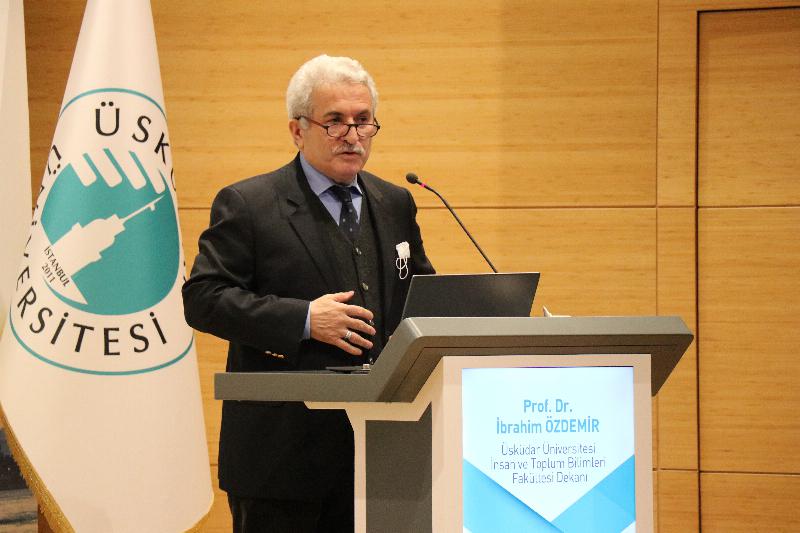
Prof. Dr. İbrahim Özdemir: “It will contribute to knowing ourselves”
Among the opening speakers of the congress, Prof. Dr. İbrahim Özdemir, Dean of the Faculty of Humanities and Social Sciences at Üsküdar Üniversitesi, stated that as humans, we must know ourselves, saying, “The saying ‘He who sees beautifully thinks beautifully, he who thinks beautifully enjoys life’ came to my mind. Because beauty is a human emotion. Kant, Plato investigated the source of beauty, and only humans appreciate beauty. If one does not appreciate beauty, if one does not see beauty and have beautiful thoughts, then there is a problem in our humanity. Socrates taught young Athenians to know themselves, morality, and virtuous living. When questioned, he never defended his weeping wife and children. He defended law and morality, arguing that his accusers judged unlawfully. He said, ‘I am going because I am moral.’ I believe our symposium will make a great contribution to knowing ourselves, coping with the problems we face every day, standing firm, and not giving up.”
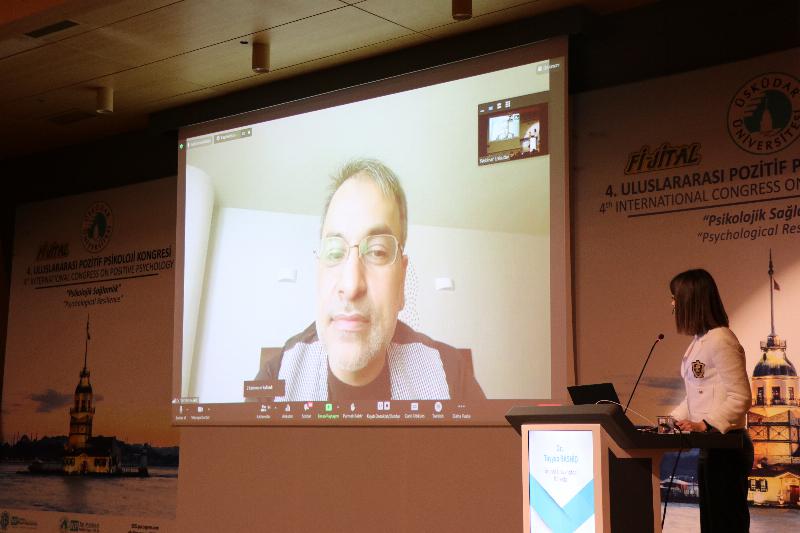
Dr. Tayyab Rashid: “We can develop psychological resilience by recognizing our strengths”
Psychologist Dr. Tayyab Rashid, known for his work in positive clinical psychology and positive psychotherapy at the University of Toronto, Canada, gave an opening lecture titled “Building Resilience in the New Normal” at the congress, which he attended online. Noting that the concept of psychological resilience has come to the forefront after the pandemic, Dr. Tayyab Rashid also conducted a survey among participants during his conference. According to the survey, which asked about the factors that most harmed psychological resilience during the pandemic, participants most frequently reported anxiety, negativity, pessimism, pandemic fatigue, boredom, and feelings of social isolation, respectively. Psychologist Dr. Tayyab Rashid stated that for psychological resilience, one needs to focus on their strengths, saying, “We defined anxiety as a close cousin of depression. It is frequently seen today. Anxiety has always been a part of human history. It is important to also be aware of our strengths. A period without anxiety may never exist. But the question to be asked is: Can we fight anxiety with our strengths? Because only in this way can we develop psychological resilience. One of the best aspects of coping with difficulties will be to focus on our strengths. Because when we focus, it means we will develop a perspective.”
Dr. Gunther Hübner: “Safe environment and secure attachment are important in resolving traumas”
Dr. Gunther Hübner from the German Institute of Positive Psychotherapy, who works on children, adolescents, and families, and has studies on conflict resolution and burnout, attended the congress online and gave examples of the methods and case studies he uses in positive psychotherapy in his presentation titled “Symptoms and Their Meaning Based on Positive Psychotherapy.” Dr. Gunther Hübner emphasized the importance of a safe environment and secure attachment in resolving traumatic events, in particular, and highlighted the significance of step-by-step information.
Deniz Altınay: “Healthy individuals can only exist with healthy societies”
Among the speakers of the congress, Expert Psychological Counselor Deniz Altınay, President of Istanbul Psychodrama Institute, participated with her presentation titled “Psychological Resilience in the Context of Psychodramatic Theories and the Philosophy of the Moment.” Deniz Altınay stated that healthy individuals can only exist with a healthy society, saying, “It is evident that for psychological resilience to be increased, society must be healthy and thus addressed.” Deniz Altınay also touched upon the relationship between action and psychological resilience, saying, “The courage to act enables problem-solving, adaptability, and self-expression. There is no moment without action.”
Dr. Louise Lambert from Canadian University Dubai, who attended the congress online, gave a presentation titled “How Can Positive Psychology Build Resilience Against Climate Change?”
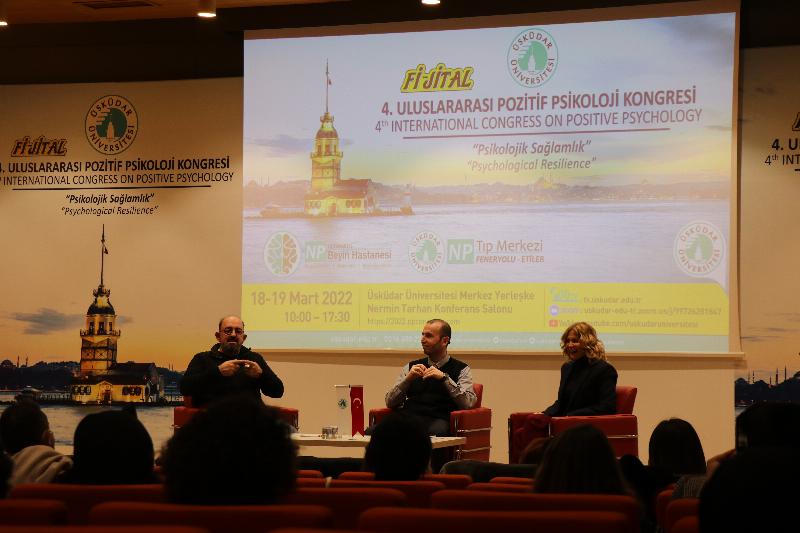
On the first day of the congress, in a panel titled “Being Instead of Doing,” moderated by Assoc. Prof. Dr. Asil Özüdoğru from Üsküdar Üniversitesi’s English Psychology department, Prof. Dr. Zümra Atalay from MEF University and Prof. Dr. Sinan Canan from Üsküdar Üniversitesi were panelists. Workshops were held on the first day of the congress.
Prof. Dr. Gökben Hızlı Sayar’s conference on “Psychological resilience during the pandemic”
The second day of the congress, which will continue on Saturday, March 19, will begin with a conference titled “Psychological Resilience During the Pandemic” by Prof. Dr. Gökben Hızlı Sayar, Psychiatry Specialist at Üsküdar Üniversitesi Faculty of Medicine, Department of Mental Health and Diseases, NP Feneryolu Medical Center. The last day of the congress will continue with various conferences, including “Mental Map of Child-Adolescent Psychological Resilience” by Expert Psychologist Counselor Kudret Eren Yavuz from Üsküdar Üniversitesi, and “Post-Traumatic Growth” by Meral Aydın, President of the Masterson Institute Turkey.
Prof. Dr. Nevzat Tarhan: Emotional Intelligence in Marriage
The congress will conclude with a panel where Prof. Dr. Nevzat Tarhan, Founding Rector of Üsküdar Üniversitesi and also the congress president, will give a speech titled “Emotional Intelligence in Marriage.” Among the other speakers of the panel titled “Emotional Intelligence in Child Rearing, Education, and Business Life in Marriage,” Üsküdar Üniversitesi Rector's Advisor Prof. Dr. Sırrı Akbaba will also contribute with his speech titled “Emotional Intelligence in Education.”
The congress program, which will be attended by many experts in the field, will consist of conferences, panels, workshops, paper, and poster presentations related to positive psychology.
The opening ceremony of the congress was broadcast live on Üsküdar Üniversitesi TV and Üsküdar Üniversitesi’s official YouTube channel.
For more comprehensive information about the 4th International Congress of Positive Psychology: http://www.ppcongress.com/2022/kongre-ana-konulari
Share
Request a Call
Other News
- Experts warn: 'Instead of memorizing letters, teach pencil grip, scissor use, and coloring'
- School fear and school love both start in the family!
- Family is not merely transforming, it is being battered under a serious assault
- Artificial intelligence opens the door to early diagnosis in autism!
- Artificial intelligence doesn't end engineering, it transforms it!