

Üsküdar Üniversitesi, the third of the monthly e-seminars organized by the Association of Defenders of Justice (ASDER) and the Association of Strategic Research Center of Defenders of Justice (ASSAM) took place. This month's guest of the event, Retired Faculty Member of Constitutional Law Department Prof. Dr. Servet Armağan, “Fundamental Rights and Freedoms in Islamic Law, Islamic Union Human Rights Court” made evaluations under the title of.
Content
3rd ASSAM-ASDER Monthly E-Seminar Held
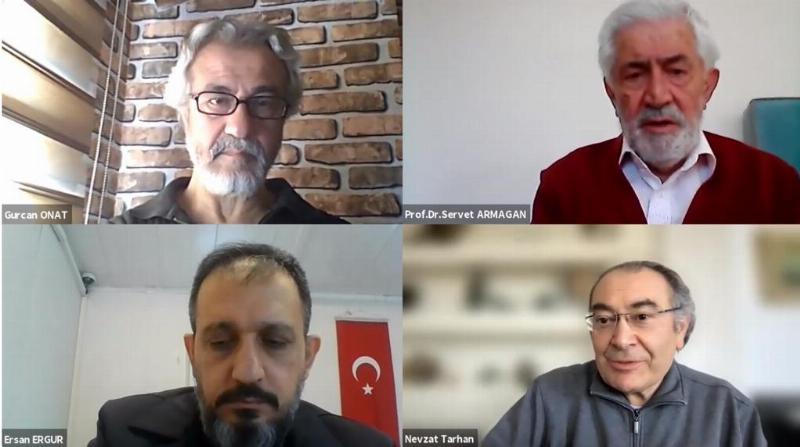
“Elements such as democracy, elections, and media are tools for expressing thoughts”
In the program, which was also attended by Üsküdar Üniversitesi Founding Rector Prof. Dr. Nevzat Tarhan, Armağan addressed the place of fundamental rights and freedoms in Islamic law; “In old Fiqh books, that is, in Islamic law books, there is no section titled Fundamental Rights and Freedoms. Old Fiqh books mostly examine topics such as marriage, divorce, and homicide after the emergence of shareholders and the submission of works. However, the subject we refer to as fundamental rights and freedoms, and which we discuss in our century, has not been presented as a separate section. It has been scattered within various topics. The absence of representative democracy and press instruments caused this. Because representative democracy, elections, parliament, newspapers, and media elements are tools for people to express their thoughts and benefit from rights and freedoms.” He said.
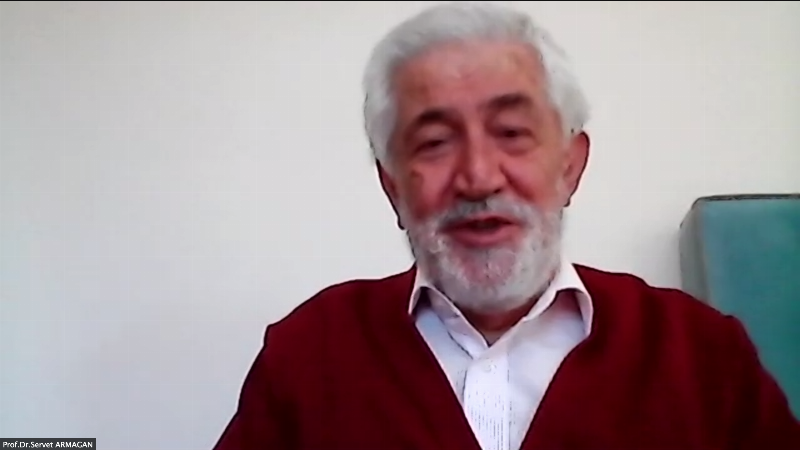
“There are many things related to rights and freedoms in the Farewell Sermon”
Referring to the book of the 1982 Constitution of the Republic of Turkey with the latest amendments, Armağan said; “When we talk about Fundamental Rights and Freedoms in Islamic Law, its sources are verses, hadiths, and the Farewell Sermon; these are our main pillars in this regard. Because there are many things related to rights and freedoms within the Farewell Sermon. That is why I included the text of the Farewell Sermon as an appendix to my book. I also included all additional texts such as the Universal Declaration of Human Rights, the French Declaration of the Rights of Man and of the Citizen, and the European Convention on Human Rights, for readers to benefit from. While writing this book, I based it on the systematic structure of the Constitution. Because this is a modern distinction. The 1982 Constitution is a constitution made in the modern era. According to the arrangement of this constitution, we see the regulation of Fundamental Rights and Freedoms first, followed by the division of freedoms into four parts. The first is personal freedoms, the second is economic and social rights, the third is political rights, and the fourth is economic rights, written in four sections. I also maintained the same sections so that people receiving modern education today can understand it more easily.” He spoke.
“All fundamental rights and freedom regulations in the Constitution also exist in Islamic law”
Prof. Dr. Armağan, who also spoke about the fundamental sources of Islamic law; “When human rights are mentioned, human rights declarations come to mind. For example, the 1948 Universal Declaration of Human Rights, the 1989 Declaration of the Rights of Man and of the Citizen, the European Convention on Human Rights. Even the African Union has some unique declarations of its own. But the most modern and developed are the arrangement and advanced form of the United Nations and European Human Rights Declarations. All constitutional regulations of fundamental rights and freedoms also exist in Islamic law. For example, personal security, personal freedom, and the privacy of private life. Those who teach secular law, without knowing this, used to say, ‘The privacy of private life does not exist in Islamic law.’ An English jurist came to Istanbul to give a conference. He said, ‘We only began to recognize and understand the privacy of private life at the end of the 19th century, in the 20th century. That is, the world understood this very late.’ I, there, gave an example by saying, ‘The privacy of private life is regulated in the hadiths and verses of our Prophet.’ There are verses that say, ‘Enter houses through doors, do not enter by climbing over walls or forcing windows.’ The English professor said it was the first time he had heard that such a thing was regulated in Islamic law. In short, all the freedoms accepted in the modern world today and included in the 1982 Constitution, and even more, have been regulated based on these three fundamental sources of Islamic law.” He stated.
Share
Update Date: February 27, 2026
Creation Date: March 29, 2021
Request a Call
Other News
- The book that read today's digital threats in 2014: Being a Conscious Family
- Experts warn: 'Instead of memorizing letters, teach pencil grip, scissor use, and coloring'
- School fear and school love both start in the family!
- Family is not merely transforming, it is being battered under a serious assault
- Artificial intelligence opens the door to early diagnosis in autism!