Every year since 1992, October 10 has been observed as 'World Mental Health Day' at the initiative of the World Federation for Mental Health. The aim of this special day is to draw attention to the importance of mental health and create awareness. This year's theme was announced as 'Make Mental Health & Wellbeing a Global Priority'.
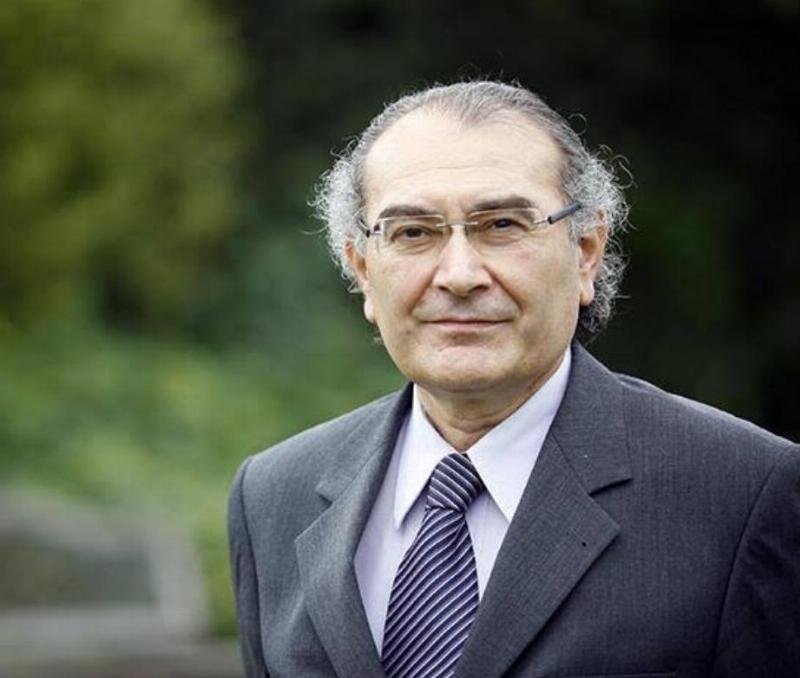
Uskudar University Founding Rector, Psychiatrist Prof. Dr. Nevzat Tarhan emphasized the importance of psychological resilience in children and adults, offering important advice especially to parents.
Increase in Global Adolescent Suicides
Psychiatrist Prof. Dr. Nevzat Tarhan stated that the World Health Organization (the theme was determined by the World Federation for Mental Health - https://psikiyatri.org.tr/3648/10-ekim-2022-dunya-ruh-sagligi-gunu-ruh-sagligi-ve-ruhsal-iyilik-halini-kuresel) launched its 'global priority for everyone' campaign this year within the scope of October 10 World Mental Health Day. He said, 'The campaign started a few days ago. Mental health problems globally increased by 25 percent during and after the pandemic. Many problems were postponed during the pandemic. Globally, adolescent suicides have shown an increase. Many crimes, acts of violence, and substance use incidents have increased. Following all these developments, the World Health Organization launched a global awareness campaign. The aim is to make mental health and well-being a global priority for everyone. Here, the word 'refah' (well-being) is translated as psychological resilience. Psychological resilience relates to a person's ability to cope when faced with any risk factor such as an accident, disaster, illness, homelessness, economic hardship, or natural disaster. Psychological resilience comes from the word 'resilience'. This word is also defined as flexibility, the ability to bend and return to its original state.'
There are 3 different temperament types
Prof. Dr. Nevzat Tarhan said that no one is immune to harm and continued:
'Even the wealthiest person is not immune to harm. There is a concept of authentic happiness. Authentic happiness is true happiness and means being happy in every situation. A person can be happy both in prison and in a palace. Possessing such happiness also requires psychological resilience. Being happy in every situation. There are 3 temperament types. Sponge-type people absorb every stress, are constantly complaining, cry, empathize with everyone's troubles, and are always sad. These people always affect those around them negatively. Even if they are well-intentioned, they are always sad. People called Teflon types do not burn themselves but burn others. They are carefree, remain alone, and suffer the pain of loneliness. They wear out more easily because they are alone in a small crisis. The third type of people are described as rubber types. Such people, even if they fall in the face of life's difficulties, get up again. They fall, get up, and see the traumas they experience as developmental traumas. A person experiences a trauma, pain, disappointment, or difficulty and overcomes that difficulty. Because they overcome it, they learn something. We call this resilience training.'
One Should Seek Challenges and Struggle
Prof. Dr. Nevzat Tarhan stated that there are children raised like little rulers of the house or 'cotton princesses' whose every wish is granted. He said, 'There are constantly sad princesses. They frequently fall into depression and are easily hurt. When their wishes are not met, they immediately become depressed. This is even called 'emo' in youth jargon, meaning emotional or sad. There is a need for a stress vaccine. There should be stress, and if stress is low, one should not be afraid. One should seek challenges and struggle. In our belief system, there is the Ramadan fast. It is a stress, but since it is voluntary, it becomes a kind of resilience training. The ability to postpone not only the stomach's desires but also many other urges and wishes is acquired against hunger. That's why those who prepare in advance can endure it. Just as the resilience provided by being trained as a soldier in a war gives a person the strength to overcome difficulties, one should prepare oneself for life's events and economic crises through psychological resilience training.'
A 4-minute Sit-Down Penalty Teaches a Child Skills
Prof. Dr. Nevzat Tarhan stated that when a child's every wish is granted, they eventually become a child who shakes their parents. He said, 'One of the greatest harms that can be done to a child is to grant their every wish. For example, a child cries for chocolate, and the mother immediately gives it. These are educational and behavioral mistakes. In fact, if the mother says, 'Okay, my daughter/son, finish your homework, then I'll give it to you,' or 'Look, my child, I will do what you want, but you have a responsibility; first, do your responsibility, and then I will do this,' the child will gain the ability to postpone gratification. For instance, instead of yelling when a child misbehaves, a 4-minute sit-down penalty can be given. The child gains self-resistance; this is how internal control training works. It can also be called psychological resilience training. In psychological resilience training, hope is needed. Hope is the greatest protective factor. Without hope, a person loses all their resilience.'
The Mother is the Child's Role Model and Sacred Figure
Prof. Dr. Nevzat Tarhan noted that the mother is sacred because the child chooses the mother as a role model. He said, 'Mothers and fathers are the child's heroes. Doing what they say is sacred in the child's world. It is necessary not to diminish the mother's authority and power. If the mother is resolute and consistent, we call this discipline with love. If there is loose discipline or a permissive parenting style, the child cannot learn what to do where. For example, if a mother kisses her child in the morning and then in the afternoon says, 'God damn you, why did I give birth to you?' the child cannot learn whether their mother loves them or not. Therefore, consistency is important.'
One Should Be Able to Discuss Right and Wrong with the Child
Prof. Dr. Nevzat Tarhan stated that a parent becoming friends with their child happens with a purpose. He said, 'If the parent engages in conversations with the child about goals while progressing towards a purpose, the child learns about life. A close horizontal relationship between mother, father, and child is important. Then the child can ask the mother and father everything. In an educational system where parents are feared, children obey. But after adolescence, the feeling of autonomy increases. When the child's expectations are high, they start to detach from their parents after a while. That is why freedom has become sacred. In such situations, the child can completely detach from the family reactively. Both love and anger develop in the child towards the parents. For this not to happen, parents must be able to discuss both right and wrong with the child. If there is friendship, they must be able to talk. It should not be obedience out of fear, but voluntary obedience. The fear of losing parents, their love, and their attention is enough fear for the child.'
The Child Observes Their Parents
Emphasizing that parental attitude and being proper role models are very important for the development of a child's psychological resilience, Prof. Dr. Nevzat Tarhan said, 'If parents are consistent, can show a positive approach in positive events, or remain calm instead of blaming others and cursing when something goes wrong, the child also becomes calm. The best teachers for a child are their mother and father. Some say, 'Oh, get your children away from there' during natural disasters. No, the child should stay there. Like the mother and father, the child will also be calm, learning a difficulty of life by experiencing it. It is not about escaping, protecting, and living in a glass dome, but about preparing them for life. Parents should prepare the child for life instead of dominating them.'
Psychological Resilience Increases with Age
Emphasizing the importance of emotional, behavioral, and social resilience in addition to educational resilience, Prof. Dr. Nevzat Tarhan said, 'The child develops by experiencing all these. Young people are more fragile in this regard. As one ages and develops, psychological resilience increases, and one becomes calm in the face of life's events. Psychological resilience is easy to talk about but not easy to implement. The first step of psychological resilience is self-awareness. That is, someone who knows themselves, their strengths and weaknesses, knows better where and how to take a step. It's like knowing where you are on a map. The second step is self-management, which means being able to manage one's own desires, impulses, and wishes. The third step for this psychological resilience is emotional intelligence training, which is also social consciousness and empathy. It means being able to consider the feelings, rights, and needs of the other party.'
Healthy Social Relationships are Related to Psychological Resilience…
Prof. Dr. Nevzat Tarhan stated that a person who can establish healthy social relationships possesses psychological resilience. He said, 'An important skill of psychological resilience is having the ability to solve problems effectively and completely. When faced with a problem, seeing it not as a threat or an enemy but as an obstacle to be solved and overcome is related to what we call 'problem-solving' skills. We are working on problem-solving skills. The path to success for those who have overcome life's difficulties is not paved with flowers. That path is paved with stones and obstacles, and overcoming them is important. Therefore, one should not be afraid of challenges.'

