

Within the scope of the TÜBİTAK 1002-C Natural Disasters Focused Field Study Emergency Support Program, Üsküdar scientists conducted investigations in the earthquake region of Hatay. The team, carrying out studies in the region within the scope of the project titled "Investigation of Respirable Dust Concentration Formed in the Region Due to the Demolition of Structures and Search and Rescue Operations After the Earthquake", performed dust measurements in the field that can cause lung cancer as an occupational disease during the search and rescue and debris removal phases.
Content
Üsküdar Researchers in the Earthquake Zone…
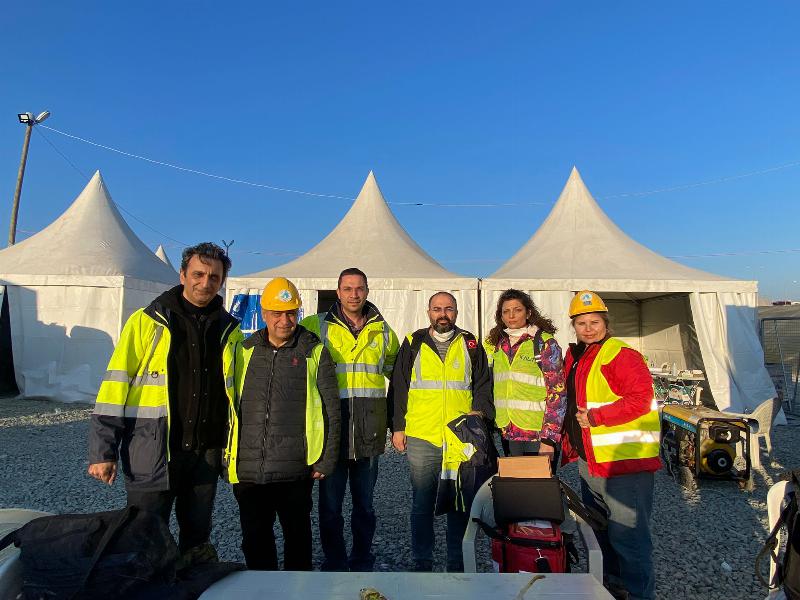
The project team, led by Assist. Prof. Dr. Rüştü Uçan, Head of the Occupational Health and Safety Department at Üsküdar Üniversitesi Faculty of Health Sciences, traveled to Hatay immediately after the earthquake for their field work. Observations regarding Occupational Health and Safety were made during the research conducted between February 16 and February 22. According to the observation results, search and rescue teams, NGO personnel, and military personnel in the field were warned about mask usage.
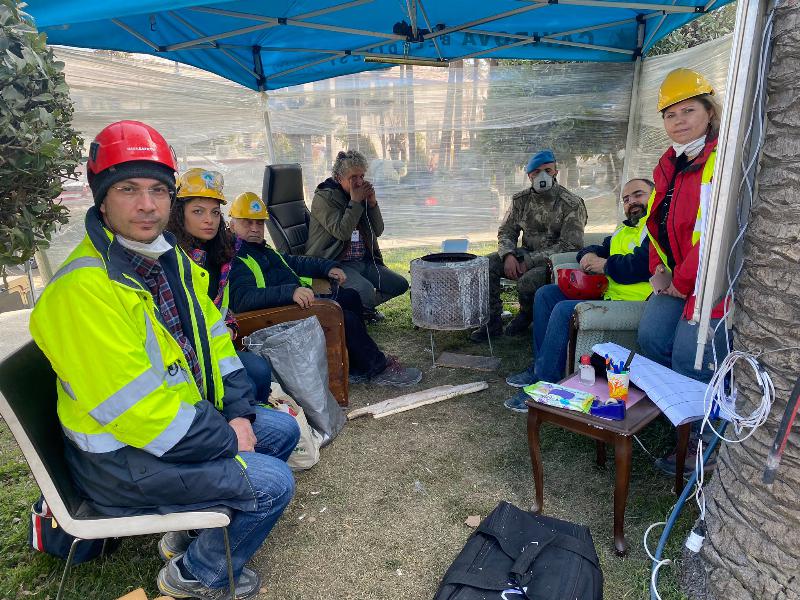
The coordination of the project, accepted by TÜBİTAK, was carried out by Res. Assist. Tuğçe Oral from the Occupational Health and Safety Department of Üsküdar Üniversitesi Faculty of Health Sciences.
The project team included Prof. Dr. Emine Can, a faculty member in the Physics Engineering Department, Faculty of Engineering and Natural Sciences, İstanbul Medeniyet Üniversitesi; Assoc. Prof. Dr. Müge Ensari Özay, a faculty member in the Occupational Health and Safety Department, Üsküdar Üniversitesi Faculty of Health Sciences; Assoc. Prof. Dr. Ayşe Coşkun Beyan, from the Medical Services and Technician Department, Vocational School of Health Services, Dokuz Eylül Üniversitesi; Assist. Prof. Dr. Rüştü Uçan, Head of the Occupational Health and Safety Department, Üsküdar Üniversitesi Faculty of Health Sciences; Lecturer Dilek Aker, from the Nuclear Technology and Radiation Safety Department, Üsküdar Üniversitesi Vocational School of Health Services; and Onur Taşkınoğlu and Kenan Çelik, Occupational Hygiene Laboratory Supervisors from the İstanbul Metropolitan Municipality (İBB) Occupational Health and Safety Directorate.
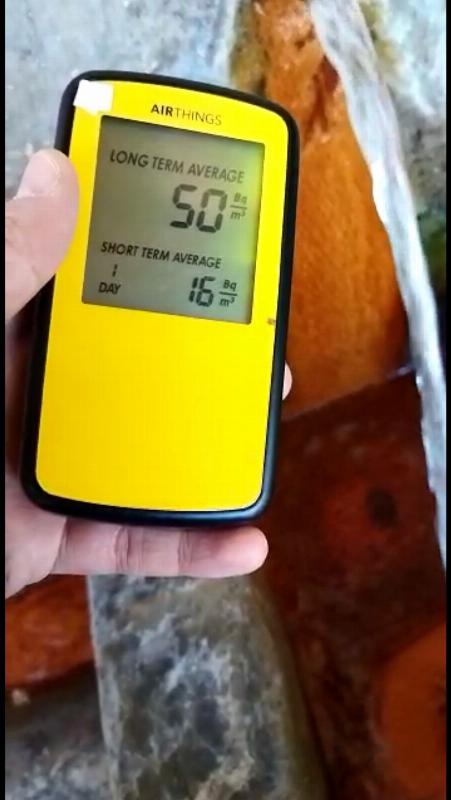
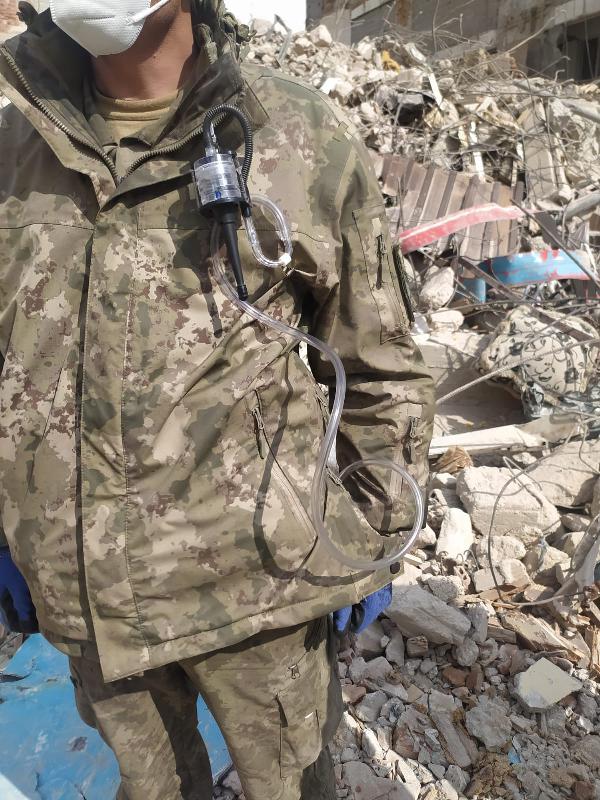
Within the scope of the project, it was aimed to reveal the effects of structures demolished after the earthquake on both earthquake victims exposed to respirable dust clouds formed during search and rescue operations, and on the search and rescue teams.
Among the project's objectives was to create an opportunity for early diagnosis and treatment through additional health screenings for earthquake victims and search and rescue teams exposed to respirable dust over time, and the importance of respiratory protective equipment and humidifying the environment as a decisive factor in health precautions during the debris removal process was emphasized.
For the respirable dust concentration measurement carried out in the field, the 'HSE MDHS 14/3 Method Gravimetric Analysis of Respirable & Inhalable Dust' method was utilized.
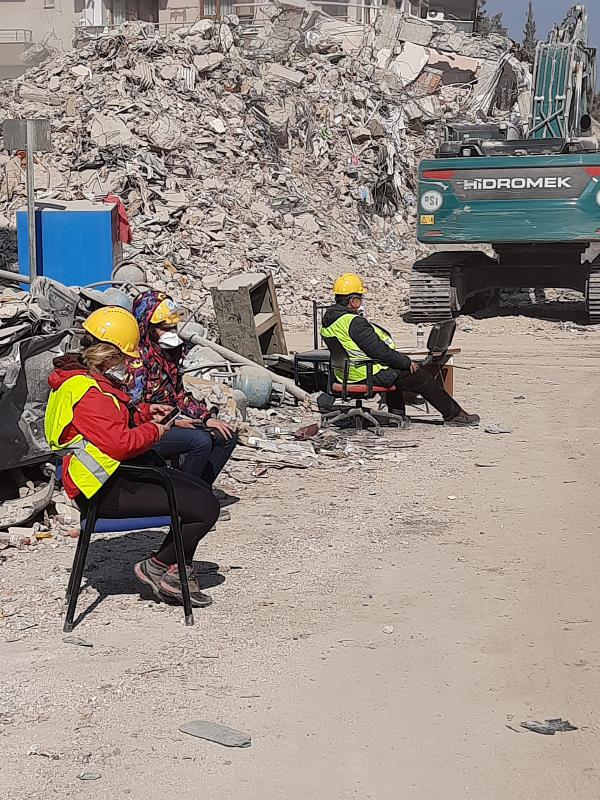
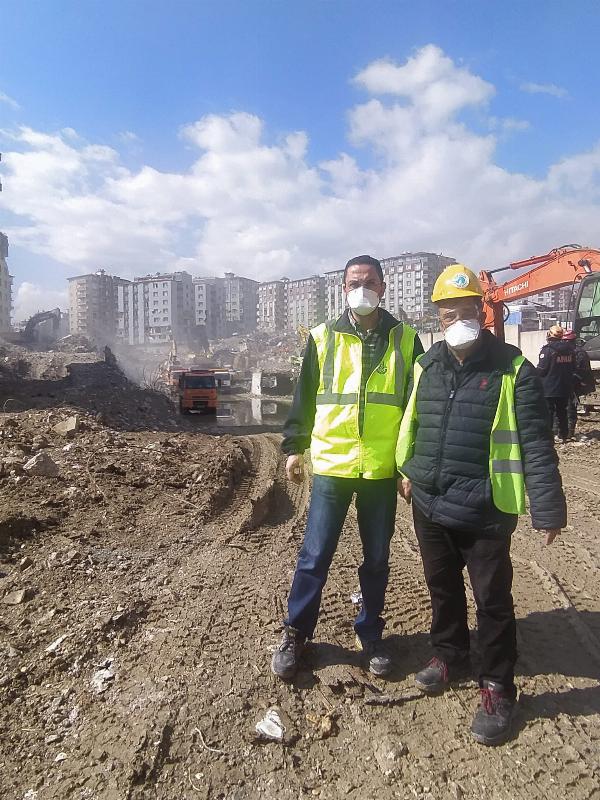
In cooperation with the İstanbul Metropolitan Municipality Occupational Health and Safety Directorate, studies were conducted in the earthquake region for 5 days in the measurement area using a dust sampling pump, utilizing the 'GilAir Plus Dust Sampling Pump, Zefon Filter, Radwag As 3100.x2 Plus Precision Balance' located in the Occupational Hygiene laboratory affiliated with the directorate. The collected samples were weighed in a suitable area, and the measured gram amount was calculated over an 8-hour period, and the amount of respirable dust to which individuals in the region were exposed was calculated in grams. Measurement durations and periods were determined by referencing the HSE MDHS 14/3 METHOD.
Following the five-day study, the results obtained will be shared in the coming days.
Share
Update Date: March 01, 2026
Creation Date: February 23, 2023
Request a Call
Other News
- Experts warn: 'Instead of memorizing letters, teach pencil grip, scissor use, and coloring'
- School fear and school love both start in the family!
- Family is not merely transforming, it is being battered under a serious assault
- Artificial intelligence opens the door to early diagnosis in autism!
- Artificial intelligence doesn't end engineering, it transforms it!