

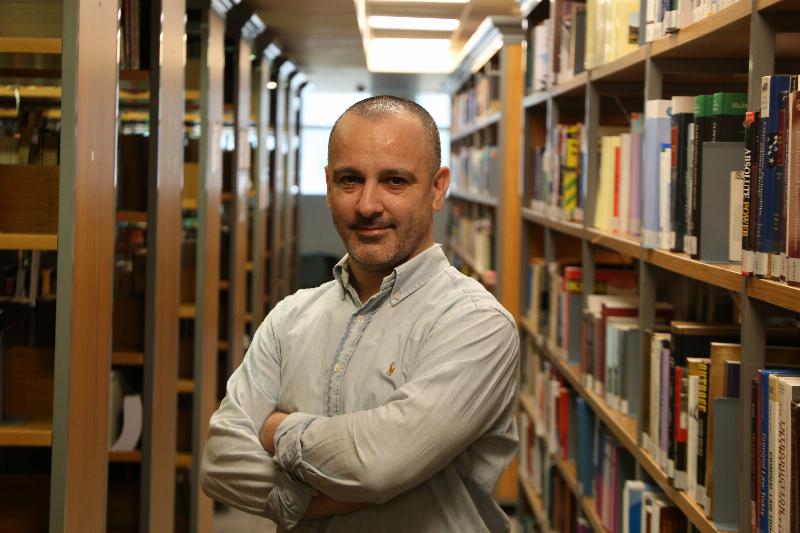
Üsküdar University Faculty of Engineering and Natural Sciences Head of Software Engineering Department Assoc. Prof. Dr. Türker Tekin Ergüzel, provided information on the In Silico concept, which refers to computational simulation and prediction models on computers that have emerged with the development of technology.
Content
The New Garden of the Scientific World: In Silico
SDG tags related to the news




Üsküdar University is undertaking significant studies with In Silico technologies, which operate on the principle of computational simulation and prediction models on computers. Head of Software Engineering Department Assoc. Prof. Dr. Türker Tekin Ergüzel pointed out that the university collaborates with leading universities and research centers in the USA, Canada, and the UK using In-Silico methods, achieving international recognition in this field. Ergüzel stated, "Our Neuroscience master's student, who drew attention with In-silico studies in previous years, completed the RIKEN Brain Science Institute's summer research program and continues their research in our Neuroscience doctoral program."
Could you explain the In-Silico concept to us?
70 years ago, Alan Turing started this process with the Turing Machine, the first intelligent physical system capable of making decisions, embarking with the question, “Can machines think?” Over time, these physical systems gave way to semiconductor technology and processors manufactured with silicon, operating with high speed and accuracy. The "In-Silico" concept, primarily used to mean computational simulation and prediction models on computers, has been frequently employed in recent years, alongside developments in computer technologies, increasing processor speeds, and the collection of high-resolution data. Computational methods, which attract researchers' interest with their high predictive capabilities, particularly in health sciences, led researchers to the concept of a "dry lab" with their use and high performance in the Human Genome project (started in 1990), the Blue Brain project (2005), and the Human Brain Research project (2013).
How have In-Silico methods found application in neuroscience?
The primary goal of the Blue Brain Project was to understand the brain's multi-level structure and function by creating biologically detailed digital models and simulations of first mouse brains, and ultimately human brains, using models and simulations designed with supercomputers. The studies using these computational methods and modeling algorithms were in fact a legacy that also defined the vision of the Human Brain Project. In the Human Brain Project, leveraging this accumulated knowledge, a radical approach focused on predictive neuroscience studies, and a brain model that algorithmically restructured the brain's structural and organizational operating rules was created. With the computational methods used, and the speed and capacity achieved, studies in the field of neuroscience have found their place in academic works, and as of 2021, the number of publications in this area has reached 30,000.
What do you aim for with In-Silico studies in the field of neuroscience?
Since its establishment in 2011, our university has been conducting data-intensive neuroimaging data analysis collected at NPİSTANBUL Brain Hospital, its application and scientific partner, together with its in-house software and computer engineers. Researchers at the artificial intelligence and intelligent systems application and research center, which works solely with the analysis of this data, and in the established therapeutic brain mapping and neurotechnology working group, are conducting studies to obtain neural biomarkers in various neuropsychiatric diseases and to create brain maps in healthy and diseased individuals. Research studies, which began with computational methods such as machine learning and feature selection, continue today with AI-supported deep learning-based models.
In Silico Neuroscience course offered at Master's level
Our researchers in the Neuroscience master's and doctoral programs within the Institute of Health Sciences conduct their studies using in-silico methods in cognitive neuroscience, clinical neuroscience, neurobiofeedback, neurotechnology, and bioinformatics laboratories. Given our university's competence, work, infrastructure, and academic expertise in this field, which also signals the importance we place on the development of in-silico research and the training of researchers, the "Theoretical and Computational Neuroscience" course currently offered in the master's program will be conducted under the name "In-Silico Neuroscience" starting next year. This same course is also offered as a 14-week course in the Natural Sciences and Engineering master's program at EPFL - Ecole Polytechnique Fédérale de Lausanne, the lead institution for the Blue Brain Project.
Do your In-Silico studies provide widespread impact?
Üsküdar University has research articles published in international peer-reviewed journals, with 60 of them within the scope of WOS, solely in the field of neuroscience. Furthermore, our university has long been conducting academic collaborations with research centers and brain research communities such as The Society for Brain Mapping and Therapeutics (SBMT), American Psychiatric Association (APA), International Brain Research Consortium (IBRC), EEG and Clinical Neuroscience Society (ECNS), and International Society For Neurofeedback & Research (ISNR).
Üsküdar University, working with significant universities and research centers in the USA, Canada, and the UK using its In-Silico methods, also possesses international recognition in this field. Our Neuroscience master's student, who drew attention with In-silico studies in previous years, completed the RIKEN Brain Science Institute's summer research program and continues their research in our Neuroscience doctoral program.
Golden Axon Leadership Award to Prof. Dr. Nevzat Tarhan
Additionally, in 2019, the Golden Axon Leadership Award, previously given to Nobel laureate Neuropsychiatrist Eric Kandel, was presented to Prof. Dr. Nevzat Tarhan by The Society for Brain Mapping and Therapeutics (SBMT) for his work in this field.
Share
Update Date: February 27, 2026
Creation Date: July 02, 2021
Request a Call
Other News
- Üsküdar University participated in an international exhibition with a child rights perspective
- Solidarity Bazaar for Palestine from Üsküdar Residents
- In additional placements, don't just choose a department, choose the profession of the future!
- 52 Erasmus students from 15 different countries at Üsküdar University
- Visit to Prof. Nevzat Tarhan from the Global Confederation of Civil Society Organizations