

Crucial advice from Psychiatrist Professor Nevzat Tarhan to university candidates on the eve of the exam… Stating that having exam anxiety is a very natural situation, Tarhan emphasized the importance of anxiety and stress management. Prof. Dr. Nevzat Tarhan noted that a sufficient amount of anxiety makes the brain work, saying, “If there is no anxiety in a person, the brain does not work. Therefore, zero stress is not beneficial, it is harmful. Controllable stress is beneficial. Uncontrollable stress is harmful.” Emphasizing that parental attitudes are important in coping with exam anxiety, Tarhan added, “Parental anxiety passes to the child. It is important to give the child the message, ‘You studied and did your best. We will wait and see the result.’ Hours before the exam, one should focus on the process, not the outcome.”
Content
Crucial Advice from Tarhan to Exam Candidates…
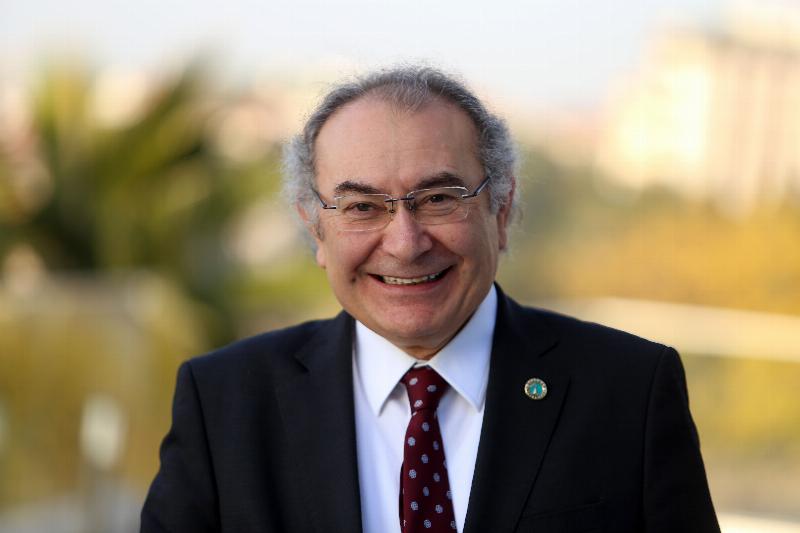
Prof. Dr. Nevzat Tarhan: “Controllable stress is beneficial”
Üsküdar Üniversitesi Founding Rector, Psychiatrist Prof. Dr. Nevzat Tarhan, made evaluations regarding anxiety disorders and coping with anxiety concerning the YKS to be held this weekend.
Performance expectation within a certain time frame increases anxiety
Prof. Dr. Nevzat Tarhan noted that the first session of the exams to be held on June 18 and 19 is a basic proficiency test, and the second session is a field proficiency test. He stated, “In our examination system, reducing the transition to higher education to a single exam greatly increases exam anxiety. The expectation of showing a certain performance within a certain period increases anxiety. This exam affects millions of people; young people become tense to avoid making mistakes. There are those who forget what they know when they enter the exam, those who leave the exam halfway, and those whose hands and feet tremble, causing them to slip the answers.”
Prof. Dr. Nevzat Tarhan, stating that the exam system also causes anxiety, and this anxiety is added to exam anxiety, said, “Exam anxiety doubles. This is something beyond their control. When evaluating the exam, young people should consider this: there are things they can control and things they cannot control. There are things within their power and things beyond their power. To make a correct distinction, they must definitely use their minds, intellect, and intelligence. If they do this, managing exam stress will be very easy.”
Anxiety makes the brain work!
Prof. Dr. Nevzat Tarhan stated that having exam anxiety is also quite natural, saying, “If there is no anxiety in a person, the brain doesn’t work... In anxious individuals, since they are not stimulated target-oriented or goal-oriented, the blood vessels in the brain do not dilate; they enter the exam like tourists, like a practice session. Even in practice, there is some stress. Therefore, zero stress is not beneficial, it is harmful. Controllable stress is beneficial. Uncontrollable stress is harmful.” Prof. Dr. Nevzat Tarhan pointed out that the perception that there will be no stress at all further increases stress, stating, “That's why we say there is stress, but no panic. What is there in panic? Loss of control.”
Prof. Dr. Nevzat Tarhan noted that when a person encounters an obstacle while moving towards their goal, anxiety arises. He said, “In such situations, 10-20 percent of what increases a person’s anxiety is the obstacles they face. 80-90 percent is their reaction to those obstacles. They can control and change that. In the face of obstacles, a person needs to say, ‘I can do something to reach my goal’ without losing control.”
Managing stress correctly is important
Prof. Dr. Nevzat Tarhan noted that anxiety can have some physiological and psychological symptoms. He said, “Physical symptoms such as abdominal pain, nausea, and sweating may occur. Sleep escapes, appetite escapes, overeating occurs, unhappiness occurs, nail-biting occurs. Arguments happen, voice tone rises. In exam anxiety, there are both physiological and emotional symptoms. There is nothing wrong with these occurring in small amounts. The important thing is to know how to manage stress. Managing stress is like riding a bicycle. There must be balance; you will slow down and speed up at the right time, and this will lead to the goal and make it easier.”
It is necessary to interpret perfectionism and competitiveness correctly
Tarhan noted that exam stress is most prevalent in perfectionist and competitive individuals, and today's global and capitalist system greatly encourages these two. He said, “In the early days of capitalism, there was a tendency to view hard work as a divine command. They attributed sacredness to hard work for religious reasons. Behind the successes and breakthroughs achieved in Industry 1.0, 2.0, and 3.0 in Germany and northern Europe lies perfectionism and competitiveness. This motivates a person up to a certain point. If there is peaceful competition, it is beneficial, but if there is destructive competition, it damages a person’s self-confidence. It increases anxiety. Parents sometimes compare children unknowingly. However, instead of comparing a person with others, setting a goal for them and supporting their strengths would be more beneficial. It is necessary to interpret perfectionism and competitiveness correctly. The correct interpretation becomes a source of motivation and a driving force for the individual.”
The key to success is hard work
Prof. Dr. Nevzat Tarhan emphasized that the key word in preparing for exams is hard work. He said, “They ask Edison the secret of his success, and he replies, ‘5 percent intelligence, 95 percent hard work.’ Indeed, hard work is the key word and concept here. A person must be intelligent and hardworking, but it is also essential for them to have good goals. If the goal is wrong, that work goes to waste. People with good intentions, good goals, and great effort manage without stress because they don't just have material goals.”
Focus should be on the process, not the exam result
Prof. Dr. Nevzat Tarhan stated that one of the factors causing exam stress is results-oriented thinking. Tarhan advised, “Candidates should no longer think about the outcome. They should focus on stress control during the exam. They should tell themselves, ‘I need to relax during the exam. I need to pay attention to my sleep, to what I eat and drink.’ They should now focus on the exam process, such as where the exam hall is and who to go to the exam with, rather than the result.”
The exam is a tool, not an end!
Prof. Dr. Nevzat Tarhan noted that it should not be forgotten that the exam is one of the steps we encounter while progressing on life's path. He said, “If a person cannot pass this step, there is a Plan B, a Plan C, and other steps. Therefore, it should not be treated as a matter of life and death. The exam, in the end, is a tool, not an end.”
Parental support can be effective in reducing anxiety
Prof. Dr. Nevzat Tarhan noted that parents also have duties in reducing exam anxiety. He warned, “Parents should make their child, who has high anxiety, feel that they are by their side. They should be supported in a way that says, ‘You did your best, you studied. Now, whatever the outcome after you’ve done your best, we will accept it.’ If parents have such a mindset, the child will take it as a reference and relax. Anxiety is more common in children of anxious parents.”
They can do breathing exercises in 3 steps
Tarhan noted that breathing exercises can also help reduce anxiety during the exam. He advised, “Breathing exercises increase the oxygen going to the brain. During the exam, because the brain secretes stress hormones, it rapidly consumes chemicals like serotonin in the brain. They can do this during the exam: it consists of 3 steps. They will take a deep breath saying 1-2, hold it for as long as they can say 3-4, and slowly exhale counting 5-6-7-8. While doing this, they should relax their bodies. They should close their eyes. They should do this 5-6 times. While doing this, they should imagine an environment they love and feel relaxed in.”
Share
Request a Call
Other News
- Social responsibility courses moved to the field
- Erasmus+ Orientation Week completed at Üsküdar
- Prof. Nevzat Tarhan: “Brain secretes ‘dark glue’ in social media lynchers!”
- Prof. Nevzat Tarhan: “Every segment of society should be able to say, ‘This constitution is my constitution!’”
- OHS releases guide for safe operation of industrial robots