

Today, many people have started to become aware of environmental problems. Stating that significant steps have been taken to accelerate the transition to a sustainable world, but there is still much to be done, Prof. Dr. İbrahim Özdemir; said that the environmental problem is everyone's common problem and drew attention to the importance of providing economic and technical support to countries most affected by climate change. Özdemir emphasized that the views and attitudes of Muslim societies and individuals on climate change must be clear and explicit, and added that we must discover and develop renewable and clean energy sources.
Content
Renewable and clean energy sources must be discovered, developed!
Environmental problems are everyone's common problem…
With a decision taken at the United Nations Conference on the Human Environment held in Sweden in 1972, June 5 was accepted as "World Environment Day", and in our country, with the decision taken in 2022, the week encompassing June 5 began to be referred to as 'Turkey Environment Week'.
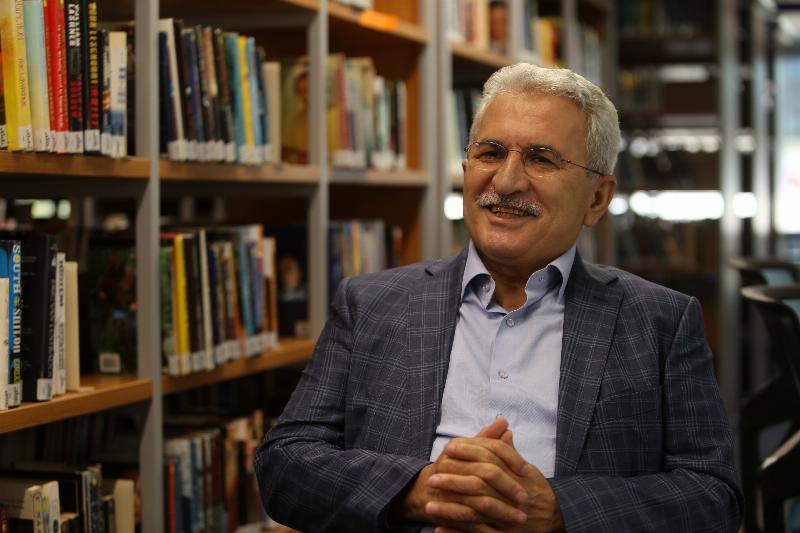
Üsküdar Üniversitesi Faculty of Humanities and Social Sciences Dean, Environment Ethics Forum Director Prof. Dr. İbrahim Özdemir, touched upon the fact that measures against environmental problems have become mandatory and offered important recommendations.
The air we breathe does not belong to a single country…
Stating that this year's World Environment Day was celebrated with enthusiasm and hope despite everything, Prof. Dr. İbrahim Özdemir said, "Storms, floods, and fires caused by climate change continue to be distressing. However, many people have started to become aware of environmental problems. More importantly, there is the Stockholm + 50 World Environment Conference held 50 years later. The first one was held in Stockholm in 1972, contributing to the awakening of environmental awareness in the world. The conference, which started under the leadership of the then Prime Minister Olof Palme, was marked by the slogan 'The air we breathe does not belong to a single country, we share it.' It was emphasized that environmental problems are everyone's common problem. Environmental ministries and environmental legislation began to take shape after this summit."
Significant steps taken for a sustainable world
Prof. Dr. İbrahim Özdemir continued his words as follows:
"Heads of state and environment ministers from over a hundred countries, including United Nations (UN) Secretary-General António Guterres and US Climate Envoy John Kerry, attended the conference held in Stockholm, the capital of Sweden. Olaf Palme's words 'Great seas are not divided by national borders, they are public property. In the realm known as human climate, there is no individual future for people or nations. Our future is common, we must share and shape it together' were etched into memories. Significant steps have been taken to accelerate the transition to a more sustainable world. However, there is still much to be done. Especially providing economic and technical support to underdeveloped and developing countries most affected by climate change is very important."
Environmental NGOs approached promises cautiously
Prof. Dr. İbrahim Özdemir stated that the UN determined the main themes of the conference as "climate change, loss of biodiversity, emissions, and pollution", and added, "Everyone, especially political actors, the business world, and NGOs, discussed their views and alternative solutions on these issues. While some Western countries clearly explained the steps they would follow until 2030, it was noteworthy that some countries refrained from taking action. Environmental NGOs are also justifiably cautious about the promises of politicians."
We presented our work at the symposium
Prof. Dr. İbrahim Özdemir stated that he attended as an invited speaker at the symposium organized by The Green Institute (Yeşil Enstitü) within the scope of June 5 World Environment Day, and said, "Various environmentalists and scientists, especially the world-renowned environmentalist and animal rights advocate Jane Goodall, gave speeches. 88-year-old Jane Goodall said that she was hopeful despite everything and that she witnessed an awakening in environmental awareness in the world, especially among younger generations. Goodall emphasized that politicians' interest in the environment is promising, and said that voters casting their votes with environmental awareness would motivate politicians to take more action. At the symposium, we had the opportunity to present our work as the Üsküdar Üniversitesi Environment Ethics Forum."
We must encourage and empower children
Prof. Dr. İbrahim Özdemir stated that the Stockholm + 50 World Environment Conference reminded them of their duties once again, and said, "We must not forget that we will live the rest of our lives on this earth with our children and grandchildren. There is no other planet yet. Furthermore, we must introduce our children to these problems and encourage and empower them to find creative solutions. The essence of the fight against climate change and its devastating consequences must be the awareness that we are morally responsible to all living beings, people, and future generations. Our ancestors, our fathers, and we have largely lived dependent on fossil fuels. However, the extraordinary events we are experiencing show that we have reached the end of the road."
The stance of Muslim societies must be clear and explicit
Prof. Dr. İbrahim Özdemir said that we must discover and develop renewable and clean energy sources and concluded his words as follows:
"While doing this, fossil fuel energy producers and powerful lobbies that are not renewing themselves and are unwilling to do so may create various obstacles. We must engage in this struggle for ourselves, our children, our grandchildren, and other living beings. Let's not forget, for now, we have no other world or other home to go to. The views and attitudes of Muslim societies and individuals on climate change must be clear and explicit. It is essential that all our actions, development plans, and strategies related to humanity and the universe are created based on these principles. It is regrettable that the vast majority of Muslim countries are not even aware that their economic models are unsustainable, and that they do not determine their development strategies and policies in the light of reason and scientific data. As the Environment Ethics Forum, we invite everyone to question ourselves on an ethical basis and to reflect on what kind of world we will leave as a legacy to our children and grandchildren."
Share
Update Date: March 01, 2026
Creation Date: June 09, 2022
Request a Call
Other News
- Solidarity Bazaar for Palestine from Üsküdar Residents
- In additional placements, don't just choose a department, choose the profession of the future!
- 52 Erasmus students from 15 different countries at Üsküdar University
- Visit to Prof. Nevzat Tarhan from the Global Confederation of Civil Society Organizations
- Golden advice from communication graduates to communication candidates