

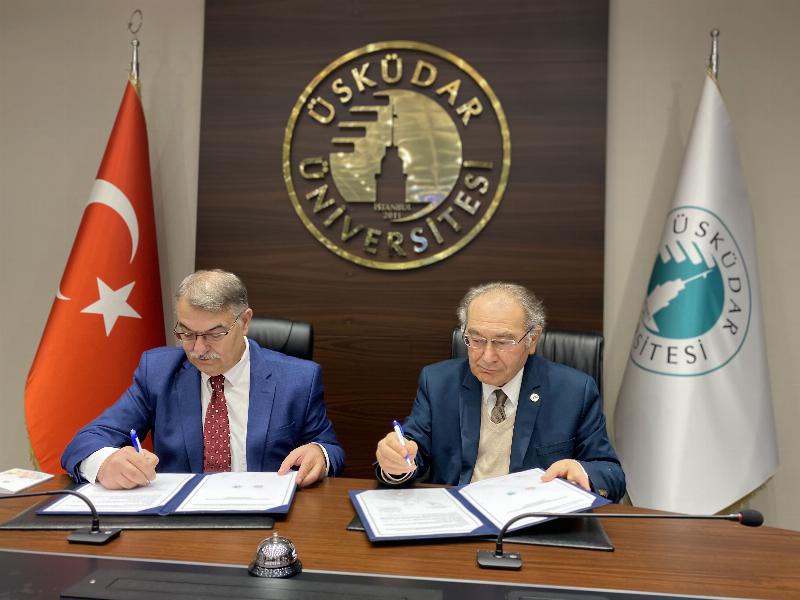
The signing ceremony for the “NGOs at the University” Project Protocol was held in cooperation with the Haydi Tut Elimi Association, which has been active within Üsküdar Üniversitesi since 2010 with the support of the Ministry of Youth and Sports, and the Amasya Associations Federation. At the ceremony, attention was drawn to the importance of institutionalizing associations.
Content
Protocol for 'NGOs at the University' Project Signed…
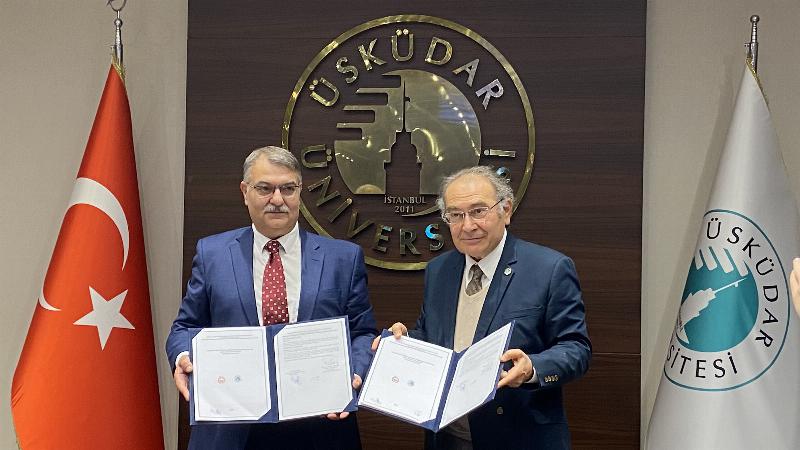
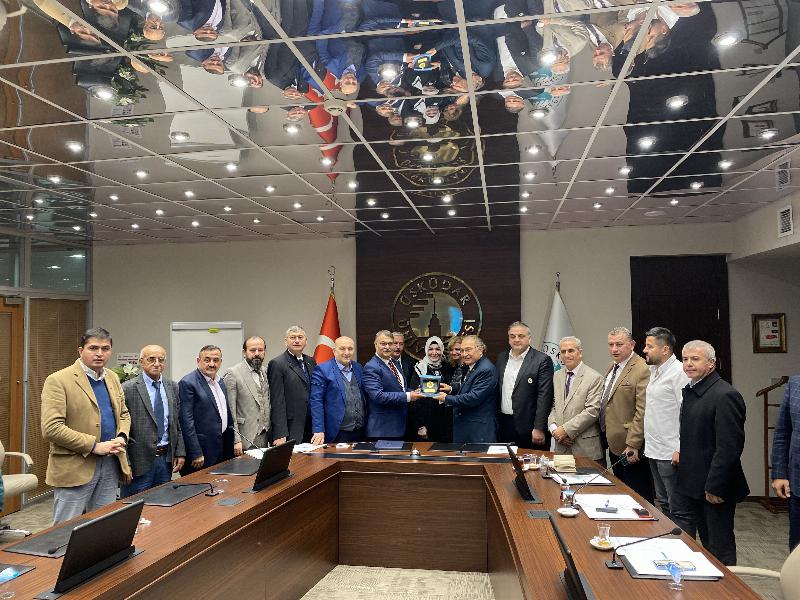
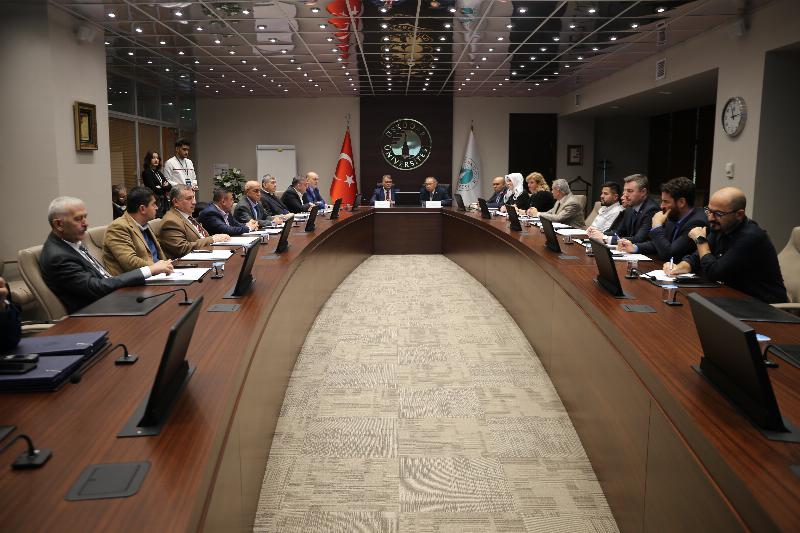
At the protocol cooperation ceremony held in the Senate Meeting Hall of Üsküdar Üniversitesi Central Campus, the topics of ‘Civil Society Organizations are Institutionalizing and Branding’ and ‘Social Innovation Model in Civil Society’ were discussed.
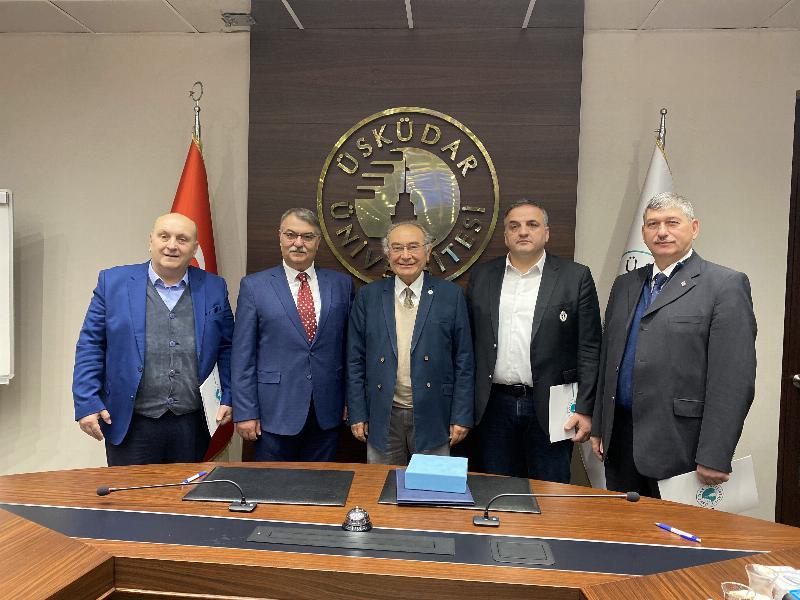
The ceremony, moderated by Dr. Lecturer Nebiye Yaşar, Director of Üsküdar Üniversitesi Young Brains Academy, for the “NGOs at the University” Project Cooperation Protocol Signing Ceremony was attended by Turan Sayar, President of Amasya Associations Federation (ADEF); Remzi Acar, Deputy President of ADEF; Orhan Aydın, Vice President; Özgür Polat, Vice President; Salih Turgut, Vice President - Secretary General; Turgay Ünsal, Vice President - Treasurer; Ziya Öncan, President of Zonguldak Associations Federation; Yaşar Saka, President of Sakarya Associations Union; Ali Özbek; Ayşe Banu Güngenci, Secretary General of Haydi Tut Elimi Association; Selçuk Uysaler, Secretary General of Üsküdar Üniversitesi; Tahsin Aksu, Head of Corporate Communications Department; and Rasim Dağhan Işık, Event Manager.
Prof. Dr. Nevzat Tarhan: “One of the most important achievements of the 21st century is teamwork”
Üsküdar Üniversitesi Founding Rector Prof. Dr. Nevzat Tarhan drew attention to the importance of social image for NGOs. Tarhan stated: “Cooperation between universities and NGOs is important and is something a university should do. Stakeholder movements are certainly important. One of the most important achievements of the 21st century is teamwork. Otherwise, the goal cannot be reached. Normally, foundations are established to help, but in our country, it seems as if they are established to collect aid. No work that cannot be accounted for should be done. If it is accountable, then there is no need to fear. Social image is important for NGOs. It is essential to do new things and experiment. NGOs should value innovation. Innovation is not about preserving the existing, but about breaking out of the shell and being open to development.”
“Social media is not a harm, but an excess”
Prof. Dr. Nevzat Tarhan, drawing attention to the suitability of associational activities for our psychological structure, said: “We are a society with hyperactivity. Associational activities are quite suitable for our psychological structure. We must not forget our own culture. Efforts that activate our own values are important. In the Amasya region, Ferhat and Şirin are important historical figures and names. We cannot be universal without preserving our local values. When there is a problem, people see it as a bad thing, but a problem is not a threat; it is also an opportunity. One must aspire to overcome challenges. If perception management can be taught, social media turns into an opportunity. Social media has a very important place in institutionalization. I always say, ‘Social media is not a harm, but an excess.’ If we use social media for a specific purpose, we will have used it correctly. Someone who knows how to use it will not fall into the trap of social media. The younger generation is now more informed about this. They should say, ‘I will manage this in my time.’”
Turan Sayar: “Associations must continue their work by institutionalizing”
Turan Sayar, President of Amasya Associations Federation (ADEF), speaking about associations disappearing in futile disputes dependent on individuals, said: “If the president is active, modernity continues, but if the president is not active, modernity does not continue. Assimilation is the most important point. Currently, there are 4 generations of youth in Istanbul. Young people gradually lose their Amasyalı identity. If we do not continue certain things, after the 3rd generation, they will lose their identity. There are two important points here. We will now determine our projects according to the financial situation, then we will be free from dependence. The second important point is absolutely institutionalization. When we took over the association on December 26, 2021, our board of directors of 15 thousand people started working. This project is a kind of beginning. Associations should no longer organize picnics, festivals, or nights as in the past, but now need to continue their work by institutionalizing. Associations disappear in futile disputes dependent on individuals.”
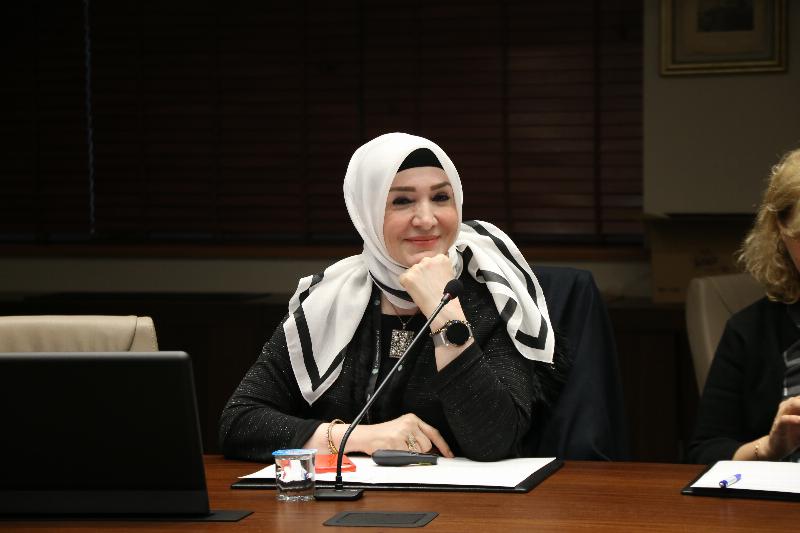
Dr. Lecturer Nebiye Yaşar: “In Turkey, there is one association per 687 people”
Dr. Lecturer Nebiye Yaşar, Director of Üsküdar Üniversitesi Young Brains Academy, provided information about the ‘NGOs at the University’ project. Yaşar said: “The aim of our project is to contribute to the formation of a civil society culture with NGOs that have strong democracy, pluralism, tolerance, volunteerism, civil participation, and citizenship awareness. In Turkey, there is one association per 687 people. According to the Ministry of Interior's January 2022 data, there are 122,203 associations in our country. 34.97% of the associations in Turkey are located in the Marmara Region. As of February 2022, there are a total of 361 public benefit associations. The 24,839 associations located in Istanbul, which has a population of approximately 16 million, constitute about 20% of all associations in Turkey. Civil society organizations are one of the policy-making actors of the era of globalization. This importance stems particularly from their significance in guiding societies. For such important organizations, there is a need for projects in a social innovation model where qualified work will be carried out with an institutionalization and innovative perspective.”
With the project, it is aimed to strengthen the legal framework of NGOs, increase their quality, enhance their participation in decision-making processes, and support the strengthening of their financial structure and human resources during Turkey's development process, while the pilot implementation of the project will be carried out with the Amasya Associations Federation.
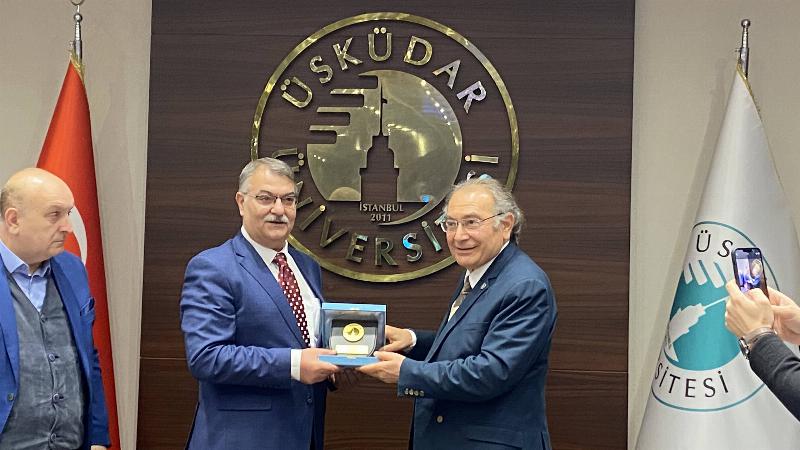
The ceremony concluded with a group photo session after the signing ceremony and plaque presentation.
Prof. Dr. Tarhan presented participants with copies of his books after the ceremony.
Share
Update Date: February 26, 2026
Creation Date: November 29, 2022