

Üsküdar University Founding Rector Prof. Dr. Nevzat Tarhan, speaking about prayer – defined as a human's plea for help from a powerful being, especially in moments of helplessness – and its effect on human psychology, stated that prayer is a mental sanctuary, it empowers individuals, and is a need that makes one feel not alone in the universe.
Content
Prof. Dr. Tarhan explained: Is prayer a necessity?
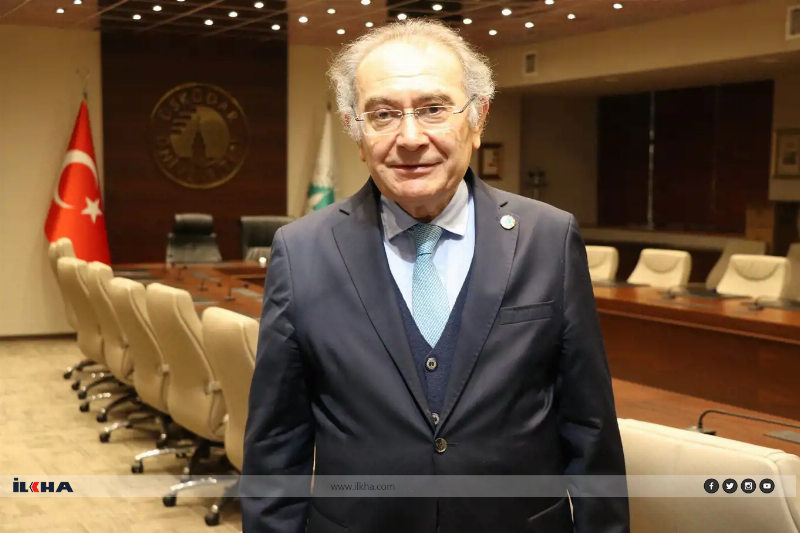
Speaking to an İLKHA reporter about the effect of prayer on people, especially due to the increased inclination towards worship and prayer during the holy three months and particularly in Ramadan, Üsküdar University Founding Rector Prof. Dr. Nevzat Tarhan stated that prayer is essentially knocking on a door, and that people feel a need for connection when they feel powerless, weak, helpless, and inadequate.
'Prayer is a spiritual refuge'
Tarhan stated, 'In the human needs pyramid, particularly Maslow's pyramid of psychosocial needs, it ranks second. The first rank includes needs like eating, drinking, and shelter. Humans are social beings. They were not created to live alone. Therefore, there are things they can control, but in some situations, they feel very powerless, weak, and helpless. In such circumstances, having a mental refuge, a belief in a guardian angel, believing in and connecting with a higher power, and seeking help from it makes the person feel not alone. It adds meaning to their life and offers solace. Especially when a person is weak and helpless, when their power is insufficient, in matters like death and natural disasters, prayer is a serious mental and spiritual refuge for them. If they have a sound, rational faith, prayer also increases their spiritual resilience by making them feel that they are not alone in the universe.'
Humans with limited power against unlimited needs find strength through prayer
Reminding that there is a concept translated into Turkish as psychological resilience or 'yılmazlık' (Psychological Resilience), Tarhan said, 'In this concept, an event or calamity experienced by a person becomes a reason for their resilience. For a person to endure the pain they experience, they must not fall into despair and must feel safe. For a sense of safety and hope, prayer in such situations allows one to gain a sense of trust when they think 'there is a higher power that knows and controls everything, knows what's in my heart and the memories in my mind. There is a will closer than my jugular vein.' When this trust is gained, their fear decreases, and they can continue their journey more easily. Otherwise, excessive fear leads to loss of control and gives the feeling of having a heart attack. They feel like they are going to die. With that feeling, body physiology also deteriorates. For example, a businessman came to me and said, 'I manage a billion-dollar budget, but I can't manage my blood pressure.' We told him, 'Your body is smarter than you. There are therapy techniques we need to apply regarding what you should do in matters where your power is insufficient so that the creator of your body is not interfered with and damaged by you.' Because some individuals with high control power see themselves as gods on earth. If some people have a feeling of omnipotence, they do not want to pray and do not accept prostration. They believe their power is sufficient for everything, but our power is not sufficient for everything. In the creation of humankind, there are infinite needs but limited power. The needs and powers of other living beings are balanced. Humans want to dominate the universe. Because their psychological and mental needs are unlimited, what they possess is not enough to meet their needs. When it's not enough, they suffer. In such situations, if individuals with a strong spiritual side apply prayer as a serious fundamental need in their lives and constantly accept their helplessness, living with the thought 'there is an all-knowing power that sees me, and I might be in my last day of life,' they will not fear death. Prayer is actually establishing a spiritual connection with the creator of the universe. A person who establishes such a connection has a great advantage in terms of psychological well-being and physical health.'
'Death is not annihilation, but changing place'
Tarhan said, 'Children who have made praying a habit in the face of life's events manage fear better. A child is either guided by fears or by facts. Parents should guide their child. If parents provide guidance, if they are the right guide, and teach the child to seek refuge in a higher power in the face of death and things they cannot control, the child overcomes this process easily. There was even a first-grade child whose father had passed away and was brought to therapy. His mother used to say, 'My child! Your father went on a long journey. He won't come back; we will go to him later.' This means we will meet in the future. Death is not annihilation; it is changing place. There is a life in the future, and we will meet there. What the mother told her child is also a kind of prayer. After the mother told this to her child, the child never asked about his father again.'
Tarhan stated that humans have 4 genes not found in other living beings, which are called meta-mind genes. He added, 'One of them is the search for meaning, another is the search for novelty, the third is questioning the past and the future, and the fourth is the gene for perceiving death. No being other than humans is aware that they will die. Only humans are aware of this. Anxiety about the past and future greatly affects human life.'
'The 3 Holy Months are an opportunity to question the meaning of life'
Emphasizing that the 3 Holy Months should be seen and utilized as an opportunity, Tarhan concluded with the following statements:
'The 3 Holy Months should be viewed like fairs and carnivals where everything is discounted. They should be seen as months of spiritual trade. These months are months of spiritual opportunity and investment. In these months, one gets a thousandfold return. Therefore, the 3 Holy Months are an opportunity for a person to pause, reflect, and restart. They are months for self-renewal. In innovation training, we call this the 15 percent rule. If one works 10 hours a day, they should dedicate 1.5 hours to asking 'Why am I doing this job?' In these holy days, too, these are months that offer opportunities to ask questions such as: What is life? What is meaning? Why am I living? Am I permanent in this world, or am I a guest? Is the world a game or real? Is real life this world, or is there real life after death?'
İLKHA NEWS AGENCY
Share
Update Date: March 01, 2026
Creation Date: March 27, 2023
Request a Call
Other News
- Prof. Nevzat Tarhan: “Those with a mental filter are not afraid of the digital”
- Artificial intelligence doesn't eliminate the translator, it transforms their expertise!
- Social responsibility courses moved to the field
- Erasmus+ Orientation Week completed at Üsküdar
- Prof. Nevzat Tarhan: “Brain secretes ‘dark glue’ in social media lynchers!”