

Prof. Dr. Süleyman İrvan stated that news websites are focusing on news that will generate more clicks instead of better journalism, and this situation has corrupted the essence of journalism. “Unfortunately, news websites are gravitating towards news that will get more clicks instead of better news reporting,” said İrvan, adding, “Google, unfortunately, introduced an absurdity like Search Engine Optimization (SEO) into journalism, corrupting the essence of 5W1H journalism. Now, it’s not about fully and accurately reporting an event, but rather keeping the reader on the page until they find the answer to the searched question.” Prof. Dr. Süleyman İrvan noted that the most important source of income for news websites is advertising revenue, stating that the real problem lies with covert advertisements.
Content
Prof. Dr. Süleyman İrvan: “Google Journalism Corrupted the Essence of News Reporting!”
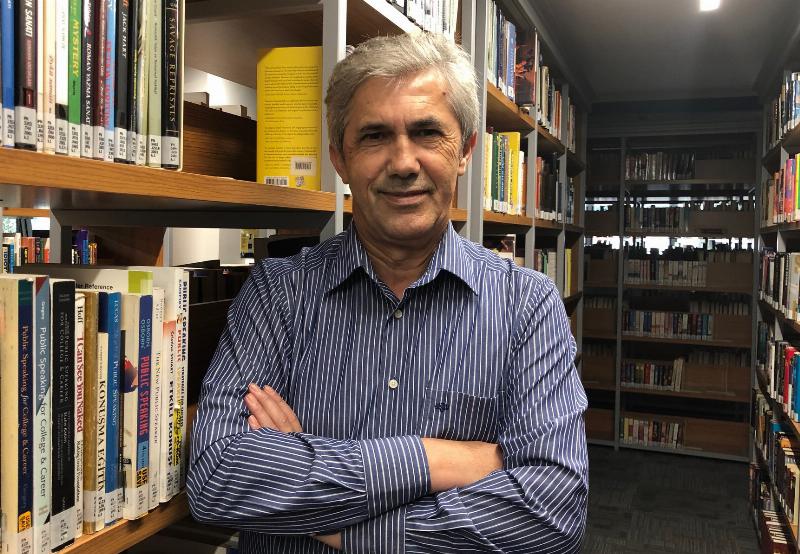
News Websites Are Turning to News That Will Get “More Clicks”
Prof. Dr. Süleyman İrvan, Head of the Journalism Department at Üsküdar Üniversitesi Faculty of Communication, evaluated the dense advertising traffic frequently encountered on news websites and its effects.
“This is the cost-free price of reading news for free.”
Stating that readers are exposed to intense advertising traffic on news websites, Prof. Dr. Süleyman İrvan said that advertising is the most important source of income for news websites. Prof. Dr. Süleyman İrvan continued:
“However, this is the cost-free price of reading news for free. Especially in Turkey, the most important source of income for news websites is Google ads. Of course, there are ad blockers like Adguard and Adblock, but as a reader, I can say that using these blockers on news websites is not ethically correct. The reason is that these blockers cut off the income source of a news website whose most important income source is Google ads. Just as we can support independent journalists and street interviewers by simply subscribing to a YouTube channel and watching uploaded videos, we also support independent journalism by being exposed to Google ads. Our freedom to access news is not hindered when we are exposed to Google ads, but when the news website we follow cannot provide financial support and shuts down.”
“The Real Problem is Covert Advertising in News Format”
Noting that Google ads are not the only source of income for news websites, Prof. Dr. Süleyman İrvan said, “If one day, for example, like in the US, we start paying money to news websites and subscribing for a fee to read news, we can also demand an ad-free news website. In fact, the real problem in Turkey is much more serious. The real problem is not the publication of advertisements on news websites. The real problem is covert advertising in news format, under the guise of cooperation or similar terms, and in exchange for a fee. It is possible to prevent ads with blockers, but we cannot prevent covert ads. This is the kind of journalism we must fight against.”
News Websites Can Be Supported by Clicking on Ads
Prof. Dr. Süleyman İrvan stated that it is, of course, annoying for a reader to constantly encounter advertisements for certain products on a news website. He added, “However, as I mentioned above, instead of being annoyed when you see an ad, perhaps clicking on that ad can help provide more resources to the news website. A local news website explicitly states: ‘…………… You can read the news by visiting the address. While reading the news, do not neglect to click on the ads that appear on the side and top of the page.’ A fair request.”
What is the Situation on Foreign News Websites?
Prof. Dr. Süleyman İrvan also touched upon the differences that emerge when comparing news websites broadcasting online in our country with foreign news websites, stating:
“While I do not find it entirely appropriate to generalize, among the foreign news/media websites I follow, the one I find most interesting is theguardian.com. The site has no ads, and moreover, it does not charge a fee for you to read the news. So how does it survive? Through reader donations, of course. When you read a news story, you encounter a call to action text like this: ‘We don’t have a billionaire owner and we’re committed to a journalism defined by reality, rigor and honesty. But as a reader-funded media organization, we need your support to do these things. If you are in a position to pay for the news, please do. Thanks to you, millions will continue to read the Guardian’s news.’ Isn’t that meaningful? There is no compulsion, and around 2 million readers provide financial support to the newspaper.”
They Are Turning to News That Will Get More Clicks
Prof. Dr. Süleyman İrvan stated that news websites are focusing on news that will generate more clicks instead of better journalism, and this situation has corrupted the essence of journalism. “Unfortunately, news websites are gravitating towards news that will get more clicks instead of better news reporting,” said Prof. Dr. Süleyman İrvan, adding, “We call this Google journalism. Google is ultimately a global company, and its main goal is to generate more revenue. Google has no concern for better informing societies or funding better journalism. What does it do? Thanks to its algorithm, it makes more-read news more visible.”
SEO Corrupted the Essence of Journalism
Prof. Dr. Süleyman İrvan concluded his words by noting that news websites now have SEO editors: “Google, unfortunately, introduced an absurdity like Search Engine Optimization (SEO) into journalism, corrupting the essence of 5W1H journalism. Now, it’s not about fully and accurately reporting an event, but rather keeping the reader on the page until they find the answer to the searched question. Almost all news websites now have SEO editors. These editors focus not on what is newsworthy, but on what is searched for on Google, and they produce content in that direction. In Google’s terms, good journalism means content that appears at the top of the search engine results. Because that content generates money. It’s not easy for journalism to escape this predicament. If we cannot develop alternative revenue models, it means we will have to accept Google journalism.”
Share
Request a Call
Other News
- Üsküdar Medical student to bring US experience to Türkiye…
- TÜBİTAK Support for 12 Student Projects Advised by VSHS Academicians
- The Era of 'Case Diversity' and 'Artificial Intelligence' in Dentistry!
- The first lecture of the year at TED Üsküdar from Prof. Deniz Ülke Kaynak…
- Üsküdar Communicators' "Son Duman" documentary reaches final at Altın Koza