

Üsküdar Üniversitesi Founding Rector, Psychiatrist Prof. Dr. Nevzat Tarhan, met with members within the scope of Mekteb – i Saadet Lesson, organized by the Saadet Party Women's Branch. Tarhan emphasized that we all need to learn lessons, both materially and spiritually, from the recent Kahramanmaraş earthquake; “If a person does wrong things, if there is a problem somewhere, our culture has the understanding that one should first look for the fault within oneself. However, Western culture teaches to blame others. Unfortunately, this is the sacred cow of our time; people worship causes. In the past, idols were worshipped; now the idol is the cause, people worship causes,” he said.
Content
Prof. Dr. Nevzat Tarhan: “Western culture teaches to blame others”
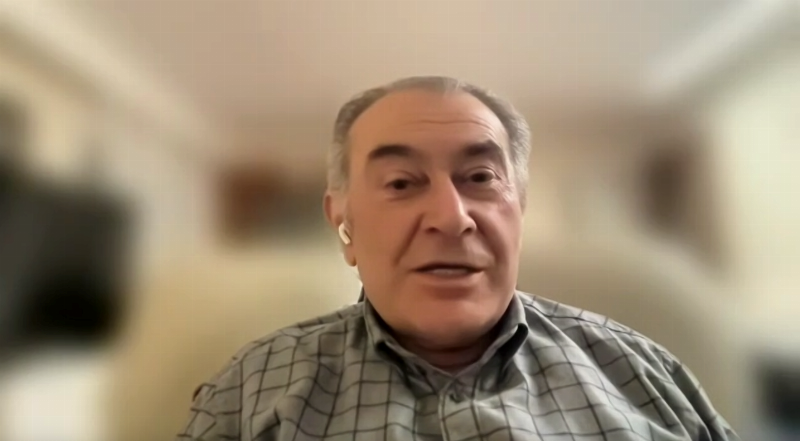
“Disasters can have different material and spiritual causes”
In the online program, Tarhan stated that disasters can have material and spiritual causes, emphasizing the need to learn lessons from them. Tarhan; “As you know, Turkey is going through a difficult period; a very big disaster occurred. In our history, a similar disaster happened 500 years ago, and interestingly, a flood occurred in the same region today. It has material causes and spiritual causes. Here, it is debated whether it is a natural disaster or a man-made one. The occurrence of floods is closely related to climate change. This is also man-made, and in the disaster we call the earthquake disaster, the main reason for many losses is entirely due to non-compliance with engineering rules, and buildings not being constructed properly, leading to situations where societal morality is buried under the rubble. Actually, this is the most important lesson to be learned. These events have material causes, as I mentioned earlier, and also spiritual causes. I mean, consider this universe; the Earth is like a dot in this cosmos. We cannot say that a planet orbiting in an 'as-a-dot' universe is without a master. When we think about it with our mathematical minds, it has an owner, a captain; there is a situation that requires us to establish the relationship between the causes of events here and the philosophy of 'Müsebbib' (the ultimate cause/creator). That is, learning lessons like “Why did such an event happen? Why is it happening in this geography?” is what we call post-traumatic growth. We, too, should draw such individual lessons from this trauma, and these are also opportunities to learn virtue. Fate, as it were, tells us, 'You are on the wrong path.' Western culture sees such disasters as punishment, but our culture sees them as 'ikazat-ı ilahiye,' divine warnings. It sees them as warnings, not as punishment,” he said.
“In the past, idols were worshipped; the sacred of this era is worshipping 'causes'”
Tarhan stated that one should look for the fault within oneself in the face of adversities and made explanations about the Western culture's method of blaming others for shortcomings. Tarhan; “In our culture, there is an understanding that if a person is doing wrong things while seeking truth, if there is a problem somewhere, they should first look for the fault within themselves. However, Western culture teaches to blame others. It is an easy method to relieve oneself by projecting every bad event that happens in life onto others. Unfortunately, this is the sacred cow of our time; people worship causes. In the past, idols were worshipped; now the idol is the cause, people worship causes. The laws and causes brought forth by determinism and science are almost regarded as sacred. Yet, as their name suggests, they are laws, written texts, and there is one who applies them. These, like Newton's Law and all natural laws, are merely laws; an will and power are needed to apply them. What kind of time are we in now? In this era, there are certain things and descriptions pointed out by our Prophet. Our Prophet Muhammad advised individual struggle against the fitna (strife/temptation) of Dajjal in hadiths, and it seems to fit this time. So, in this situation, such a fitna is one that we will individually struggle against; it is not a political fitna, but an individual cultural fitna, a moral fitna. What is defined as Dajjal is currently popular culture, Hollywood-sourced popular culture,” he stated.
“Social media is the open door of the house”
Tarhan stated that social media is the open door of the house, defining the illnesses of the era as egocentrism and worldliness. Tarhan; “Our home is no longer a fortress, a last refuge. We cannot protect our children at a young age within the home; children are growing up in a very insecure environment within the supposedly safe confines of the house. Not just our children, but children all over the world are affected by this. In America, suicide rates and depression cases have increased among children after the age of 12. The biggest reason is social media and, as a result of people envying each other on social media, children feeling bad about themselves and entering depression, leading to an increase in suicide cases. All of these create very serious problems; in fighting against such a fitna, we must engage in an individual struggle, one-on-one, through persuasion and conviction, making this issue a concern and a cause for our friends, neighbors, and relatives. Modernism tells us that the world is a very comfortable place. This era has two diseases; the first is the disease of egocentrism; there has never been a period in human history where the ego was inflated this much. The second is worldliness. Muslim women are also affected by this. Worldly desires are seen as primary today,” he said.
“Our era is not an age of preaching, but of representation”
Tarhan stated that representing Islam well is the greatest service, drawing attention to the importance of representing Islam by living it properly rather than by preaching. Tarhan; “This era is not a time for preaching Islam, but a time for representing it. If we represent the religion of Islam well, we will have performed the greatest service. Therefore, it is no longer an era for explaining the truth through sermons and conferences, but an era for explaining the truth by living it. This is also true within the family, and at home. If there is no peace at home, if marital storms are raging, children in such situations are afraid to get married. Those children need to be peaceful so they can take you as an example. If a child thinks there will be constant arguments and tension at home, in such situations they look at other happy, peaceful families. They take them as examples. Children do not take their own mother and father as examples. Therefore, making the home a warm environment for children, the mother's role is important here. If a mother is not successful in her mothering role, a child in such a situation cannot learn how to relate to people. They cannot learn to communicate with them. It is very important to have a good division of roles in the family. This applies to both women and men. It is also necessary to maintain balance in family and work life. This is a situation that requires some effort and investment,” he said.
“Perfectionist people try to make others perfect too”
Tarhan underlined that the feeling of perfectionism is an emotion that needs to be managed, emphasizing the need to maintain balance in the family so as not to go overboard and raise ‘project children’ while trying to raise good children. Tarhan; “A significant portion of perfectionist individuals reflect their own perfectionism while trying to make others perfect, but expecting such perfection from others is not realistic. There is a maximum point they can reach, they have capacities; when expecting this, it is necessary to set a specific goal and spread it over time. Perfectionism is a situation that needs to be managed; especially mothers, while wanting their child to be perfect, turn the child into a 'project child'. Parents should offer options to the child, explain the pros and cons, and leave the final decision to them. Otherwise, there is no other mother, no other father, and we lose the child. Having hostile feelings towards the mother becomes both love and hostility, and anger. It is more important for a child not to have such feelings than to have a profession. Therefore, in mother-child relationships, there should be no mother-child wars, no father-child wars; if you can raise the child without these, that child will be attached to the family in the future, and will have a strong sense of belonging. Even if they go astray, they will turn back from their mistake because they love their family. In this age, it is very easy for young people to make mistakes, but for them to be able to turn back from mistakes, they need to love their home, family, parents. If they love it, the child can return home even if they make a mistake in such situations. To give them that opportunity, the home needs to have a warm family environment. The mother also needs to be a comforting mother, a warm, comforting, unifying mother figure. If so, raising a child is not difficult at all,” he said.
Share
Update Date: March 01, 2026
Creation Date: March 16, 2023
Request a Call
Other News
- The book that read today's digital threats in 2014: Being a Conscious Family
- Experts warn: 'Instead of memorizing letters, teach pencil grip, scissor use, and coloring'
- School fear and school love both start in the family!
- Family is not merely transforming, it is being battered under a serious assault
- Artificial intelligence opens the door to early diagnosis in autism!