

Üsküdar Üniversitesi Founding Rector, Psychiatrist Prof. Dr. Nevzat Tarhan, was a live guest on the “Ramazan Sevinci” (Joy of Ramadan) program, presented by Serdar Tuncer and broadcast on TRT1. Tarhan made evaluations on the topics of ‘the month of Ramadan, the effect of the recent earthquake on mental health, and monotheism.’ Emphasizing that people began a search for truth after the earthquakes, Tarhan underlined that the earthquakes would lead to societal wisdom in the medium and long term. Tarhan stated; “The recent earthquake pushed us to seek the truth. It opened up a tremendous perspective and new windows in our souls for discovering our inner world and the reason for the universe's existence, in other words, for discovering life. I believe these effects will lead us to become wiser as a society in the medium and long term.”
Content
Prof. Dr. Nevzat Tarhan: “The earthquake pushed us to seek the truth”
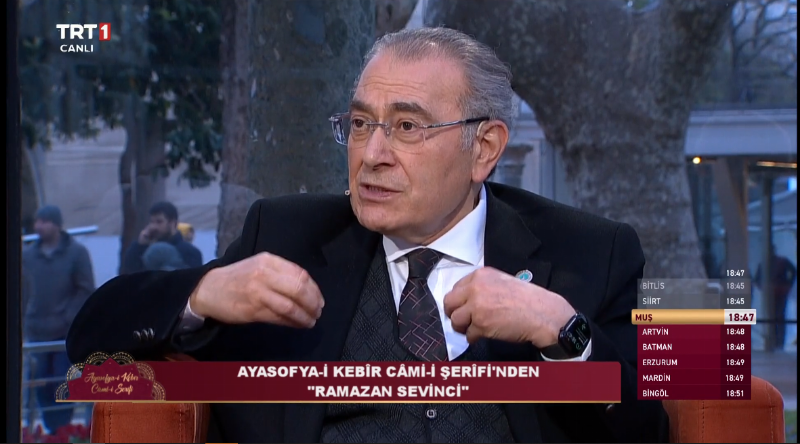
“We need to draw meaningful conclusions after the earthquake”
Stating that it is necessary to draw spiritual, meaning meaningful, conclusions after the traumas and disasters experienced, Tarhan drew attention to the earthquake's effect on society as an education in patience and resilience. Tarhan said; “After the earthquake, our civil comfort and ease were disturbed. We felt that death was near, that our health was at risk, that we were helpless, weak, and powerless. From this, for example, spiritual lessons also need to be drawn. By spiritual, I mean drawing meaningful conclusions. We draw meaningful conclusions on the post-traumatic growth scale. For example, we say, one of the questions there is; I started to understand the value of the things I have, which means a feeling of gratitude. For example, it says, 'I understood that I could face events strongly,' it says, 'I felt strong,' 'I was resilient…' This means an education in patience and resilience, you can derive this. Or a person says, 'I started to take more interest in spiritual matters,' and so they empathize, understand deprivation better, and feel the need to share with those in trouble. Even a person who stayed and slept in the mosque after the earthquake says; ‘My landlord who lives there, he is also sleeping here.’ People become equal in conditions and difficulties.”
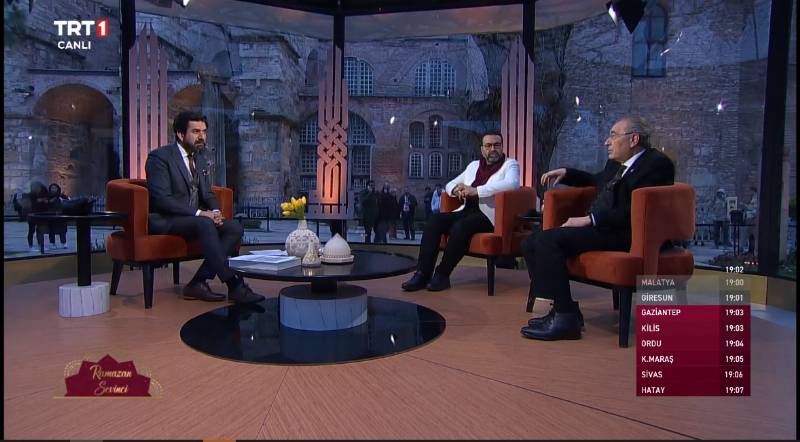
“The earthquake pushed us to seek the truth”
Emphasizing that people began a search for truth after the recent earthquakes, Tarhan underlined that it would lead to societal wisdom in the medium and long term. Tarhan stated; “This era is the age of the highest egoism in human history. Egoism and secularism teach us to live as if death and the afterlife do not exist. This teaching of modernism had distanced us from the truth. The recent earthquake pushed us to seek the truth. It opened up a tremendous perspective and new windows in our souls for discovering our inner world and the reason for the universe's existence, in other words, for discovering life. For this reason, I believe this will lead us to become wiser as a society in the medium and long term. That is, to become wise means for a person to be able to realize the meaning of their life and to succeed in living correctly. Modernism greatly glorified the type of person who serves and worships only themselves. This earthquake, however, shook modernism.”
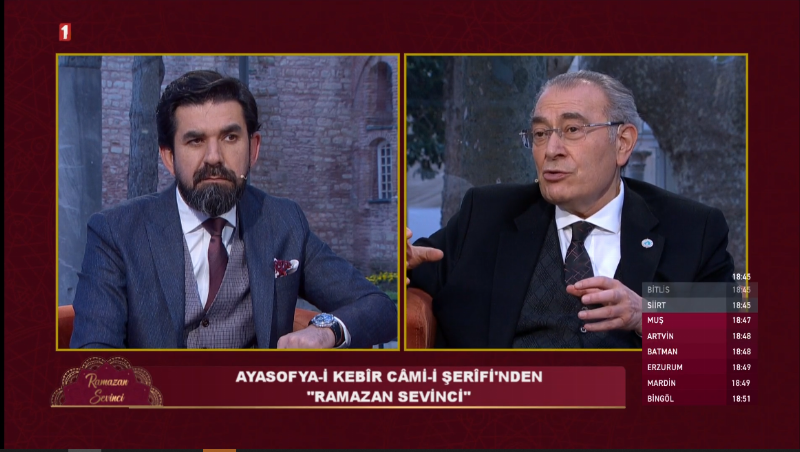
“What truly affects a person is not traumas, but the feeling of uncertainty”
Making evaluations regarding the earthquake, Tarhan stated that one should not fall into despair. Tarhan said; “Sometimes a person experiences such a blow in life that they hit rock bottom, but then they can climb to greater heights. For this reason, one should never fall into despair. Events like earthquakes have visible and invisible causes; one needs to look from an inner perspective. This earthquake caused trauma. What truly harms a person is not the event experienced, the trauma itself. What truly harms is ‘uncertainty.’ Uncertainty is what causes the most anxiety, the most fear, and what most disturbs a person’s mental health. That is, ‘what will happen next,’ ‘what will happen to my child,’ ‘what will happen after I die,’ ‘there is death…’ This uncertainty is what frightens people the most. Because this uncertainty overturns the fear of death, anxiety, and a person’s search for meaning, it is identified as the biggest cause of fear. The biggest cause of anxiety disorders that disrupt a person’s mental health are these types of crises. When a person becomes part of a belief system, they overcome this state of mind. However, a person’s belief system must be sound and rational.”
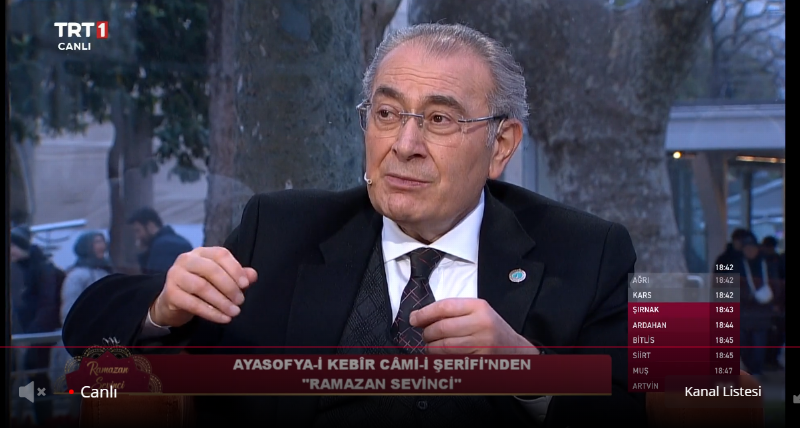
“We are moving towards a child-centric world”
Drawing attention to the transition from a patriarchal and matriarchal world order to a ‘child-centric’ world order, Tarhan underlined that children raised in comfort would not develop personalities. Tarhan said; “Children are currently not patriarchal, nor matriarchal, but moving towards a child-centric world. Children have become like the masters of the house. The mother-child relationship is like a slave-master relationship. The mother is like a slave, and the child is like a master. There is sacrifice here, saying, ‘We didn’t experience it, let them experience it; we didn’t taste it, let them taste it.’ Also, doing everything the child wants in the name of raising them well. If you want to raise a child well, you will do everything they say, but it is necessary to teach the child personal boundaries. Just as you teach the boundaries between your home and your neighbor’s home, you teach to stop at a red light, children will also do what their age requires. We will explain things to children like they are adults, but we will not expect adult behavior. We sit and play with our children like children. Yet, we approach our child like an engineer, trying to shape them as we wish. That child obeys the mother until adolescence, and after adolescence, becomes hostile to the mother and father. Motherhood and fatherhood mean companionship. We raise the child in comfort. Personality does not develop in comfort, psychological resilience does not form in comfort. If we want to raise a child with psychological resilience, we need to confront them not only with the comfortable and pleasant aspects of life but also with the realities of life. When we don’t do this, you raise the child like a greenhouse flower. When it's taken outside, it collapses in the first storm.”
“First, question marks about the existence of God must be removed”
Stating that the increasing use of social media recently leads people to doubt religion, Tarhan said: “In the Religious Culture and Moral Knowledge textbook, the topic of fate is discussed. For a person to understand the attribute of fate, to understand the topic of resurrection (haşir), to understand resurrection after death, there should first be no doubt in their mind about believing in God. Our current education system introduces doubt; questioning introduces doubt. This doubt doesn't even need a child; it doesn't need school; the internet is enough. Social media currently makes everyone question. Today, there are young people who question not how to pray, but why to pray. It is our duty to answer these questions and remove the question marks. We should not be afraid of young people who ask questions. In fear-based administrations, a reverse identity emerges. Now, you cannot explain this to a person who asks 'why should I pray?' with the fatwas of Molla Fenari. The perspective from which we can explain this is by synthesizing natural sciences and religious sciences. When I explain them together, the child, the young person, will say, 'Let the question mark in my mind about the existence of God disappear first; after that, it's easy to understand fate, easy to understand resurrection, easy to understand prophethood, easy to understand the need for worship, but first, we need to correct their conception.'”
“There are 4 fundamental paths to seeing the truth”
Speaking of the 4 paths to seeing the truth, Tarhan said; “It's not science that needs to approve, but reason. Is there anything in the Holy Quran that transcends reason? No, that’s it. There are 4 paths to seeing the truth: The first is experiment and observation, positive science. Our current science does not only show this. The second is reasoning methods, which became theoretical, thought experiments just now, and the third is what we call rational intuition. For example, Newton discovered the law of gravity with that rational intuition, Archimedes found it that way, he focused and focused and discovered it. The fourth is faith; if one cannot find a solution with these three, they take refuge in their beliefs. Hegel says, ‘Everything rational is real, and everything real is rational.’ Now, if nothing in the Holy Quran is rational, then all of it is real. The existence of a single God is rational; what is not rational in the Holy Quran? Some things are Sufism. Tell me, for example, which one is not appropriate. I couldn't find anything inappropriate in the Holy Quran; all of it is appropriate.”