

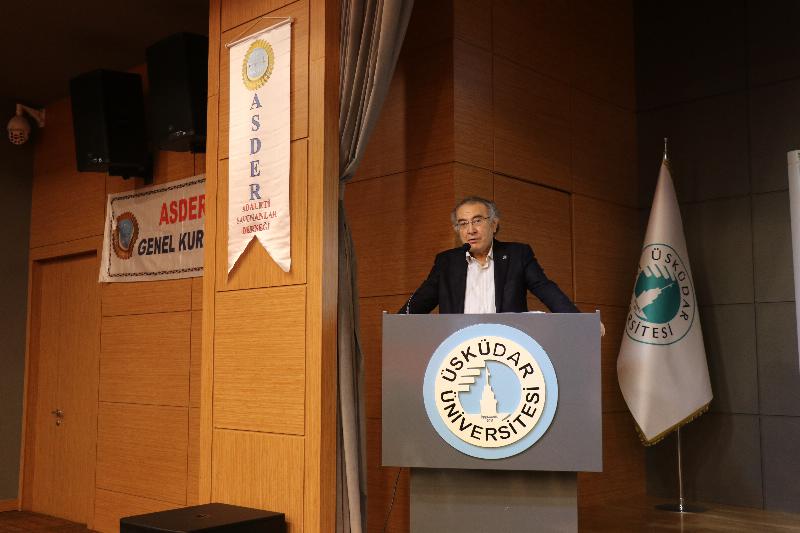
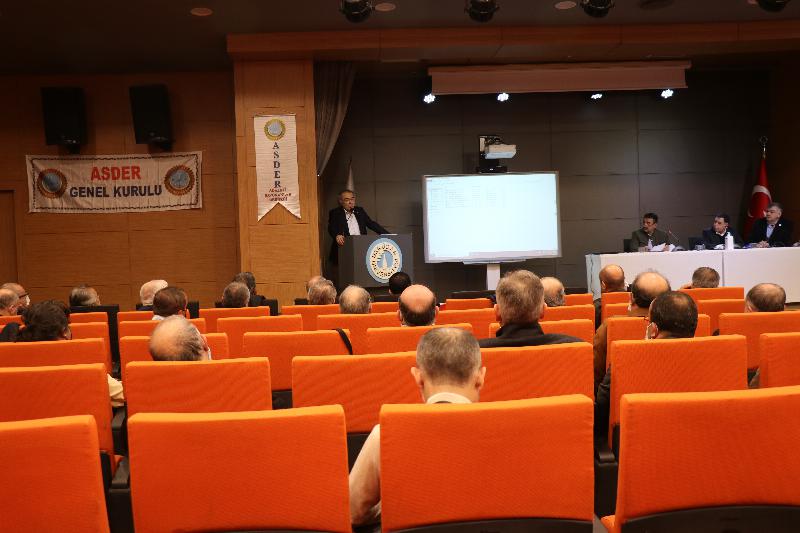
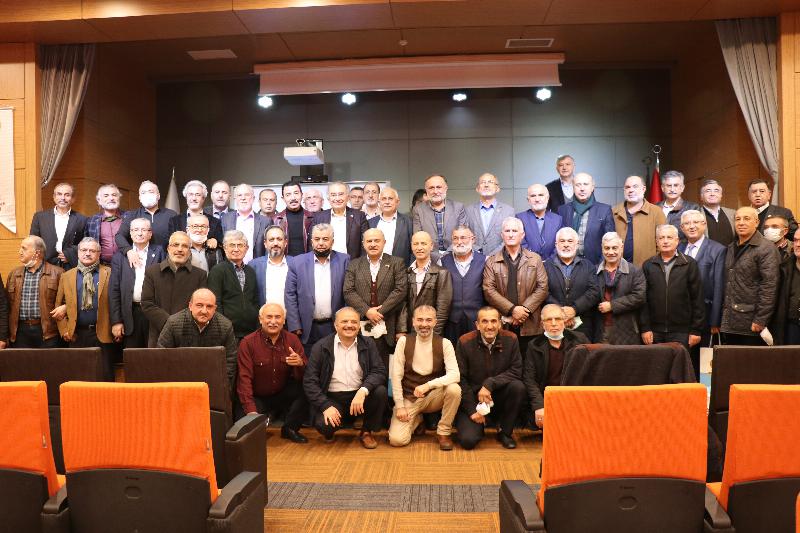
Üsküdar Üniversitesi Founding Rector, Psychiatrist Prof. Dr. Nevzat Tarhan attended the 9th ordinary general assembly of the Association of Defenders of Justice (ASDER), of which he is the general chairman. Making the opening speech, Tarhan stated that the globalization of justice is a debt to humanity. Following Tarhan's speech, Ankara Branch President Dr. Hasan Hüseyin Uludağ, Bursa Branch President Arif Çelenk, Kayseri Branch Honorary President Kemal Mete, and Konya Branch President Mehmet Kanmaz addressed the participants with welcoming speeches. During the ASDER ordinary general assembly, a new term board of directors election was also held, and Prof. Dr. Tarhan was once again elected as General Chairman. Stating that 'as ASDER, we must redefine the concept of justice,' Tarhan added that world parliaments should be established for the realization of justice.
Content
Prof. Dr. Nevzat Tarhan: “As ASDER, We Must Redefine the Concept of Justice”
“In this century, the concept of justice has been removed from law”
During the 9th ordinary general assembly meeting of the Association of Defenders of Justice (ASDER) held at Üsküdar Üniversitesi Emir Nebi Conference Hall, Prof. Dr. Nevzat Tarhan touched upon the grievances experienced during the February 28 period, and, by drawing attention to the fact that some individuals have served their sentences in prison but there are still those who have not been tried, stated that those who do not pay their dues in this world will pay them in another way. Tarhan said: “The victims of February 28 were primarily the military. We were the first ones to be sacrificed on the front line. Currently, 16 high-ranking officials are convicts. This means these rights will be claimed, but I don't know about the rights not claimed in this world. However, greater rights will be claimed before Allah. From this point, I want to talk about why justice is not realized in the world. Throughout world history, the concepts of right, law, and justice have been interpreted in different ways. In our era, positive law has been introduced. Accordingly, once reason is determined as the sole measure, justice has disappeared from the concept of law.”
“As ASDER, we must redefine the concept of justice”
Stating that there is great confusion regarding the concepts of justice and law, Tarhan said that the concept of justice needs to be redefined. Tarhan said: “There is serious conceptual confusion in the concepts of law and justice. According to positive law, justice is accepted as adherence to rights. This concept is expressed as the doctrine of equity in England. As ASDER, since we defend justice within this legal system, I believe it is necessary to redefine the concept of justice correctly and do something about it. There is a rational understanding of justice in Islamic tradition, and we need to work to re-establish it. Currently, with scientific developments, the most important thing in justice is accountability. For example, if a person is not well-intentioned, patriotic, and religious, their accountability protects them. Therefore, accountability justice falls under the concept of natural justice. If a person ensures this, conscience emerges. In the justice system, the only conscience currently observed is public conscience, while divine conscience is disregarded. There is a justice system that does not consider divine conscience at all.”
“A system that disregards public, individual, and divine conscience cannot be just”
Stating that positive law does not meet human needs, Tarhan emphasized that a conscientious justice system should be established. Tarhan said: “Suicides and drug abuse have reached extreme levels globally. Suicide epidemics are being discussed in all world parliaments. Suicide prevention projects are being carried out. This indicates that positive law, known as natural law, does not meet people's needs. A system that does not take into account conscientious responsibility, public conscience, individual conscience, and divine conscience cannot be just. True justice cannot be achieved unless a conscientious legal system, exemplified by the Prophet, is established. Hz. Omar is called 'the gate of justice.' We must have a function, a responsibility, to rebuild such an understanding of justice. Justice should not change according to circumstances and time; only some minor adjustments might occur. Hz. Omar used to tell his governors when sending them to their posts: 'Let the powerful in the place you go not expect you to be on their side, and let the weak not doubt your justice.' In his first speech after becoming caliph, Hz. Abu Bakr said: 'I am not the best among you, but from now on, those among you who are in the right are the strongest with me. Those among you who are in the wrong are the weakest with me. I will use my power for justice.' This means that in the Age of Bliss (Asr al-Saadah), a balance between power and justice could be established. We, however, say 'power first, then justice.' We are an association that defends justice. We need to do something to correct the confusion brought by modernism regarding justice.”
“World parliaments should be established”
Stating that world parliaments should be established for the achievement of global justice, Tarhan said: “Being lawful is one thing, and being just is another. One must be both lawful and just. The right to a fair trial is a fundamental human right. There is also the issue of culture in law. Cultural values are important when public conscience is formed; if there is cultural legitimacy, the law functions. An effort is needed to increase cultural legitimacy and to fill the concept of justice with meaning. It strikes me as odd when people who are not just talk about justice. Justice requires courage. When power is seized, it is said 'it serves me, I won't change it.' Justice is not about domination; justice arises from truth. Our President Erdoğan says 'the world is bigger than five,' and I want to say another version of that: world parliaments need to exist for the establishment of justice. There will be equal representation in the world, and it will hold power. The UN is a system where the powerful have a say; it is not a just system. The UN needs friendship, justice, and truth against power centers, not defiance.'”
Prof. Dr. Nevzat Tarhan renewed confidence…
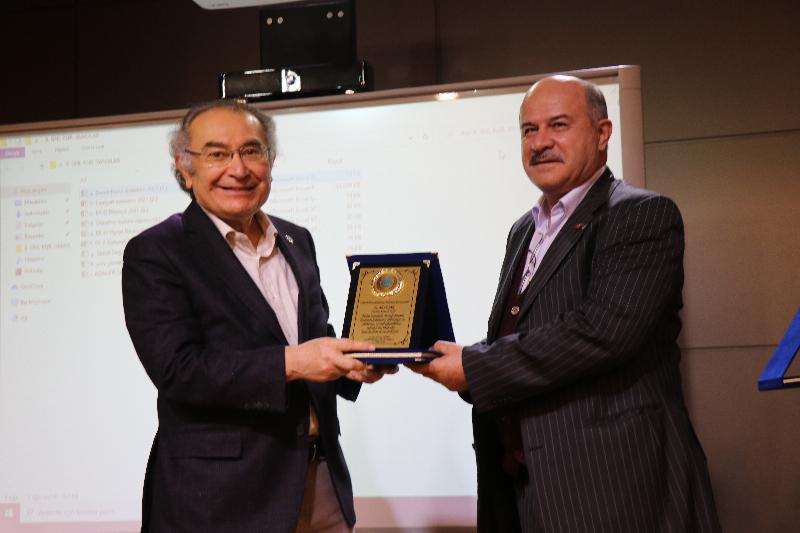
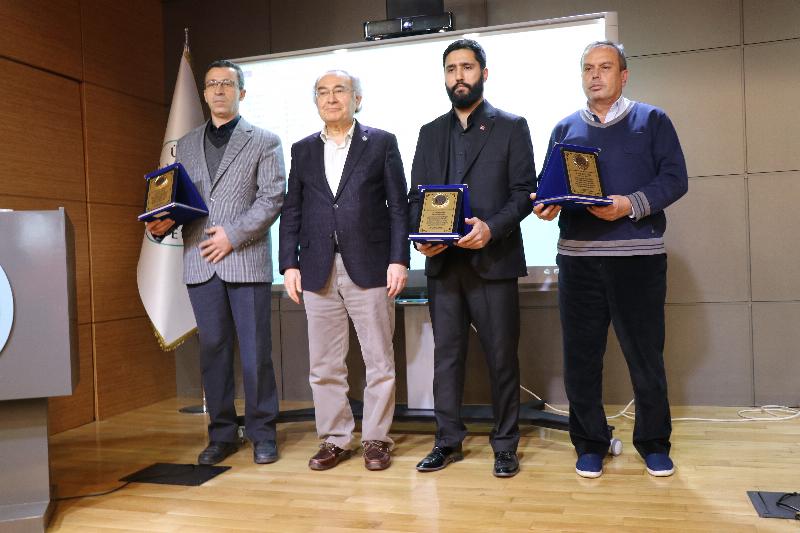
In the continuation of the program, a new board of directors election was held. Prof. Dr. Tarhan, who was once again elected as the General Chairman for the new term, addressed the audience with a thank you speech. Tarhan said: “I extend my sincere thanks to everyone who contributed. Be sure to visit ASDER's website. A digital transformation is taking place today. Our generation are immigrants to the digital world, while young people are its natives. ASDER's motivation is not self-interest but responsibility towards Allah; it is entirely spiritual. We are here today, tomorrow someone else will continue; we act feeling this spiritual responsibility. The greatest strength here is the strength of sincerity (ikhlas). Ikhlas is also divine consent, to work sincerely without adding any other intention to our purpose. As we recounted the injustices we experienced, this led to a significant mental transformation, which then reflected in the situation by leading to social transformation. We will continue our work in this field. I thank you again.'”
Share
Request a Call
Other News
- The book that read today's digital threats in 2014: Being a Conscious Family
- Experts warn: 'Instead of memorizing letters, teach pencil grip, scissor use, and coloring'
- School fear and school love both start in the family!
- Family is not merely transforming, it is being battered under a serious assault
- Artificial intelligence opens the door to early diagnosis in autism!