

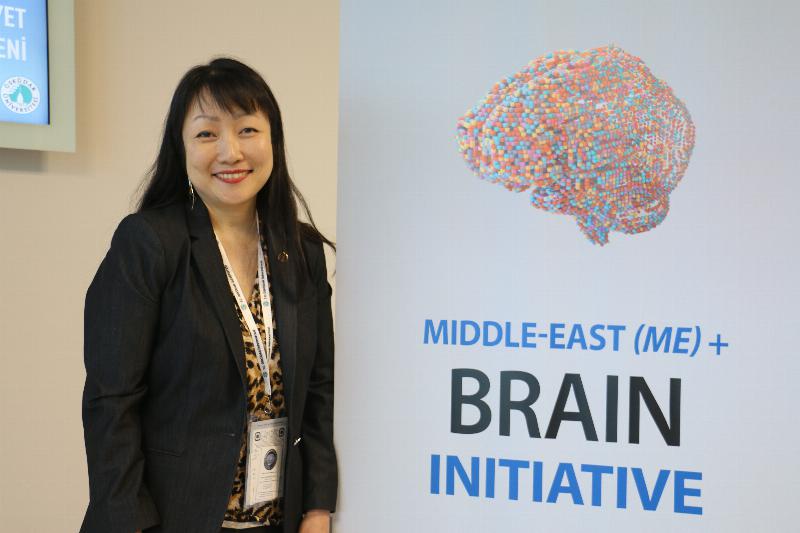
Üsküdar Üniversitesi and the Balkans and Middle East Brain Initiative Summit, organized by the Society for Brain Mapping and Therapeutics (SBMT), brought together experts working in the field of neuroscience. Dr. Vicky Yamamoto, who conducts studies in the field of neuro-oncology, said that vaccine studies for cancer are promising. Yamamoto noted that the vaccine production process is easier and faster with mRNA technology, stating, “Theoretically, I believe a cancer vaccine would work if tried. If more investment and work are done on this, we could be able to produce an mRNA cancer vaccine within 5-10 years. Theoretically, this is possible.” Yamamoto, also drawing attention to cancer treatment with stem cells, said that the most preferred and clinically studied among these are stem cells isolated from umbilical cords.
Content
mRNA vaccine studies offer hope in cancer treatment
SDG tags related to the news




Umbilical cord in cancer treatment…
Society for Brain Mapping and Therapeutics (SBMT) Executive Director Dr. Vicky Yamamoto stated that cancer is a disease where the healing process becomes more difficult when it recurs.
Stem cells within cancer are targeted
Vicky Yamamoto, who conducts important studies in neuro-oncology, noted that her research in cancer aims to kill stem cells within the cancer without harming the surrounding healthy tissue for a better treatment. Yamamoto said, “Because even if cancer is cured, the stem cells within the cancer can remain in the body. We need stem cells to heal injured tissues, but we do not need stem cells within cancer, however, unfortunately, stem cells are also found within cancer.”
Cancer stem cells are different from normal stem cells
Pointing to the importance of stem cells in cancer treatment, Dr. Yamamoto said, “Normal cells contain stem cells. Generally, stem cells are very important for normal functions like daily bodily functions. Current studies show that cancer cells also contain stem cells, which is not a desired situation. The presence of stem cells in cancer is a factor that makes our work more difficult. As a result of chemotherapy, cancer shrinks and even disappears. But sometimes cancer grows again, and people don't know why. Patients return with a more serious case in second cancer incidences. It becomes harder to treat the second cancer in the same area. Studies from 20 years ago show us that the reason for this is that cancer also contains stem cells. The stem cells of our normal cells know when and how much they will grow, and to what extent they will renew, but cancer stem cells only divide and grow, and they continue to do so constantly. Because these cells divide continuously, they spread throughout the body, and generally, cancer patients die due to this. Since cancer stem cells are different from normal stem cells, it is very important for us, as cancer biologists, to identify and eliminate them. In this way, we hope to control, and even treat, the regeneration of cancerous stem cells,” she said.
A high number of stem cells in the tumor increases the risk of recurrence
Yamamoto noted that in some types of cancer, not many stem cells are observed within the cancer, adding, “These types of patients may even respond better to cancer treatment because patients with a low number of stem cells and a high number of well-differentiated cells tend to respond more positively to cancer treatment and live longer. Patients with a high number of stem cells in the tumor, on the other hand, have a higher risk of developing cancer again, and recurrent cancer can be more difficult to treat.”
Biontech's cancer vaccine should be theoretically successful
Yamamoto also made evaluations regarding vaccine studies carried out to eliminate cancer, stating the following:
“The work conducted by Biontech should theoretically be successful. Although Biontech is known for its coronavirus vaccine, it was originally founded with the aim of treating cancer. The company found the process of working on a cancer vaccine to be very risky because the subsequent process would be very long, but since they possessed mRNA technology, they tried to identify specific cancer proteins. Some types of cancer are known for producing specific cancer proteins. People use these as cancer markers. When the coronavirus pandemic emerged, with people expecting a vaccine to be produced quickly, Biontech paused its cancer research and shifted its focus to the coronavirus vaccine. The vaccine production process with mRNA technology is easier and faster. Unlike normal vaccines, such as the flu vaccine, it can be obtained in a few months instead of a year. I believe that theoretically, a cancer vaccine would work if tried. If more investment and work are done on this, we could be able to produce an mRNA cancer vaccine within 5-10 years,” she said.
Sugar intake should be reduced during cancer treatment
In response to a question, Vicky Yamamoto also touched upon the relationship between sugar and cancer, saying, “As you know, cancer occurs with the uncontrolled division of cells. Cancer cells grow continuously and rapidly. Our body naturally needs some sugar. The chocolate, pastries you consume in your daily life, or the sugar you put in your tea are sources of energy for you. As you know, sugar is important for normal cells, but cancer cells have a higher need for sugar because they divide more. For example, an important warning from doctors to patients undergoing chemotherapy or cancer treatment is not to consume foods high in sugar and carbohydrates such as rice, pasta, pastries, and sweets. The reason for this is that cancer cells divide more when they encounter excessive sugar. Especially during cancer treatment, it is important to limit the intake of sugar and carbohydrate-rich foods. We don't tell our patients to completely cut out sugar; we only recommend reducing their intake. And generally, even before becoming a cancer patient, excessive sugar intake is not good for your body. In my opinion, it's all about balance. To prevent or reduce the risk of getting cancer, an important thing to do is to balance your diet. This balanced diet should include small amounts of sugar and carbohydrates, a healthy amount of protein, and plenty of vegetables. This diet is quite important for preventing cancer, but it is especially important to be aware of the importance of a balanced diet while undergoing treatment.”
Dr. Vicky Yamamoto stated that she has studies on stem cell therapies for cancer treatment, saying, “Currently, we have stem cell therapies for cancer. There are clinical trials, but a clinical trial does not mean an approved treatment. These are still ongoing studies, sometimes tested on five to ten, sometimes hundreds of patients, with results yet to be confirmed. Sometimes there are treatment studies using normal stem cells; these types of research are focused only on cancer stem cells, but my area of work is how cancer can be treated directly. However, of course, there are also different scientists continuing their work in this field.”
Umbilical cord in cancer treatment…
Yamamoto noted that there are multiple ways to treat cancer with stem cells, saying, “Among these, the most preferred and clinically studied method is to convert stem cells isolated from the umbilical cord into immune cells and use them in cancer treatment. The umbilical cord, which carries elements necessary for the continuity of life such as oxygen between the mother and baby, contains abundant blood. Under normal circumstances, this cord is discarded after the baby's birth, but the umbilical cord actually contains immature, young stem cells that could be beneficial in cancer treatment. Scientists wondered if they could use this in treatment. As a result of their experiments, they found the answer to be yes, but studies are still ongoing.”
Studies on stem cell therapies offer hope
Dr. Vicky Yamamoto stated that in experiments conducted by scientists, when stem cells isolated from the umbilical cord were injected into injured tissue in laboratory settings, the tissue was observed to heal, adding, “The conclusion drawn from this is that stem cells have the ability to self-renew. After these experiments, the question arose whether stem cell usage would be possible in cancer treatment by following the same steps. As a result of laboratory experiments, they observed that stem cells found in the umbilical cord are very different from normal cells because stem cells are very unspecialized cells. In the stem cell experiments applied to cancer, they could not observe the ability to treat cancer. It is a known fact that immune cells within the body attack small cancer cells. The new agenda for some researchers has been whether an increase in the number of cells showing defense against cancer could be achieved when stem cells isolated from the cord are specialized as immune cells. Recent studies have proven that such a possibility may exist. These studies are currently being continued and tested clinically.”