

Prof. Dr. Nevzat Tarhan wrote about the effect of Hypnosis in resolving traumas in his column this week:
Content
Hypnosis helps in resolving traumas
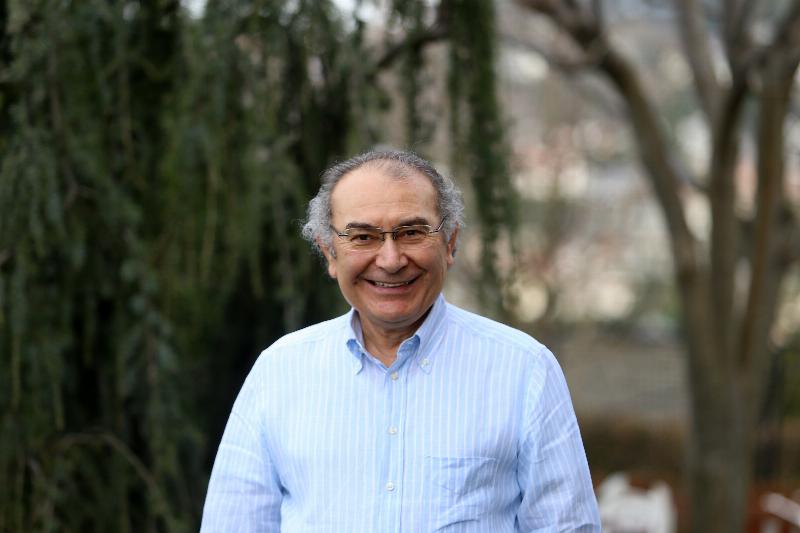
Hypnosis is used as an auxiliary treatment technique in psychiatry. Especially in traumatic life events, hypnosis is utilized to resolve trauma. Hypnosis helps to turn a person's unresolved traumas into resolved ones by creating a different state of consciousness in the brain. There are traumas in the brain that resemble volcanoes. Hypnosis actively brings these traumas to the surface, actively intervenes, and heals them correctly.
Hypnosis is used as an auxiliary treatment technique in medicine, especially in psychiatry. Hypnosis is used like a psychotherapy technique. Hypnosis is a different state of consciousness. This is the scientific definition. Normally, a person changes their state of consciousness themselves, temporarily giving subconscious control to someone else. When they enter hypnosis, they hand over conscious control to another person, who then corrects their fears, anxieties, worries, and thought disorders. The hypnotherapist needs to know the patient well. They must know the patient's fears and what needs to be corrected. After getting to know them and inducing them into hypnotic depth, they begin with suggestions, dividing this into sessions as needed.
The person performing hypnosis must be trusted
To understand hypnosis, it is necessary to know the four stages of entering hypnosis. In the first stage of hypnosis, the person must mentally trust the hypnotist. They need to surrender to them. If a person does not fully surrender to or trust the hypnotist, they absolutely cannot enter hypnosis. They must completely believe, surrender, trust, and let go. This is the first condition. Hypnosis absolutely cannot be done by force. You know, like in movies, they meet in an elevator. Hocus pocus, they perform hypnosis and make them do something. There is no such thing.
Some medications are used in hypnosis
Some medications and chemicals are used in hypnosis. There are narcoanalysis and hypnoanalysis. There is narcohypnoanalysis. There are also drugs used in anesthesia. We administer it at a sub-threshold dose, so the person does not sleep. In anesthesia, it's given at a sleep dose. In hypnosis, it's given at a wakefulness dose. In this way, the person's conscious control weakens, and their suppressed emotions and fears emerge, and they begin to talk. This situation is sometimes observed in anesthesia as well. When waking up from anesthesia, a person starts rambling about the topics they care about most, the ones they are most anxious about. In essence, conscious control weakens there.
Hypnosis is done with chemicals, while classical hypnosis is done with suggestion. With suggestion, we help the person with the issues they request. In some cases, hypnosis is used as a performing art. They make the bodies of curious and willing individuals rigid. They say the entire body will contract and make it rigid. The person stands like a bridge between two chairs, and this is done.
The first stage is to focus attention on the treatment, the second stage is to relax, the third stage is to enter a conscious sleep, and the fourth is to transition into deep hypnosis.
When the person reaches the fourth stage, they have handed over control to the hypnotist. At this stage, hypnosis has brought the person back to their childhood. When told, 'You've gone back to your childhood, you're reliving your childhood days, your mother is by your side now, playing peacefully,' if you place a pacifier in front of them, the person takes it and starts sucking it like a child. You can revert them to the same childhood period.
Used in resolving unresolved trauma
The hypnosis technique is used to resolve unresolved trauma in some traumatic events. Therefore, in hypnosis therapy, the person must first believe. In the second stage, we ensure the person focuses on the hypnotist. In therapy, we use verbal suggestion. We say, 'Give all your attention to me.' I usually induce hypnosis by having the patient look at the nail of their right finger. There is a treatment in hypnosis achieved through eye movements. It's known as the eye movement desensitization method. This is actually very similar to hypnosis. In hypnosis, there is also a rotating object. When you spin it black and white, it makes you feel like you're being drawn in, it spins like that. Especially the emblem of the Far East had this effect. It also induces hypnosis. When a person looks at it, fixing their eyes and moving something like a pendulum makes them enter hypnosis more easily. Eye movements facilitate it. It is a method used for that purpose.
How to tell if a person has entered hypnosis?
How can you tell if a person has entered hypnosis? I tied a balloon to the patient's right arm. The balloon is rising, rising. You say, 'It will go up, your arm will rise upwards. You won't hear anything, you're completely relaxed, refreshed. You're sleeping peacefully, but your arm will slowly rise.' The person's arm begins to rise with eyes closed due to hypnosis. That then becomes our measure of entering hypnosis. We slowly tell them, 'Your arm will return to its original position,' and their arm lowers. After that, the therapy part begins. Sometimes a more aggressive method is applied to individuals here. In that method, the top of their hand goes numb, you say, 'You won't hear anything, you won't feel anything at all due to the effect of anesthesia,' and you insert a needle, and the person doesn't feel anything. Later, when they wake up, we ask what happened to their arm, and they say, 'My arm lifted involuntarily,' because they gave their conscious control to the hypnotist. This indicates deepening into hypnosis.
At the end of the session, the patient is woken up by being told, 'You are completely refreshed and relaxed now, we have slowly come to the end of the session. You have seen that there is nothing to fear.' The finger-snapping gesture is also taught to that person. They are told, 'You will wake up immediately when fingers are snapped,' and the patient wakes up immediately after the fingers are snapped. There is self-hypnosis. A person learns this on their own. They take a key in their palm, close their eyes when they squeeze it. They can enter self-hypnosis and give themselves suggestions. If a person learns this automatically, then if they get upset about something automatically, or when they don't feel good, they can immediately perform self-hypnosis, relax themselves, do something like meditation, and then wake up again and continue with their work.
Inability to wake up is not an issue in hypnosis
There is no question of being unable to wake up in hypnosis. Even if you leave the person to themselves, at most they will sleep very deeply, and then wake up.
The concept of implicit memory is now more commonly used instead of subconscious. Implicit memory, which is what we call the subconscious, is actually a very important discovery. It has been understood that it has a neuroscientific equivalent. The neuroscientific equivalent of the subconscious is implicit memory, meaning a person records many things in implicit memory but forgets them. They don't remember it. Hypnosis brings out the information in implicit memory. It brings it to the present, resolves it, and puts it back in a new form. People's trauma is resolved. Therefore, it is something that is very easily used in trauma treatment, but in hypnosis, the person must trust the hypnotist. This is very important.
Hypnosis is not applied to everyone
Those with certain psychiatric illnesses cannot enter hypnosis. Paranoid individuals cannot enter hypnosis, obsessive individuals cannot enter hypnosis. Because they are obsessive, constantly questioning everything and saying 'what if, what if,' they cannot let go.
Individuals with personalities prone to suggestion, and those in professions where obedience is glorified, enter hypnosis much more easily. These individuals are accustomed to a command-and-control situation. Their control emotions in the brain work that way. In cultures of obedience, Eastern cultures, cultures of fear, obedience due to fear is very common. Unfortunately, hypnosis is easier for them. That is, they surrender to a person they fear out of fear. Later, that surrender makes them feel helpless, powerless, weak, and worthless, and then they surrender. When they surrender, everything can be made to happen to them through hypnosis. Nothing wrong can be made to happen to a person with principles through hypnosis.
Hypnosis must be performed by an expert
Hypnosis is currently used in various branches within the scope of complementary medicine practices. Hypnosis can be used by some dentists to alleviate pain. If a person enters hypnosis, painless dental operations can be performed without using any anesthesia. During a hypnosis session, it is important for the therapist to remain continuously active and maintain control. If they can analyze the person correctly, results can be achieved. Hypnosis is not used in every case. Therefore, we use it as a treatment method in selected cases. Every profession uses it in its own field. In recent years, its neurobiological basis has also been understood. Hypnosis creates a different state of consciousness in the brain. It transforms a person's unresolved traumas into resolved ones. There are traumas in the brain that resemble volcanoes. Hypnosis actively brings these traumas to the surface, actively intervenes, and heals them correctly. Hypnosis must be performed by experts who have received training in it.
Prof. Dr. Nevzat Tarhan
Founding Rector of Üsküdar Üniversitesi - Psychiatrist
Share
Update Date: February 27, 2026
Creation Date: February 17, 2021