

The prevention, elimination, and therapeutic services for all kinds of risks to children are within the scope of child protection. Experts state that every child is under the state's protection umbrella; children whose family unity is disrupted, who cannot meet their basic needs, and who become vulnerable to neglect and abuse need special protection. Lecturer Ezgi Tesir points out that the need for child protection is rapidly increasing, while also emphasizing the importance of enhancing the quality of personnel working in this field.
Content
Every Child is Under the State's Protection
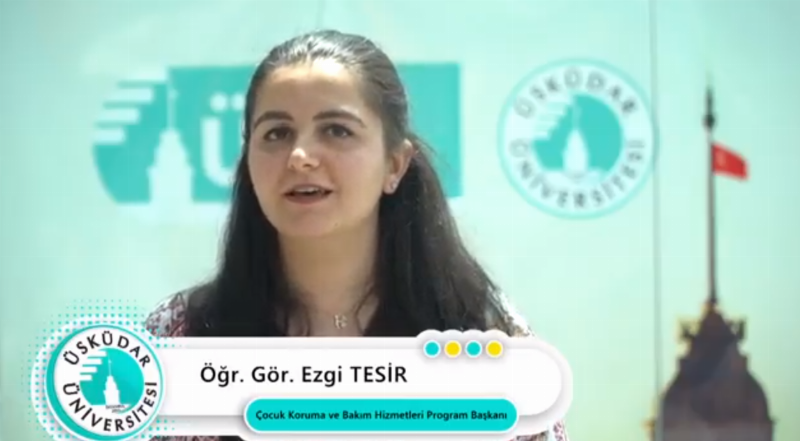
The need for child protection is rapidly increasing…
Lecturer Ezgi Tesir, Head of the Child Protection and Care Services Program at Üsküdar Üniversitesi Vocational School of Health Services, made evaluations regarding the scope of child protection.
Includes preventive and therapeutic services
Lecturer Ezgi Tesir stated that the field of child protection refers to a holistic area encompassing services, legislation, and institutions aimed at preventing and eliminating all kinds of risks to children, protecting the child's best interests and well-being, and supporting their development. She said, “This field includes both preventive and therapeutic services. On one hand, there are services aimed at preventing various health problems, and risks such as addiction, abuse, and violence that children may be exposed to. On the other hand, it covers services including the protection, support, and treatment of groups of children who have faced various risks, such as those with substance use, working in heavy labor, drawn into crime, exposed to neglect and abuse.”
Children with disintegrated families need protection
Lecturer Ezgi Tesir emphasized that every child is under the state's protection umbrella and continued her words as follows:
“However, some children need special protection. Here, the concept of 'children in need of protection' must be addressed. For children, the state of needing protection is a problem that arises within the framework of individual and social issues, leading to the disintegration of the family unit and its inability to sustain itself for various reasons. In other words, children who do not live with their parents for various reasons, or even if they live with their family, are deprived of the attention and love they need, whose basic needs are not met, who are drawn into crime, cannot receive necessary education, are forced to work, become vulnerable to neglect and abuse, and are subjected to ill-treatment are considered children in need of protection.” she stated.
Children are most affected by social problems
Lecturer Ezgi Tesir stated that children are among the most affected vulnerable groups by social problems experienced in societies. She said, “Social problems such as migration, poverty, unemployment, and violence are observed to change the family structure and, consequently, affect children's living conditions. Poverty is the most fundamental social problem of our time. While poverty causes problems for children such as lack of access to basic food, suitable housing conditions, education, and health services, it also represents the driving force behind many other social problems such as violence, abuse, substance use, family disintegration, and being drawn into crime. In this context, we can say that the need for child protection is rapidly increasing.”
Intervention should be made before encountering a problem
Emphasizing the great importance of therapeutic services in child protection, Lecturer Ezgi Tesir said, “It is also important to implement preventive services correctly and timely to improve this field and protect the child's best interests. In other words, when we take precautions before a child encounters a problem, we truly protect the child. For example, supporting a family experiencing poverty before the child is drawn into crime, drops out of school, or is subjected to any form of abuse, would be a correct intervention both for the child and for reducing the burden on the child protection system.”
Importance should be given to improving personnel quality
Lecturer Ezgi Tesir stated that enhancing the quality of personnel working in child protection is also one of the important points. She said, “It is a necessity that personnel working at every level, especially caregivers who are in direct contact with children in institutions where children are placed under protection, consist of individuals trained in this field. The continuous communication between personnel working with children and their teachers in schools, as well as the widespread adoption of school social work as an active area, are among the important points to focus on for both the healthy monitoring of children under protection and the early diagnosis of children at risk.”
Primary responsibility belongs to the state
Lecturer Ezgi Tesir, Head of the Child Protection and Care Services Program at Üsküdar Üniversitesi, stated that the primary responsibility belongs to the state in legislation and concluded her words as follows:
“Responsibilities for child protection have been defined within many institutions such as the Ministry of Family and Social Services, Ministry of National Education, Ministry of Justice, Ministry of Health, local governments, and law enforcement agencies. However, in addition to the state, non-governmental organizations also hold an important place in this field, and the private sector also provides services related to this area. We can also say that increasing the number and comprehensiveness of projects and services carried out in cooperation by public, private sector, and non-governmental organizations on this issue will provide significant developments for the field of child protection.”
Share
Update Date: March 01, 2026
Creation Date: October 28, 2022