

Üsküdar University Faculty of Communication Head of Visual Communication Design Department Prof. Dr. Hatice Öz Pektaş made evaluations about digital art, a form of art produced through digital technologies.
Content
Art is also going digital
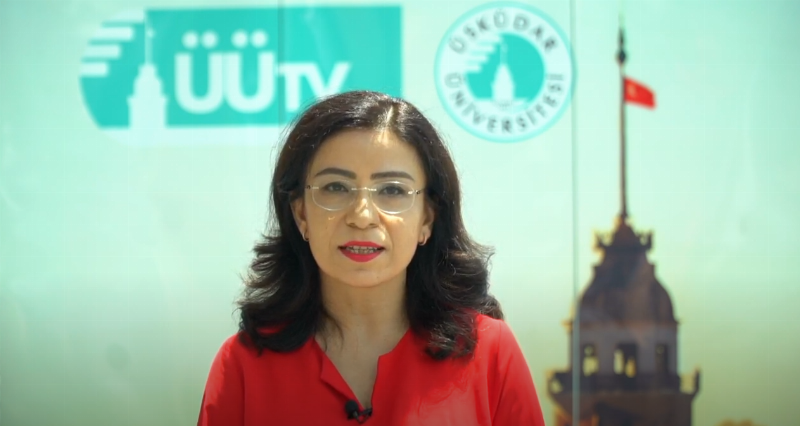
The concept of “digital art,” which emerged with the age of technology we live in, appears in many areas of life. It can be used in many different fields, from the film and TV series sector to the video game sector and the newly developing online education sector. Experts point out that digital arts form the culture of humanity's new life, which has begun to experience the Industry 4.0 era, emphasizing that it shapes a new visual and aesthetic perception radically different from the previous one. Prof. Dr. Hatice Öz Pektaş stated that in the near future, non-digital art production techniques will gradually disappear and take their place in history.
What is digital art?
Prof. Dr. Hatice Öz Pektaş stated that since digital technologies are the standard production technology in every field of our age, digital art is also the art of our age.
If Da Vinci or Van Gogh lived today
Prof. Dr. Hatice Öz Pektaş noted that throughout history, every artist has used the most advanced technological opportunities and the newest raw materials offered by their era to produce their art. She said, “Today's production technologies in the Industry 4.0 era are digital tools, artificial intelligence, and algorithms, and their raw material is data. There is no doubt that if Da Vinci or Van Gogh lived today, they would produce with algorithms and use data as pigment.
Especially in the near future, where Generation Z, born into the digital age and grown up with the internet, will govern the world, non-digital art production techniques will gradually disappear and take their place in history.”
The intersection of visual art and visual design is expanding
Prof. Dr. Hatice Öz Pektaş noted that art does not have to have a “function” to be used, stating, “A work of art is the product of the artist's effort to express and externalize themselves. A usable product is design, not art. Today, as digital screens and the visual content presented through them equip our perceptual environment and permeate almost every moment of our daily lives, the intersection of visual art and visual design is expanding. Visual content can be both an art and a design product.”
Digital arts are used in many fields
Prof. Dr. Hatice Öz Pektaş stated that in this new field where boundaries are blurring, digital arts are used in almost every field, ranging from the entertainment sector to the education sector and nourished by visual design. She added, “The most frequently used areas are the film and TV series sector, the video game sector, and the newly developing online education sector. The function assigned to digital arts as a design product is to provide communication and storytelling in the digital environment of the new age.”
Digital arts shape aesthetic perception
Prof. Dr. Hatice Öz Pektaş said, “Digital arts form the culture of humanity's new life, which has begun to experience the Industry 4.0 era, shaping a new visual and aesthetic perception radically different from the previous one. It serves as a visual medium in the digital world, which is the new platform for communication and emotional sharing.”
Artificial intelligence has started transforming digital arts
Stating that “Digital arts are already current,” Prof. Dr. Hatice Öz Pektaş added, “In the future, they will continue to transform in line with the evolution of technology. Artificial intelligence, algorithms, and data, which are the harbingers of the Industry 4.0 era, have started transforming digital arts and will be the key concepts for producing digital arts in the near future.”
Share
Update Date: February 27, 2026
Creation Date: June 25, 2021
Request a Call
Other News
- Social responsibility courses moved to the field
- Erasmus+ Orientation Week completed at Üsküdar
- Prof. Nevzat Tarhan: “Brain secretes ‘dark glue’ in social media lynchers!”
- Prof. Nevzat Tarhan: “Every segment of society should be able to say, ‘This constitution is my constitution!’”
- OHS releases guide for safe operation of industrial robots