

Experts point out that due to the aging population, deaths from cardiovascular diseases will reach 400,000. This situation indicates that the need for well-equipped healthcare personnel will increase. Perfusionists are also among the occupational groups that will be needed. Experts, noting that the field is little known despite the definition of the profession in 2011, state that those trained in this area can work in artificial heart technologies, heart-lung transplant units, and all types of surgery where organ protection will be performed.
Content
Aging population will increase the need for perfusionists!
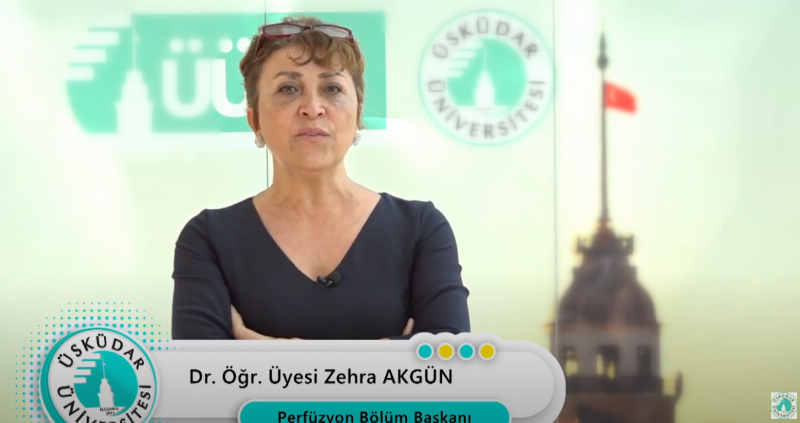
Üsküdar Üniversitesi Faculty of Health Sciences Head of the Department of Perfusion Dr. Lecturer Zehra Akgün, made evaluations about the perfusionist profession, which is not well-known in Turkey.
Profession Defined with the Law in 2011
Stating that perfusionism is not a widely known profession, Dr. Lecturer Zehra Akgün said, “The profession of perfusionist was defined with Law No. 6225, which was published in the Official Gazette on April 26, 2011, and entered into force. Despite the enactment of the law, we can say that the absence of graduate perfusionists with the required qualifications was effective in the initial opening of this department. The law stated that perfusionists are professionals who manage extracorporeal blood circulation using a heart-lung machine. This program will ensure the training of human resources with theoretical and practical equipment at a level that can work in the management of mechanical heart support devices, artificial heart technologies, heart-lung transplant units, all types of surgery where organ protection will be performed, and isolated organ chemotherapy.”
Aiming to Raise Constructive and Creative Individuals
Akgün stated that the aim of perfusion undergraduate education is to raise individuals who are constructive, creative, possess critical thinking skills, can use the knowledge and skills they acquire in clinical practices, and can establish a relationship between science and technology, adding, “Perfusion education should enable students to reach knowledge through their own work, analyze the information they acquire, develop their creative aspects from this information, utilize it, and make correct decisions. In this context, we can say that the level and adequacy of perfusion-related knowledge are extremely important.”
Perfusionist Need Will Increase in the Coming Years
Dr. Lecturer Zehra Akgün reminded that cardiovascular diseases are among the leading causes of death worldwide and in Turkey, and continued her words as follows:
“Globally, 17 million people die annually from cardiovascular diseases, 2 million in the European Union, and around 200,000 in Turkey. Despite Turkey's young population structure, the high rate of deaths is expected to reach even higher levels in the coming years with the aging of the population. While the population aged 65 and over in Turkey is approximately 5 percent, it is projected to double in the next 10-15 years, and deaths from cardiovascular diseases are expected to rise to around 400,000 by 2020. Therefore, the need for well-equipped healthcare personnel working in this field will increase.”
They Can Work in Public and Private Healthcare Institutions
Dr. Lecturer Zehra Akgün emphasized that graduates of the Perfusion Department can work in public hospitals with cardiovascular surgery departments, university hospitals, training and research hospitals, private healthcare institutions, and the medical sector, adding, “Candidates who are open to lifelong learning, will work in harmony with their teammates by showing a positive approach, have problem-solving skills, high communication skills, can produce rational solutions to problems, will keep their scientific development alive by following professional publications and technology, can work in enclosed environments and intensive care for long periods, will adapt to the on-call system, can travel for short and long-distance transport operations when necessary, respect ethical rules and show sensitivity to patient rights can choose this department.”
Perfusion Department to Play a Role in Training Scientists
Akgün stated that Üsküdar Üniversitesi Perfusion Department Undergraduate Program will play a role in the development of perfusion practices needed in this field in Turkey, adding, “Personnel who will follow current technological developments and will be trained in their field, and who are theoretically and practically proficient in their field, will be trained for physicians working especially in the surgical field during operations. In our country, research at an academic level is also needed to solve existing problems in education in this field. This program will undertake an important role in training the scientists needed in the field.”
Share
Update Date: February 28, 2026
Creation Date: August 20, 2021
Request a Call
Other News
- The book that read today's digital threats in 2014: Being a Conscious Family
- Experts warn: 'Instead of memorizing letters, teach pencil grip, scissor use, and coloring'
- School fear and school love both start in the family!
- Family is not merely transforming, it is being battered under a serious assault
- Artificial intelligence opens the door to early diagnosis in autism!