

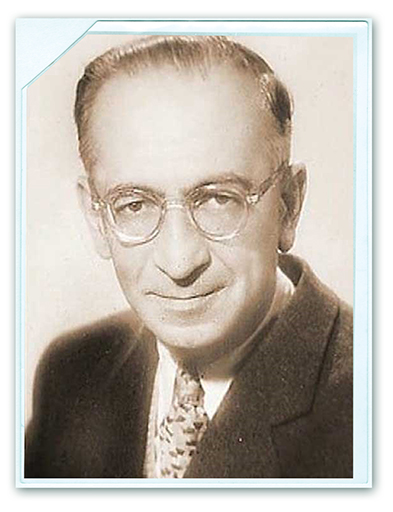
Peyami Safa (April 2, 1899; Fatih, Istanbul - June 15, 1961, Kadıköy, Istanbul) was a Turkish writer and journalist.
Who is Peyami Safa?
Peyami Safa was born in Istanbul in 1899 and is one of the important writers of Turkish literature. Known in the world of literature, especially for his novels, stories and essays, Safa made significant contributions to Turkish thought and cultural life. Safa gained an important place in Turkish storytelling and succeeded in addressing the problems of society through his literature. Psychological analysis and social criticism come to the fore in her works. The author's life was characterized by difficulties from an early age. After the death of his father, he lived a difficult life with his mother and brother. These difficulties in Safa's life left their traces in his works and created a desire to delve into the depths of the human soul.
He started his education in Istanbul, but due to the early death of his father, he experienced financial difficulties. In addition, due to the illness he suffered in his childhood, he could not receive a regular education and was self-taught. Peyami Safa, who had to drop out of Vefa High School due to financial difficulties, won the exam and started working at the Post and Telegraph Ministry. He worked as a teacher at the Rehber-i İttihat School. In 1918, he started his journalism and writing career by publishing his stories titled Asrın Hikâyeleri (Stories of the Century) in the newspaper Yirminci Asır, which he published with his brother İlhami Safa. Later he worked for the newspapers Son Telgraf, Tasvir-i Efkâr, Cumhuriyet, Milliyet and Tercüman. He published the magazines Kültür Haftası and Türk Düşüncesi. He is one of the names who laid the foundations of detective novel writing in Turkey and his characterization of Cingöz Recai, inspired by Maurice Leblanc's Arsen Lüpen, is widely known.
Understanding of Art and Literature
The difficulties he experienced in his youth strengthened his relationship with literature. The author's works, nourished by his observations and the social conditions in which he lived, earned him a great reputation. At the beginning of his literary career, he was especially known as a short story writer, and in the following years he proved himself in the novel genre. One of his most well-known works, "Ninth Ward of the Hariciye", stands out as a psychological novel. This novel is an example of Safa's unique style and tells the journey of the individual to his inner world. In the author's literary approach, there is a tendency to delve into the depths of the human soul and to resolve the conflicts in this soul.
Another important work of Safa, "Fatih-Harbiye", presents an important criticism of the changing structure of society. Here, two different lifestyles represented by traditional Istanbul and the modernizing West are compared and their effects on human beings are questioned. In this work, Safa also deals with the conflict of the individual in his inner world and his relationship with society. The author's works also frequently deal with cultural conflicts and the effects of society on the individual. Safa skillfully explores how social structures put pressure on individuals, how individuals express these conflicts in their inner worlds and the effects of these conflicts on human psychology. Individual freedom, belonging, identity crisis and social values are the cornerstones of Safa's works.
Influence and Legacy
Peyami Safa wrote many works throughout his life and gained an important place in Turkish literature. Died in 1961, the author is still active in the world of literature with the works he left behind. His literature is aimed at exploring the subtleties of the human soul, understanding individual and social contradictions and seeking ways to resolve these contradictions.
Peyami Safa's place in Turkish literature is great not only for his literary aspect but also for his social criticism. His works are an important source for understanding both the inner world of the individual and the evolution of society. For this reason, Safa's life and works are recognized as an important turning point in the development of Turkish literature. Her works Fatih-Harbiye and Dokuzuncu Hariciye Koğuşu are included in the list of 100 basic works recommended to secondary school students by the Ministry of National Education, and her works have been adapted into movies and TV series in various periods and remain popular even today.