

Üsküdar Üniversitesi Founding Rector Prof. Dr. Nevzat Tarhan, evaluated the concepts of growth and maturity in a psychological context. Stating that learning from one's mistakes is one of the most important indicators of maturity, Prof. Dr. Tarhan emphasized that the maturation process continues throughout life; “Maturity is not a destination, it’s a journey.” he said.
Content
Prof. Dr. Tarhan: “Maturity is not a destination, it’s a journey”
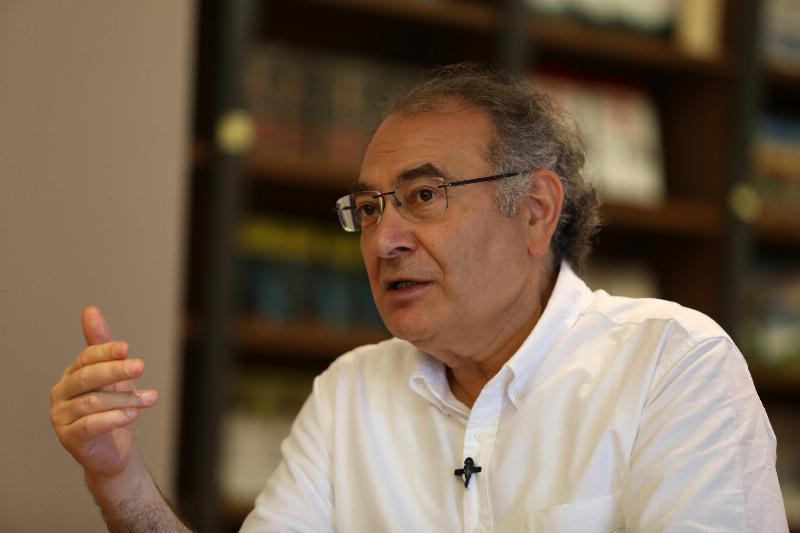
“Maturity emerges when mental and emotional development proceed in balance”
Prof. Dr. Tarhan stated that spiritual growth has two important pillars; “One of them is mental, the other is emotional maturity. Physical maturity is the development of the body according to the age group, so it is an easily measurable thing. Height and weight are measured and monitored according to age. When it comes to human spiritual development, it has both a mental and an emotional dimension. So, what is the mental dimension? It is the aspects related to academic success, such as logic, reasoning, analysis, speech, and calculation. The emotional dimension, on the other hand, is the dimension more related to one's internal success. One is about external self-proof, the other is about internal development. Maturity emerges when these two proceed in a balanced way.” he said.
“We must distinguish between the definitions of vision and mission”
Tarhan stated that mental maturity can be measured, “A person's intelligence can be measured with the tests they take. Our education system currently measures mental maturity. However, it does not measure behavioral maturity. Behavioral maturity includes emotions, self-development, values, and goal setting related to self-development. For example, Confucius said centuries ago, ‘A person who serves the purposes of creation is a mature person.’ In our companies, vision and mission are defined, for example, and that also applies here. Vision involves striving to be the best a person can be in life. Mission, on the other hand, involves doing the best one can do in life. One shows goals, the other shows ideals. Vision indicates strategic thinking, while mission indicates more professional thinking, that is, ‘What should I do now?’, ‘What can I do best?’ Has humanity come to this world for a mission or to live randomly? According to Confucius, we must first make a distinction between the definitions of vision and mission.” he stated.
“A person must also have a vision to think about what comes after death”
Tarhan continued his speech as follows: “If a person thinks, ‘inorganic substances created me,’ and says, ‘I will rot away under the soil anyway,’ if this is their life philosophy, their vision extends only to death. They have not been able to form a vision for what comes after death. However, there are such emotions in humans… There are things Confucius called ‘the purpose of creation’… There, a person brings explanation to what comes after death. People don’t want to die. They reach eighty and ask, ‘How can I live longer?’ They ask, ‘Is there a cure for immortality?’, ‘Is there an end to eternity?’ As Tolstoy said, ‘There must be a meaning that death cannot change.’ If a person cannot think these things, their vision is narrow.”
“This period led humanity to question its purpose”
Tarhan stated that especially after the pandemic, a great desire for rethinking, re-evaluation, and returning to factory settings emerged in the world; “This period also led humanity to question its purpose. This is also true for young people. Young people need to realize this. Let's say you have a machine. For that machine to work efficiently and be productive, it must be operated according to its factory settings. So, who knows it best? Who knows best how the device works in which situations, and how to fix a malfunction? The one who made it, who designed it, knows. The same applies to humans. In fact, there is a famous story. When computers first came out, computer repairmen were very few. One day, a broken computer is brought for repair to a very skilled person in the USA. The man works for days, repairs the non-working computer, and the computer starts working again. Then they ask the man, ‘What do we owe you?’ The man says, ‘One thousand dollars and fifty cents.’ Those facing him are surprised and ask, ‘We understand the thousand dollars, but what is the fifty cents for?’ The man replies, ‘Fifty cents is for the broken part, and one thousand dollars is (pointing to his head) for this.’ There is mental maturity, mastery, and experience here. Humans are such beings, not mechanical beings. Descartes’s misconception begins at the point where he said, ‘Humans are merely mechanical beings.’ He said this influenced by Newton, but now the 21st century has taught us that there is no matter first, there is abstract information first, there is a universal database first. Matter was formed after that. Matter is not the cause, but the result.” he said.
“Maturity is something learned”
Prof. Dr. Tarhan stated that recognizing the ideal, mature person is different for every age, “The maturity of each age is different. There is adolescence, marital maturity, school maturity… All of these are different types of maturity. Maturity is something learned. Our body grows according to its genetic codes. In animals, behavioral maturity is also written in genetic codes. It is coded according to eating, drinking, and reproduction. As in the famous hierarchy, at the very bottom of the pyramid of needs, there is the need for food, drink, and reproduction. Secondly, there is the need for security, psychosocial needs, and thirdly, the need for love and to be loved. Then come social needs and the need for self-actualization. What is self-actualization? Humans are beings beyond eating, drinking, and reproducing. Therefore, for self-actualization, a person must have abstract goals. As a person realizes this, they progress through the stages of maturation. If a person says, ‘I am thirty years old now, I am forty years old, I have matured,’ that person has not matured. Maturity is not an instantaneous state; it is a lifelong process. Therefore, maturity is not a destination, it is a journey. It is the state at the end of life. The final state of a person is like total quality in a factory; total quality is revealed upon death. If a person says, ‘I am mature, I am successful,’ they are deceiving themselves. That is why maturity is a dynamic process. Every step on the path to maturity is progress. It is progress on the path of quality, on the path of perfection. It is about achieving this. When a person says, ‘I have become, I am ripe, I was raw,’ they stop there, they lose, they start losing.” he stated.
“Learning from mistakes is the greatest characteristic of a mature person”
Tarhan stated that life experiences and traumas also affect maturity; “Learning from mistakes is indeed the greatest characteristic of a mature person. When a person encounters a mistake, they do not make that mistake a second time. This is an average person. They learn from it, but what do smart people do? They learn from the mistakes of others, take precautions against them, and never make that mistake themselves. These people are in the minority. Most people are prone to making the same mistake twice. In Anatolia, people who repeatedly make the same mistake three or four times are called 'hödük' (bumpkin/boor). These are types who follow their nose and make the same mistake again. That is why it is necessary for a person to learn from their mistakes. For this, instead of going through trial and error, a person must learn from these events. There is a very nice story about this. A vizier had a frame made and hung it in his room as an example for himself. The frame read, ‘Think about the end of what you do.’ The enemies of this vizier plotted against him. They bribed the barber to kill the vizier while shaving him. As the barber was shaving, he read the inscription on the frame and said, ‘My Sultan, I will tell you something.’ He explained that there was such a plot. He said, ‘I read your inscription and I want to tell you about this plot.’ He said, ‘I hope you will forgive me.’ He explained the event, and the plot was foiled. Therefore, when a person is learning a lesson or making a decision, they should think about the outcome.” he said.
“It is important to think about consequence awareness”
Tarhan stated that a person should make the rule their guide; “This is what an immature person does not do. We call this ‘consequence awareness.’ Especially young people only think about today, not tomorrow. But when doing something, it is important to think about consequence awareness. A person should ask themselves, ‘I am doing this, but what will happen in five years if I continue to do it?’ We are also working on this issue. Especially among addiction patients, there is a wrong understanding of ‘live in the moment.’ However, they should not live *in* the moment, but rather *in* the present. They live a life of 'let's party and play.' Albert Einstein once saw such a group and observed them, saying; ‘These people don't need a huge brain, a spine would be enough for them.’ However, the purpose of life is not this. One needs to think abstractly and be in search of meaning.” he said.
“If a person considers their responsibilities, they will set their vision correctly”
Tarhan stated that people who only think about being beneficial to themselves are selfish; “Does this person not have responsibilities towards the society they live in and that raised them? Do they not have responsibilities towards their family, their homeland, their nation, their creator? If a person considers these responsibilities, they will set their vision correctly. But if they only think about their own self-interest, which the capitalist system unfortunately teaches. There is an existentialist philosophy system that swept through the 20th century. This philosophy states that human creative activity stems from free thinking and selfishness. They defend this as a philosophy. Free thinking is correct, but the aspect of being selfish is very wrong. Among those who criticized this philosophy, for example, Sigmund Freud said, ‘Human creative activity is the pursuit of pleasure.’ A generalization was made. Alfred Adler, one of the founders of modern psychology, also said, ‘Human creative activity demonstrates one’s superiority.’ This also encourages narcissism. Viktor Frankl and Confucius say, ‘It is the search for meaning.’ While Socrates says, ‘It is the search for meaning,’ and adds, ‘The purpose of life is the pursuit of virtue.’ Aristotle, however, says, ‘The purpose of life is not the pursuit of virtue, but the gratification of pleasures,’ thus initiating the human process of becoming selfish. He even creates the aristocratic class. He says that animals and slaves are equal. He says that any treatment can be applied to both, legalizing the master-slave relationship. Thus, humanity begins to degenerate with Aristotle. Plato also follows Socrates. In fact, Plato has the allegory of the cave. A person living in a cave does not see outside. We also live in a place like a cave in this world. Plato says, ‘We are greater than this world, you are something greater.’ We don't know these things. Currently, unfortunately, we are only chasing our pleasures, imitating other living beings. Cats and dogs fulfill the codes in their genes. A lion sleeps 15 hours, hunts two or three hours, and plays with its cubs for two hours. But we are not like that. We do not work to fill our stomachs. We did not come to this world to fill our stomachs. We did not come to live a luxurious life in this world. It must have another meaning. We will search for this, God has given us intellect. We will find that meaning ourselves.” he continued.
“With our free will, we must set ourselves the goal of being a good person”
Tarhan stated that a person's logic might say one thing and their emotions another, but in the end, they have free will; “With our free will, we will at least set ourselves the goal of being a good person. Whatever you do, do it to be a good person. When raising children, we always prioritize academic success. We want them to be intelligent and diligent. A child becomes intelligent, diligent, and academically successful, but then you see they can be a dishonest chemical engineer, a fraudulent computer scientist, or a genius involved in espionage. Our education system is currently, unfortunately, focused on academic success. Parents are also like that, focused on academic success. Because the global wind, the global system, is like that. But now the West has realized this. Scientific circles in the West have realized it.” he said.
“Narcissism is becoming an epidemic”
Tarhan noted that as humanity, we are currently doing wisdom wrong; “The purpose of human life is not to pursue selfishness, to pursue pleasure, or to be a narcissist. A book titled ‘Narcissism Epidemic, Pandemic’ came out in the USA, I wanted that book. Narcissism is becoming an epidemic. What causes this is the change in our philosophy of life. Therefore, we must first correct ourselves, and then our children. If we correct ourselves, our children also improve because they model us. Therefore, our ego ideal in life should be to strive to be a good person. This should be the gold standard in the meaning of life. At this point, learning from mistakes is very important. Our biggest mistakes are our teachers. They are the teachers of nature. Mistakes are the teachers of nature. Criticism is a gift. These are opportunities to educate us. A person who makes a mistake learns something. A person who makes a mistake does not lose; they come out having learned something. This is a gain, the greatest gain. Sometimes a person hits rock bottom, makes a mistake, but then learns such a lesson that they can learn as much as if they had finished a university. This is how the maturation process in life is.” he said.
“One of the obstacles to maturity is complaining”
Tarhan stated that one of the things that hinder a person's maturity is complaining; “Some people are always complainers. One day, a patient's spouse said to me, ‘If you put my wife in heaven, she would complain about why it’s beautiful here.’ Such people are never satisfied with their situation. These types of people have high expectations. They don't see the positive aspects of their spouse, their child, or themselves. They look at the situation this way. This is also something related to changing our perspective.” he said.
“We need to use our minds to find the goal”
Tarhan stated that a person matures not by aging, but by living; “You will experience everything, good and bad. You don't mature by staying in the same place. You mature by continuously developing yourself. Human maturity is not the same as the maturity of a pear. Some people see humans as pears or pets. No, humans mature by living and learning lessons. Humans have abstract evolution, not concrete evolution. Therefore, this person will certainly pursue meaning and look at life through that lens. Every person has their own ego ideal. After that ego ideal, there is recognizing one's strengths and weaknesses, positive and negative aspects. Some schools of thought, personal development techniques, say, for example, ‘Ignore my negative aspects.’ They inflate the ego by saying, ‘You are a good person, you are perfect, you are a lion, you are a tiger,’ giving them a false sense of happiness. Then the person's relationships with people deteriorate. No one can say, ‘I am perfect, I am successful.’ One should say, ‘I am a person who can have successes and failures. But I need to live by focusing on success. I need to live by focusing on maturity.’ This situation stems from old psychological schools of thought that were created by ignoring a person's negative aspects. Currently, a truly self-confident person is someone who likes themselves with their negative aspects. They are not someone who ignores their negative aspects. That is why self-confidence and self-admiration are confused. Self-admiration is being fascinated with oneself, but self-confidence is being able to see one's positive and negative aspects, not giving up on one's goals, and being able to struggle with difficulties. What does a mature person do while progressing on the path of life? When an obstacle appears before them, they do not see it as an obstacle. They see it as a situation that needs to be overcome. If they see it as an obstacle, they get upset and turn back. They change that place. This is also present in puzzles, mice wander around but cannot find the cheese. A person also needs to use their mind to find the goal.” he said.
“Reason is a compass for us”
Tarhan stated that we have a magnificent device like reason in our minds; “That reason is a compass for us. But it is necessary to combine reason with the heart. Reason cannot see everything. The distance reason can see is limited. But if we include emotions, intuitive perceptions occur. Let reason still be at the helm, but let's proceed with our emotions. The unity of reason and logic is important. Some glorify only reason, some glorify only emotions. In our culture, for example, there is Batinism as a counterpart to this. Batinism glorifies only emotions. There is a very good TV series now, for example, Kuruluş Selçuklu (The Great Seljuk Awakening). We see the Batinis there and how Imam Ghazali tried to draw a correct path there. We see how the Batinis, Hasan Sabbah, misled people with the understanding of an innocent Imam by rejecting reason. Mehmet Akif said that history repeats itself, but in reality, history does not repeat itself, events repeat themselves. If we can learn lessons, the hypocrites of the East and Asia and the tyrants of Europe will always exist. Therefore, we will take precautions against them, and this is also a form of maturity. Being open to criticism is maturity. A person who is open to criticism means they are self-confident. They listen, if it's correct, they accept it, if not, they move on. Being able to listen to criticism requires self-confidence. For example, being pluralistic and liberal is a sign of maturity. A pluralistic and liberal person discusses, they do it with the aim of finding the truth. For example, I was examining why Hz. Omar was so just. Once I understood one of his stories, I said, 'Solution.' Hz. Omar makes a decision. As he is about to leave, someone says, 'Such and such information has come about that event.' When he receives that information, he completely changes what he was doing, stops and says, 'Then we need to change our decision,' and implements the new decision. That is why one of Hz. Omar's names was also Waqqas, meaning one who stops, waits. When making a decision, he stops, thinks, and then decides. 'I have made my decision, I will not turn back; I have drawn my sword, I will not turn back; I will not lick up what I spat out' he does not say. This means being open to all information. This is maturity. That is why he was just. One of the results of being mature is that a person can make just decisions. It's not something that happens immediately, of course.” he concluded his speech.
Share
Update Date: February 27, 2026
Creation Date: March 31, 2021
Request a Call
Other News
- Üsküdar University participated in an international exhibition with a child rights perspective
- Solidarity Bazaar for Palestine from Üsküdar Residents
- In additional placements, don't just choose a department, choose the profession of the future!
- 52 Erasmus students from 15 different countries at Üsküdar University
- Visit to Prof. Nevzat Tarhan from the Global Confederation of Civil Society Organizations