

Stating that a phobia-like fear of illness has emerged, Psychiatrist Prof. Dr. Nevzat Tarhan emphasizes that the population with illness phobia is increasing and hospitals are at risk. Expressing that covert stress is also observed in some individuals, Prof. Dr. Nevzat Tarhan, “Covert stress is very common in people who suppress their emotions. Because they do not allow emotional expression, constant stress suppresses the immune system. Covert stress awakens dormant cancer cells in the body, and cancer begins in the person,” he said.
Content
Prof. Dr. Tarhan: “Covert stress awakens cancer cells!”
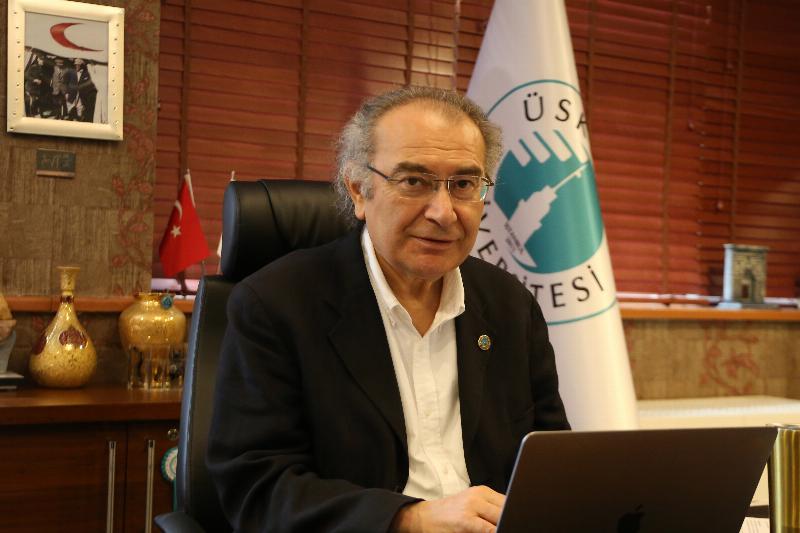
Üsküdar Üniversitesi Founding Rector, Psychiatrist Prof. Dr. Nevzat Tarhan, addressed the importance of health and made important evaluations about illness phobia.
The value of health is understood when it is lost
Prof. Dr. Nevzat Tarhan stated that people have recently started to give more importance to health, and said, “Especially the young population used their health very carelessly. Humanity used it carelessly. The value of health was understood when one reached a certain age. In that respect, we had forgotten a skill that is among the basic teachings of human happiness science, such as knowing the value of the small things one possesses. Being happy with small things is important because, as you know, the capitalist system aims to be happy by consuming, so it does not care about being happy by producing. In other words, being happy by producing is preferred over being happy by consuming. This pandemic actually reminded people that they live in a mortal world. Therefore, you realize the value of your health when you lose it, but it's too late. Illnesses stem from a wrong lifestyle. Issues like eating, drinking, nutrition, and movement – in other words, life philosophy – are important. There is a group whose anxiety about health is increasing.”
The population with illness phobia has started to increase
Prof. Dr. Nevzat Tarhan stated that a phobia-like fear of illness has emerged and continued his words as follows:
“This population has also increased considerably. Because illness phobia develops, hospitals are at risk. Those with phobia start going to hospitals more often in such situations. They constantly go there to get tests, standing in queues. This situation creates greater risks. Some have overdone it. They tried to live by disregarding everything outside of hospitals and health. Some of those with phobia have an illness phobia beyond health anxiety. In health anxiety, one worries about health, gets frequent tests, goes to the doctor immediately if a part of the body feels numb, and undergoes many tests, but feels relieved when no negative results come out. If they feel another discomfort the next day, they go again. Actually, this is a condition called somatization disorder. The person has an excessive preoccupation with illness even though they are not sick, but they do not have a fear of illness, they have a preoccupation with illness. Hypochondriasis has both a fear of illness and health anxiety component. People with a fear of illness do not mention the word 'illness'. They avoid everything related to health. Those with mysophobia, meaning germophobia, have an illness phobia. In those fears, the opposite, avoidance, occurs.”
They live by disregarding illness
Tarhan stated that it is natural for a person to have a fear of illnesses, and said, “They may become fearful about whether they have tuberculosis or other diseases. There are two types of reactions in people who have fear. In some, it turns into health anxiety. They frequently get tests, they go to many doctors. In some, an illness phobia develops. They try to live by disregarding the illness. Avoidance behavior emerges. Those with illness phobia do not go to the doctor even if their illness progresses. Even if they are elderly, they cannot take their children for tests. They try to comfort themselves by ignoring the fear of an illness appearing. This happens when what we call illness phobia emerges. If there are no other fears, and only the fear of death, it is not monophobia. The treatment for those with this type of fear is different. In those with health anxiety, we look at their expectation levels regarding health. Do they understand health as having no symptoms at all? Do they understand it as being unable to escape anywhere? If they understand it this way, they immediately panic when a tiny spot itches or a minor thing happens. Humans are interesting beings. Fear dominates the lives of some people. That is, fear influences all the decisions they make. Fears have become that person's value judgments.”
They make narcissistic investments in their bodies
Tarhan stated that we must accept that we are not the masters of our bodies, and said, “A system smarter than us has been created in our bodies. That is, when a microbe enters our body, if we follow hygiene rules, that microbe cannot progress. If we cannot maintain hygiene, it progresses, spreads to the lymph nodes, and if we neglect it, wounds begin to form. Physicians only find a missing link in the treatment chain and put it back in place. They give a few drugs to immediately eliminate the microbe and quickly heal, and after that, the body does the rest itself. The Creator has created such a system that we must know our limits. That is why we will respect the system in our body. There are people who constantly sit and examine themselves for 59 minutes out of 60, asking why their health isn't perfect. When the worst-case scenarios like 'How is this part of my body, how is that part, what will happen, oh no, what if I get sick, what if I die' are constant, everything goes wrong. They cannot fall asleep due to these thoughts occupying their minds. We define these people as individuals who have made narcissistic investments in their bodies.”
Health anxiety in individuals should be examined
Prof. Dr. Nevzat Tarhan stated that they examine whether the person has health anxiety, high expectation levels, or avoidance behavior, and said, “If there is avoidance behavior, they do not leave the house. It is necessary to examine if there is health anxiety. If there is too much mental preoccupation with health, then it becomes health anxiety. In addition, nosophobia, known in the literature as fear of illness, often accompanies these. In such cases, a sub-dimension is panic disorder. Panic disorder also has a biological dimension. If these are present in the person and whichever is dominant, a treatment plan related to it is made.”
Chronic stress empties fat and sugar stores into the blood
Tarhan stated that there is an area in our brain called the hypothalamus related to the regulation of our autonomous nervous system, and said, “When we get excited, our heart races; when we are scared, there is a fight or flight response. If there is a fight or flight response, the shoulder and neck muscles contract, and blood pressure and vascular resistance increase. If a person has chronic stress, in such situations, because the person constantly secretes stress hormones, the fat and sugar stores in the body are released into the blood. In cardiology clinics, antidepressants are immediately started for those who have had a second heart attack, without any questioning, to prevent a new attack. Because there are post-stroke depressions. There are depressions after a stroke. It is done automatically for them after a heart attack. This measure could not be measured before.”
There is a health-related alarm mechanism in our brain
Prof. Dr. Nevzat Tarhan said, 'Actually, we have determined that we manage our autonomous system with the chemicals in our brain,' and continued his words as follows: “Some trigger excessive secretion, some do not trigger any secretion at all. While the autonomous nervous system should work like an orchestra, the rhythm in the orchestra is disrupted. In this situation, we can measure that disrupted area in the brain. Stress levels rise in the brain, and serotonin stores are depleted. We say there is a decrease in serotonin in the brain. There is a health-related alarm mechanism in our brain. Because it is disrupted, these people's brains overreact to minor things. They do not do this knowingly. Suggestions such as ‘you are not sick, don't worry, it will pass, be your own doctor’ should not be offered to that person. This is doing them harm. First, a treatment that corrects the brain chemistry is given to that person. This is standard drug therapy. If it is not sufficient, the second stage is moved to. Magnetic stimulation therapy is performed. That is done, and at the same time, psychotherapy is required as a standard every time. There is a treatment method performed by measuring brain functions. This method has developed worldwide. It has been confirmed that it can also measure attention deficit in children. We show these with biological evidence and proceed with treatment based on that.”
They feel relieved when they produce logical solutions
Tarhan stated that in psychotherapy, they identify a person's thinking errors, and said, “We identify their health-related anxieties and teach them to solve those anxieties rationally. If the person produces a logical solution, they feel relieved; if they cannot, the illness becomes chronic. That is, there are cases where people have reached a point where they cannot leave their homes. They cannot go out alone, they cannot stay home alone. Such behaviors greatly impair quality of life, but they do not do it knowingly. This is a treatable condition. A healthy person looks healthy when you observe them, but these people's brains work differently. The region in their brains that manages the autonomous nervous system is disrupted.”
Covert stress is observed in people who suppress their emotions
Prof. Dr. Nevzat Tarhan, drawing attention to the fact that covert stress can also occur in some individuals, concluded his words as follows: “In covert stress, the person says, ‘I'm not stressed, why would my blood pressure rise, why would my limbs go numb, why would my heart race?’ When you tell these people it's due to stress, they say they have no stress. Then they think the doctor doesn't understand them. In covert stress, the person doesn't know they are stressed; stress is experienced through organ language. Stress constricts blood vessels, raises blood pressure, and tightens shoulder, neck, and back muscles. Covert stress is very common in people who suppress their emotions. Because they suppress their emotions, these individuals cannot express emotions. When they are sad or angry about something, they internalize it and fight with themselves. In this situation, because they do not allow emotional expression in the brain's motor pathways, constant stress suppresses the immune system. It awakens dormant cancer cells in the body, and cancer begins in the person. Therefore, they should not forget this covert stress. They should not act carelessly by saying, ‘I have no stress’.”
Share
Update Date: February 27, 2026
Creation Date: January 26, 2021
Request a Call
Other News
- Social responsibility courses moved to the field
- Erasmus+ Orientation Week completed at Üsküdar
- Prof. Nevzat Tarhan: “Brain secretes ‘dark glue’ in social media lynchers!”
- Prof. Nevzat Tarhan: “Every segment of society should be able to say, ‘This constitution is my constitution!’”
- OHS releases guide for safe operation of industrial robots