

Üsküdar Üniversitesi Founding Rector, Psychiatrist Prof. Dr. Nevzat Tarhan, made assessments on addiction in a statement due to the International Day Against Drug Abuse and Illicit Trafficking.
Content
Prof. Dr. Nevzat Tarhan: “Social contact is the greatest medicine for addiction”
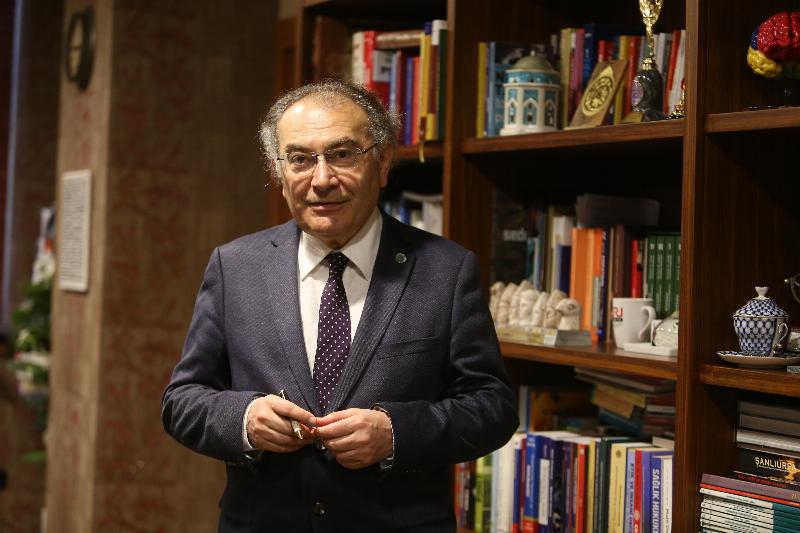
Psychiatrist Prof. Dr. Nevzat Tarhan noted that in all types of addiction, from substance addiction to digital addiction, the brain's reward and control system is disrupted. He stated that the most important factors leading to addiction are weak family, wrong friends, unhappiness, and loneliness. Tarhan emphasized that sociality, social skills, and social contact are the greatest medicine for addiction, warning, “Most addicts are lonely. Social isolation and loneliness are one of the biggest causes of addiction in young people.”
In 1987, the United Nations General Assembly adopted June 26 as the "International Day Against Drug Abuse and Illicit Trafficking" to achieve the goal of a healthy society free from drug use and to strengthen international action and cooperation in the fight against drugs. On this special day, the importance of healthy lifestyle behaviors is emphasized, drawing attention to the harms of drug use.
In Addiction, the Brain is Insatiable for Reward
Prof. Dr. Nevzat Tarhan stated that the reward and punishment system in the brain is disrupted in addiction, saying, “In psychiatry, we call addiction ‘reward deficiency syndrome’. The brain is insatiable for reward. This century glorifies hedonism. Currently, people are advised to pursue their pleasures as a life philosophy. We live in a time that presents the pursuit of pleasure and speed as an ego ideal. Young people dream of being rich, famous, wealthy, and living fast.”
Game and Digital Addiction Observed in Young People
Referring to the dark triad, a personality inventory that examines Narcissism, Machiavellianism, and Psychopathy, which are socially undesirable character traits, Prof. Dr. Nevzat Tarhan said, “The dark triad consists of three personality traits. Narcissistic personality has selfish, self-serving, self-admiring, and ego-sanctified characteristics. The second is individuals skilled in crime with antisocial personality traits. They lie and feel no guilt or remorse. The third personality is the Machiavellian personality. They believe that anything goes to achieve a goal. One should stay away from people who possess these three traits together. In this age, these people have multiplied.”
Prof. Dr. Nevzat Tarhan noted that addiction is the doctrine of this century, stating, “The cause of addiction and depression is a social virus. The name of this virus is the hedonism virus. The hedonism virus, the virus of pleasure-seeking and indulgence, has especially enslaved young people. We see it in young people in the form of gaming addiction and digital addiction.”
Three Most Important Factors in the Development of Addiction
Prof. Dr. Nevzat Tarhan stated that there are three factors in the development of addiction, saying, “In digital addiction or substance addiction, we see that the biggest factors are a weak family, wrong friends, and unhappiness. When these three combine, that person becomes a candidate for addiction. If family ties at home are weak, there is no peace, no charm, no attraction. The child is left alone. In such situations, if the peer group is also bad, the child can very easily be led into addiction.”
Important Responsibilities Fall to the Family
Prof. Dr. Nevzat Tarhan noted that important responsibilities fall to the family in preventing addiction, stating, “When family ties are weak, when a rule-based environment is not created at home, when there is no gentle discipline, it becomes easier for the child to turn to addiction. In such cases, the mother says one thing, the father another. Parents need to form a coalition at home. A coalition needs to be formed with the child. Parents should first discuss and solve their problems among themselves, and only then talk to the child. When the mother and father say different things, the child does whatever pleases them. The child resists and objects to everything, developing oppositional behavior. They protest everything. This child is only happy in the virtual environment.”
A Peaceful Home Environment is the Most Important Shield
Prof. Dr. Nevzat Tarhan noted that a peaceful home environment forms a shield against external dangers, stating, “If the home environment is peaceful, even if young people turn to addiction, they see the fake life there. The entertainment there is fake, the laughs are fake, the friendships are fake. After seeing this falsehood, the young person gives up. In addiction, the new generation is truly at risk. They are self-centered, comfort-seeking. However, if we, as mothers and fathers, set a good example, it is very easy for them to correct themselves and turn from their mistakes. Because they are pure, bright children. Since they learn right and wrong from social media, they can temporarily be misled. If parents or the environment set a good example, they recover quickly.”
Prof. Dr. Nevzat Tarhan stated that addiction has various criteria, saying, “One of these is feeling withdrawal when you are not exposed to it. It could be a substance or the virtual world. When you cannot access it, you become angry, restless. For example, you went on a trip, there is no internet, you went crazy, you are lashing out left and right. That means addiction has started in you. There is currently a fear of not being online. We see many such examples.”
In Addiction, the Brain's Control System is Disrupted
Stating that “the second criterion for addiction is using it longer than planned,” Prof. Dr. Nevzat Tarhan said, “A person says they will go online for an hour, but they have been online for 4-5 hours. In addiction, the brain's control system is disrupted in the reward-punishment system. Difficulty in control is the biggest reason for addiction. The person loses control of the steering wheel. They steer towards pleasure. However, life is a journey. On that journey, we have a goal. While moving towards it, pleasures pull us one way, realities pull us another. But we need to progress between these two, making right decisions and right choices in line with our goal.”
Loneliness is the Biggest Cause of Addiction in Young People
Tarhan stated that sociality, social skills, and social contact are the greatest medicine for addiction, saying, “Most addicts are lonely. Social isolation and loneliness are one of the biggest causes of addiction in young people. Because they are not happy. The child has no other option. They turn to it as a stress reduction technique. They turn to it to reduce their stress, they relax, but this time, as they relax, they increase the dose. After a while, it becomes their only area of interest in life. They will, of course, use digital technologies. But they will use it as much as they need. We will not be the object of the internet, we will be its subject. We will manage it, it will not manage us. This is a global epidemic. We need to protect our children.”
Prof. Dr. Nevzat Tarhan stated that one of the important factors in the emergence of addiction is the weakening of social support, saying, “The Anatolian wisdom still holds us together. That too is rapidly depleting. In 20-30 years, the current close, warm relationships will no longer exist in Anatolia. The new generation sees marriage as a burden. This global illness has also affected us. We boast about being young now, but in 10 years, our population will age.”
Emotional Neglect Also Makes One Feel Lonely
Prof. Dr. Nevzat Tarhan also drew attention to emotional neglect, saying, “While doing various protective studies, we separate risk groups; there are broken families, there are children, especially children under state protection in care homes. For these children, loneliness is the biggest problem. The absence of mother and father, lack of love, lack of empathy. Such people experience emotional neglect. Those who experience emotional neglect have abandonment without distance. It seems like there's no problem in the family; the mother has dedicated herself to cleaning the house. She feeds the child, cleans them, and goes straight to the kitchen. Emotional neglect occurs in the child. The child says, 'My mother doesn't love me, my mother loves the tablecloth on the table more.' In our culture, fathers especially do not show affection to their children in front of everyone. This is an old way of thinking. Affection must be shown to the child. The culture of 'love in sleep' is in the past; now, dedicate an hour.”
The Last Sanctuary is the Family
Prof. Dr. Nevzat Tarhan also pointed to the importance of a democratic environment in the family, saying, “In the family, children will get answers to their questions, and if they don't, they will say, 'let's research together.' It will be a learning organization. Mother, father, all will learn. There should be a study buddy and a travel companion. They say you can't be friends. Why not? In positive psychology, there is a goal buddy. There is a goal; you say, 'we will study with you for two or three hours while going towards it,' this is goal companionship. Establish this with your child. Have fun, laugh, study together. The leaders of the house should be the mother and father. We must not lose this to the child.
Social norms are broken, the castle has fallen. There is only an inner castle, the last sanctuary is the family. If that also falls, the family will cease to exist. Parents should offer options instead of giving orders to the child. The child should experience a sense of autonomy. One of the options should be attractive, otherwise, there will be mother-child wars.”
Addiction is Treatable
Prof. Dr. Nevzat Tarhan stated that addiction can be treated, saying, “The treatment aims to correct the disrupted reward-punishment system. The disrupted reward-related mechanism in the brain is cleared with medication. The detoxification period lasts two or three weeks. After that, rehabilitation begins as part of the treatment. Personalized therapies are conducted. One of the stages of treatment also involves prevention efforts. Here, it is important to rehabilitate individuals in weak and at-risk groups and increase their happiness levels. This is where positive psychology comes into play.”
If Happy, They Won't Turn to Substances…
Prof. Dr. Nevzat Tarhan noted that the understanding of addiction treatment is also changing today, saying, “You strengthen the immune system and pave the way for the body to overcome the disease on its own. You try, and if it still doesn't improve, you take them to surgery. In the fight against addiction, it is now necessary to increase people's happiness scores. If a person is happy, they will not turn to substances.”
Share
Update Date: February 27, 2026
Creation Date: June 28, 2021
Request a Call
Other News
- The book that read today's digital threats in 2014: Being a Conscious Family
- Experts warn: 'Instead of memorizing letters, teach pencil grip, scissor use, and coloring'
- School fear and school love both start in the family!
- Family is not merely transforming, it is being battered under a serious assault
- Artificial intelligence opens the door to early diagnosis in autism!