

The 9th International Communication Days Symposium, organized this year by the Üsküdar Üniversitesi Faculty of Communication, began on its first day with opening speeches and sessions. Prof. Dr. Nevzat Tarhan, Founding Rector of Üsküdar Üniversitesi, who delivered the opening speech for the symposium set to continue until the evening of May 18 under the theme “Communication Studies in the Digital Age,” stated that we live in a digital age that includes Industry 4.0. Tarhan, emphasizing that communicators were the ones who best embraced digitalization among all scientific disciplines, said, “Embracing digitalization is actually embracing the future. We need to embrace digitalization not to manage today, but for the future.” Tarhan drew attention to the fact that artificial intelligence is accepted as the new God of the earth and emphasized that the Metaverse is not just a social media platform, but a serious global project.
Content
Prof. Dr. Nevzat Tarhan: “Embracing digitalization is actually embracing the future”
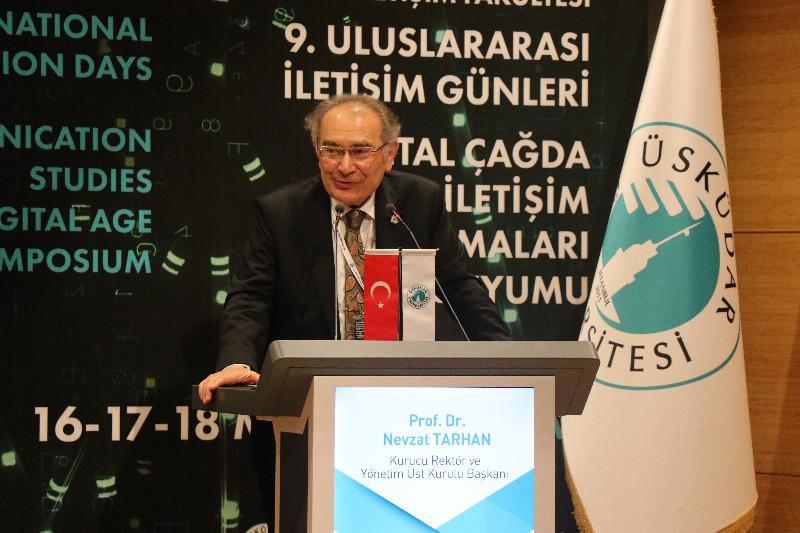
The 9th International Communication Days Symposium, organized by Üsküdar Üniversitesi under the title “Communication Studies in the Digital Age,” commenced with its opening ceremony at Üsküdar Üniversitesi Central Campus Nermin Tarhan Conference Hall. The symposium began with opening speeches by Founding Rector Prof. Dr. Nevzat Tarhan, Acting Rector Prof. Dr. Mehmet Zelka, and Dean of the Faculty of Communication Prof. Dr. Nazife Güngör. The symposium, which will take place on May 16-17-18, 2022, will be held both in-person and online.
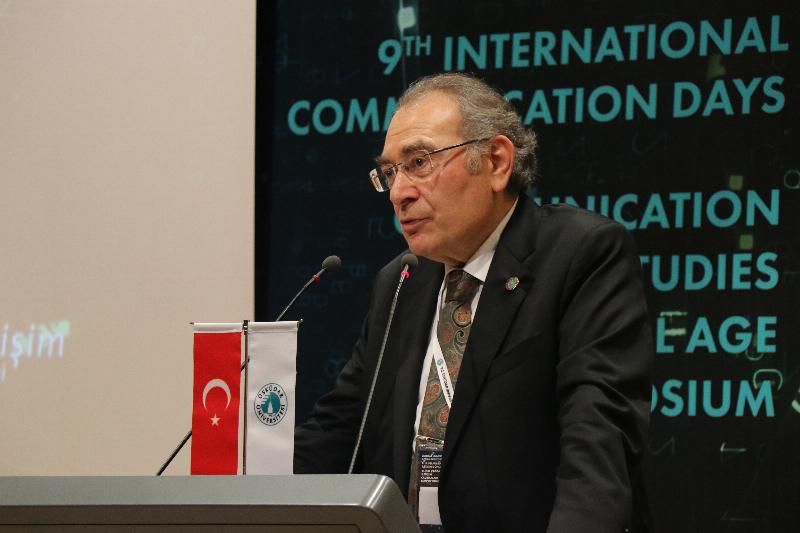
Prof. Dr. Nevzat Tarhan: “Universities are the locomotive of civilization’s accumulation”
Prof. Dr. Nevzat Tarhan reminded that the International Communication Days Symposium continued online during the pandemic, saying, “This also provided us with many different perspectives, such as turning online into an opportunity. The function of universities is to identify global trends, uncover societal and individual needs, produce solutions for emerging needs, present the outcomes of the produced solutions, and ensure that decision-makers benefit from these outcomes. The advancement of science actually means the advancement of humanity. Universities are institutions that generate ideas, propose project ideas, and contribute to the progress of humanity, serving as the locomotive of our current civilization’s accumulation. For this reason, as the Faculty of Communication, we have persistently continued the symposium.”
Prof. Dr. Nevzat Tarhan: “We live in a digital age that includes Industry 4.0”
Prof. Dr. Nevzat Tarhan stated that this year’s symposium addressed a timely topic, saying, “We know that the 21st century we are in is a digital age that also encompasses Industry 4.0. Some changes occurred with Industry 4.0. There are symbols that revolutionized humanity. The first is the apple of Adam. The second symbol is Newton’s apple, and the third symbol is Apple’s apple. It became a symbol of the digital age. Among all scientific disciplines, communicators were the ones who best embraced digitalization. The medical world was the slowest to adopt it. Embracing digitalization is actually embracing the future. It is very important to produce plans and projects for the future, to be able to do things for the future.”
Prof. Dr. Nevzat Tarhan: “Global power centers want to rule the world with Metaverse”
Prof. Dr. Nevzat Tarhan stated that in the symposium, where approximately 350 national and international academics submitted paper abstracts and 60 sessions were planned, society is trying to adapt to the advent of the digital age, saying, “As a self-criticism, a study on digitalization was carried out in Turkey 10 years ago. Tablets were distributed to everyone. Some educators opposed this, but approximately 2 million tablets were distributed. If 2,000 software developers had been trained instead of distributing these 2 million tablets, Turkey could have established its own platform by now. This is missing the boat. We must produce medium to long-term policies instead of short-term ones. As a university, we will always express this. We need to embrace digitalization; not to manage today, but for the future. Currently, there is a reality of Metaverse. The Metaverse reality is very important in digitalization. Metaverse is not just a project of a social media platform. We can say it is a serious global project. Digitalization is very important for controlling the world. There is a desire for dominance within humans. Global power centers want to rule the entire world. The historian and philosopher Harari also realized this. He said that the world is moving towards digital dictatorship and that they are the last free generation.”
Prof. Dr. Nevzat Tarhan: “Artificial intelligence is considered the new God of the earth”
Prof. Dr. Nevzat Tarhan emphasized that artificial intelligence is today’s reality and continued his words as follows:
“At the Davos Summit held in 2018, it was stated that the new God of the earth is artificial intelligence. Previously, Napoleon and Caesar were referred to as gods of the earth. Individuals with a feeling of absolute power want to dominate globally and control everything. For this, humanity has produced the solution of democracy. We need democracy more now. Where there is democracy, there is opposition. Where there is no opposition, democracy cannot be discussed. There is criticizability. For this reason, when Üsküdar Üniversitesi was founded in 2011, we wrote a motto. This motto consists of the words criticizability, liberalism, pluralism, and participation. To prevent the world from moving towards globalization and digital dictatorship, there is a need for liberalism, pluralism, participation, and criticizability as a solution. What protects humans from error is not goodwill, patriotism, or religiosity. What protects humans from error is accountability. It is necessary to create accountable digitalization. Currently, there are dark web environments. Against this, open and transparent communication needs to be encouraged. Communication professionals have significant tasks to ensure that digitalization serves democracy, not autocracy, and moves towards human-centered digitalization, not capital-focused digitalization. It is beneficial for those studying in the faculty of communication to carry out their work according to the needs of society, not in a manner dictated to them.”
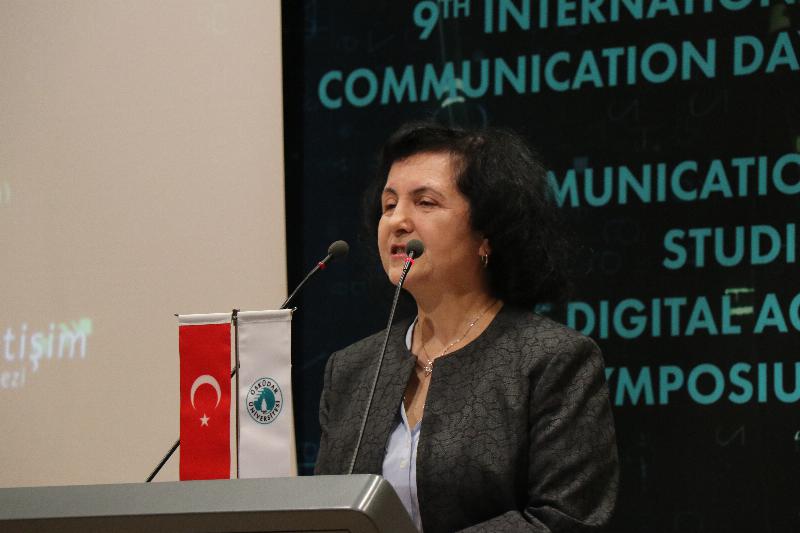
Prof. Dr. Nazife Güngör: “Media and communication sector most affected by the pandemic”
Prof. Dr. Nazife Güngör stated that when organizing the International Communication Days Symposium each year, they determine the main topics from among the current issues on the agenda of the communication and media sector, saying, “The world experienced a major coronavirus crisis for 2 years. During the pandemic crisis, the digital revolution and digital technological developments that humanity was experiencing took on the character of a full-fledged revolution with the coronavirus. It affected almost all segments of life. The media and communication sector were the most significantly impacted by this situation. The digitalization in the media sector and the intense use of digital technologies in the media sector inevitably necessitated the organization of communication education and communication studies in this context.”
Prof. Dr. Nazife Güngör: “We strive to contribute to the world of communication”
Prof. Dr. Nazife Güngör stated that they want to review the developments and scientific studies in the field of communication up to now, thanks to this symposium, saying, “We train people to work in the media sector. On this occasion, to organize the path we need to determine in communication education in a much more realistic and programmed way, we set this year’s topic as ‘Communication Studies in the Digital Age.’ The symposium, which will last for 3 days and consist of 60 sessions, will include a round table discussion panel featuring journalists, media professionals, and communication academics in its closing session. By organizing this event every year, we strive to contribute to the world of communication. This event, hosted by Üsküdar Üniversitesi, actually became an academic discussion platform for the entire communication world.”
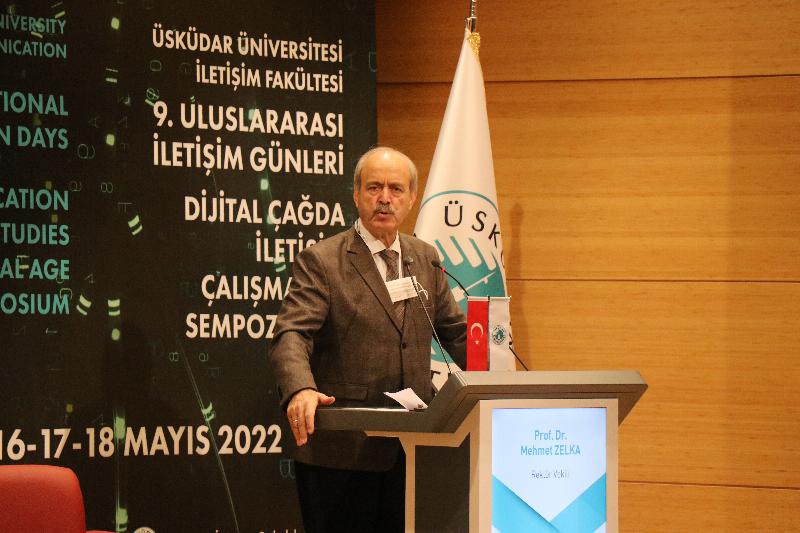
Prof. Dr. Mehmet Zelka: “The importance of communication was seriously felt”
Acting Rector Prof. Dr. Mehmet Zelka pointed out that we live in a period where the importance of communication is constantly increasing, stating, “Especially during the Covid process we experienced in the last 2 years, the importance of communication became more palpable and understandable, while at the same time the need to explain it also increased. With the occurrence of this process, we seriously felt the importance of communication in economic, social, and academic life. Today, digitalization has become an issue that needs to be addressed quickly. Experts state that in America, one of the countries where it is most widely applied, only about 45% of the distance has been covered. We need to take action quickly, move, and take measures that will respond to the requirements of the age.”
Prof. Dr. Mehmet Zelka: “We invested 500 thousand dollars in technical infrastructure to prevent disruptions in education”
Prof. Dr. Mehmet Zelka stated that as Üsküdar Üniversitesi, despite having a strong infrastructure, they invested 500 thousand dollars in technical infrastructure to strengthen it at the beginning of the Covid-19 process to prevent any disruption to education and training, and concluded his words as follows:
“We had the opportunity to conduct our education process 97% online without any disruption. According to some evaluations, being among the top 3% of over 200 universities in our country within the first 2 weeks of the process, as shown in a study, pleased us. Another important point that pleases us is that the International Communication Days Symposium is progressing in an increasingly developed manner. There will be 60 sessions and approximately 350 papers. We believe that future symposiums will be more productive with the experiences we gained in the past and those we will gain today.”
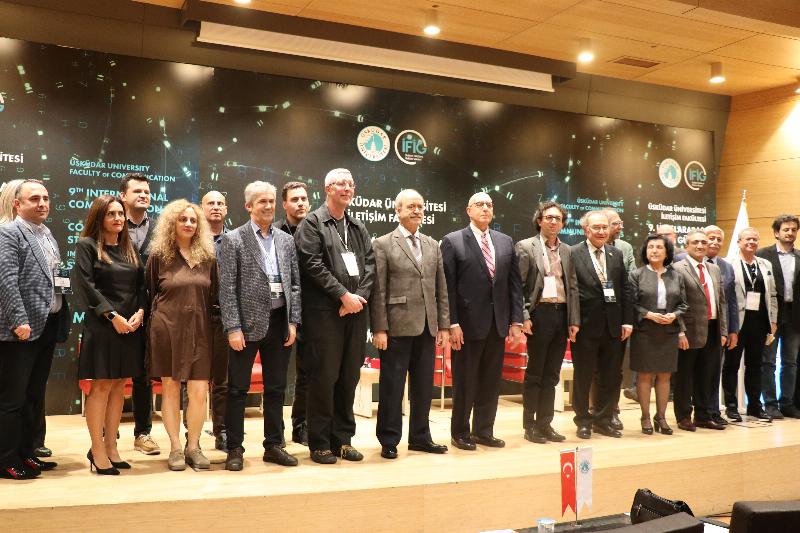
Important figures from the sector and academia will meet in a round table panel..
The final session of the 9th International Communication Days Symposium, featuring important figures from the sector and academia, and moderated by Prof. Dr. Süleyman İrvan, Head of the Journalism Department at Üsküdar Üniversitesi Faculty of Communication, will be held as an online/Zoom round table panel.
The symposium will conclude with the closing speech by Prof. Dr. Nazife Güngör, Dean of the Faculty of Communication and Head of the Symposium Organizing Committee, which will be delivered online/via Zoom.
Share
Request a Call
Other News
- The book that read today's digital threats in 2014: Being a Conscious Family
- Experts warn: 'Instead of memorizing letters, teach pencil grip, scissor use, and coloring'
- School fear and school love both start in the family!
- Family is not merely transforming, it is being battered under a serious assault
- Artificial intelligence opens the door to early diagnosis in autism!