

Prof. Dr. Ebulfez Süleymanlı stated that the Azerbaijani people gave very important moral support to their army in the front-line war between Azerbaijan and Armenia, adding that this struggle is very meaningful. Prof. Dr. Ebulfez Süleymanlı noted that today, Azerbaijani Turks are waging an epic struggle both at the front and behind the lines, stating that this struggle resembles the spirit of Çanakkale (Gallipoli), and said, 'This feeling is the Karabakh spirit.'
Content
Prof. Dr. Ebulfez Süleymanlı: 'Karabakh Spirit is Similar to Gallipoli Spirit'
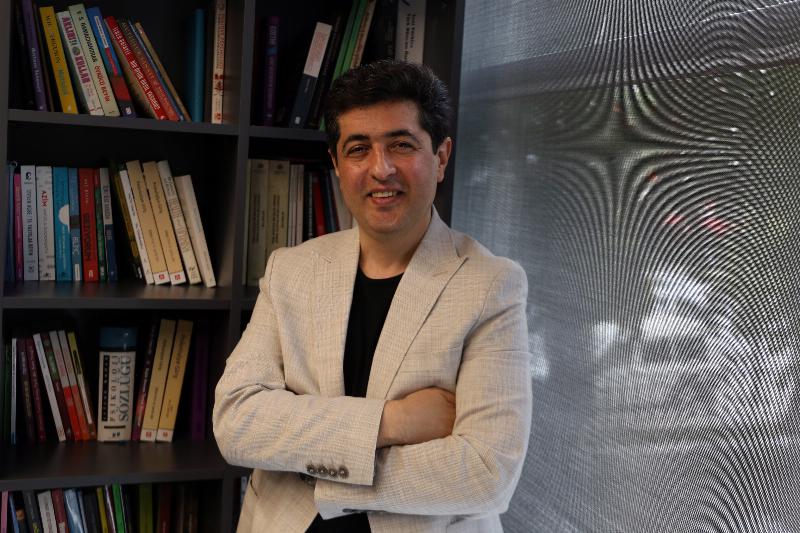
Head of the Sociology Department at Üsküdar Üniversitesi, Prof. Dr. Ebulfez Süleymanlı, made evaluations regarding the front-line war between Azerbaijan and Armenia.
Prof. Dr. Ebulfez Süleymanlı noted that there are major events that sociologically bring together members of society around the same emotion, spirit, and ideal, strengthening their spirit of unity and solidarity, and enabling them to become a nation. He said, 'The operation launched by the Azerbaijani armed forces from four fronts since September 27 to liberate Nagorno-Karabakh from occupation is such an event that demonstrates the Azerbaijani people's spirit of sacrifice, love for their homeland and nation, and spiritual strength to both their own society and the world.'
Prof. Dr. Ebulfez Süleymanlı pointed out that during the approximately 30-year occupation in Karabakh, the international community, the Minsk Group, and similar organizations psychologically negatively affected people with delaying strategies aimed at making them accept the de facto occupation under the guise of 'peace talks,' noting that this situation led to psychological trauma.
Azerbaijani army's success boosts public morale
Prof. Dr. Ebulfez Süleymanlı stated that following all these events, since the morning of September 27, the Azerbaijani army has exercised its right to legitimate self-defense in accordance with international law after the attack by the Armenian side, saying, 'The Azerbaijani army's liberation of villages, towns, and cities one by one through a stable and rational military operation has enabled the Azerbaijani people to, as it were, come to themselves after thirty years and has created enormous synergy with these operations.'
Youth voluntarily join the army
Prof. Dr. Ebulfez Süleymanlı stated that in Azerbaijan, where partial mobilization was declared immediately after Armenia's attacks, young people rushed to the front voluntarily to fight, adding, 'Families send their children to the front with great enthusiasm. In interviews with wounded soldiers treated in hospitals, soldiers plead with doctors to rush back to their duties on the battlefield.'
Prof. Dr. Ebulfez Süleymanlı noted that delegations consisting of intellectuals representing all segments of society, civil society organizations, writers, and artists went to the front line to keep the soldiers' morale and spirit high, stating that the visits of these delegations strengthened the soldiers' fighting spirit and determination.
'Soldier's Share' support from the Azerbaijani people
Prof. Dr. Ebulfez Süleymanlı stated that the people are making efforts to give morale and support to the fighting soldiers, saying:
'Along the road in areas close to the front line, there are stands under the name of 'soldier's share' consisting of fresh fruits, drinks, and other food products sent by the public for the soldiers. People prepare food by sacrificing animals and deliver it to the soldiers on the front line. In this context, a very impressive example is a high school teacher who buys meat with his own salary, barbecues it by the roadside, and distributes kebabs in bread to soldiers going to the front. Another example is civilian citizens finding the daughter of a soldier who said on TV, 'Today is my daughter's birthday, I congratulate her,' reaching out to that soldier's daughter, and gifting her a bicycle as a birthday present. Examples such as schoolchildren writing letters to soldiers fighting at the front provide immense morale to the soldiers at the front and also show that the trauma of occupation has begun to heal.'
Prof. Dr. Ebulfez Süleymanlı stated that the announcements and social media posts by Azerbaijani President Aliyev and military officials regarding the liberated areas were met with great enthusiasm by the public, adding that enthusiastic crowds, participating with flags, cheered in city centers and squares.
Great support for the struggle from social media
Prof. Dr. Ebulfez Süleymanlı noted that in addition to the struggle at the front, a significant part of the struggle on the home front is being waged by citizens on conventional and social media platforms, saying, 'Azerbaijani experts participate in programs on media channels of different countries, conveying all the facts about the Karabakh issue and Azerbaijan's just cause to the world. Social media users are waging a serious fight against Armenian propaganda on Russian, English, and other versions of social media platforms, exposing Armenian lies one by one. The Azerbaijani press also interprets the feelings of the nation, contributing to the unity of the people around national sentiments with emotional victory news from news anchors.'
Prof. Dr. Ebulfez Süleymanlı noted that Azerbaijani citizens and diaspora organizations living in different countries of the world are announcing Azerbaijan's just cause to the public in their respective countries by organizing demonstrations and issuing public statements.
Prof. Dr. Ebulfez Süleymanlı reminded that the international community has started vocalizing ceasefire calls these days, saying, 'With this, they are trying to bring Azerbaijan to the negotiating table in some way. However, the Azerbaijani people fully support the determined stance of state officials for the war to continue until Karabakh is completely liberated from occupation and Azerbaijan's territorial integrity is ensured. Even the Armenian army's provocative targeting of civilian settlements far from the front line, disregarding international legal rules, does not disturb the people living in those regions; on the contrary, it leads to the strengthening of the fighting spirit.'
The Karabakh spirit resembles the Gallipoli spirit
Prof. Dr. Ebulfez Süleymanlı stated that all these events are very meaningful, saying, 'In this context, we are actually living through historical days. Today, Azerbaijani Turks are waging an epic struggle both at the front and behind the lines. This struggle, not only for Azerbaijan but also for global Turkic people, is causing a new feeling, similar to the spirit of Gallipoli, to be experienced again in the first quarter of the 21st century for the patriotic war for Karabakh, which holds a very important place. This feeling can be called 'Karabakh Spirit'.''
Share
Update Date: February 26, 2026
Creation Date: October 08, 2020
Request a Call
Other News
- The book that read today's digital threats in 2014: Being a Conscious Family
- Experts warn: 'Instead of memorizing letters, teach pencil grip, scissor use, and coloring'
- School fear and school love both start in the family!
- Family is not merely transforming, it is being battered under a serious assault
- Artificial intelligence opens the door to early diagnosis in autism!