

Üsküdar University's Human-Centered Communication Application and Research Center (İLİMER) and the Faculty of Communication's Department of Journalism organized a symposium titled “March 8 Media and Women” with the participation of important figures. Held in two sessions, the symposium saw academics and professionals from the field discuss women and their representation from many perspectives.
Content
‘Media and Women’ Discussed…
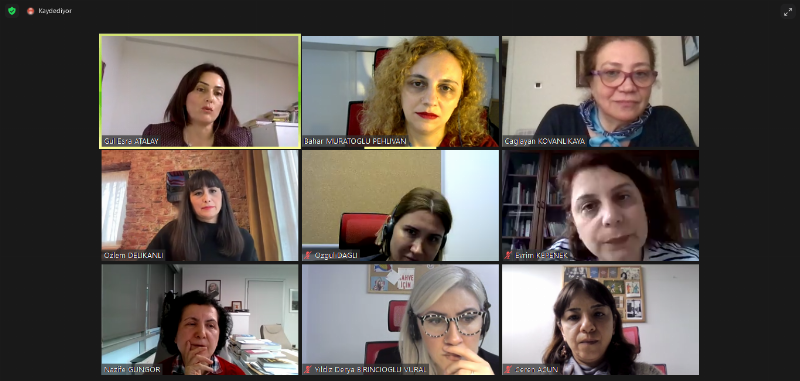
The opening speech of the International Women's Day Symposium was delivered by Prof. Dr. Nazife Güngör, Dean of the Faculty of Communication at Üsküdar University. The first session of the symposium featured Prof. Dr. Çağlayan Kovanlıkaya, Head of the Sociology Department at Mimar Sinan Fine Arts University, Journalist Evrim Kepenek from Bianet, and VMLY&İstanbul Client Director Özlem Delikanlı. The final session of the symposium included Assoc. Prof. Dr. Aybike Serttaş Ertike, Head of the Radio TV, Cinema Department at İstinye University, Director Funda Uluköse, Screenwriter Selcan Özgür, and Journalist Dilek Şen from Medyascope as speakers.
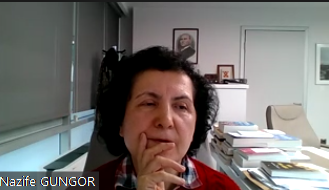
Prof. Dr. Nazife Güngör: “Our main problem is that events are becoming normal.”
Prof. Dr. Nazife Güngör, Dean of the Faculty of Communication, stated that women are objectified and marginalized in media representation, addressing many points on the subject. Güngör said; "Firstly, when considering women in media, we need to look at women working in the media sector. Secondly, in the functioning and creation of content, in the media's representation, we observe that women are objectified and largely marginalized. Examples of this occur very frequently. Our main problem is that this pushing and shoving, often being subjected to violence, and all these issues are now becoming normal in our lives. This is the greatest danger. Because once it is normalized, it can no longer be defined as a problem, and there is no need for a solution to something that cannot be defined as a problem. Perhaps, as a country, unlike Western countries or developed countries that at least create a space for the concepts of democracy and freedom, our biggest problem is that we have normalized all these situations and issues, and this normalization is being reinforced."
“Women need to protect other women and pave the way for them.”
Emphasizing that women should always support each other and become productive individuals, Güngör said; "If a female journalist makes negative remarks about another female journalist, the situation is even more dire. As long as this normalization continues, it indicates that we are in great danger for our future. As a journalist, we witness women being marginalized while trying to practice their profession in the media. In media representations, we generally see women as objects of the media. No matter how important things you say, if you are a woman, there will inevitably be a gaze, a word, an attitude that trivializes you from somewhere. Perhaps the real solution is to ensure women actively participate in production. Because for an individual to be a free individual, they need to produce. Because a productive individual can contribute to the life they live. Women need to be mentally and physically involved in production, which is much more important than simply making demands for freedom in discourse. It is also necessary to struggle to be actively involved in production. Women need to protect other women and pave the way for them. In such events we organize, it is very important to discuss these issues and raise awareness. On the one hand, it is very important for our valuable colleagues here to be role models for society and opinion leaders for women in society. On the other hand, it is also necessary to raise awareness for women to be actively included in production."
Important figures participated in the symposium organized by Üsküdar University Faculty of Communication, Department of Journalism, and moderated by İLİMER Director Assoc. Prof. Dr. Gül Esra Atalay and Assoc. Prof. Dr. Bahar Muratoğlu Pehlivan.
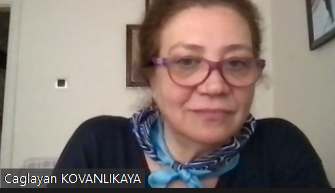
Prof. Dr. Çağlayan Kovanlıkaya: “Language undergoes change from the moment the body begins to socialize.”
Prof. Dr. Çağlayan Kovanlıkaya, Head of the Sociology Department at Mimar Sinan Fine Arts University, shared insights on the masculine language in media during the first session of the symposium, stating; "First of all, we have experienced a very great disaster that has emotionally wounded all of us. We are thinking about the problems and struggles our female friends will face in that disaster that wounded all of us. On the one hand, we are trying to create new productions. I want to start by addressing the discourse of 'o' (he/she/it). We can begin the discussion of possibility by opening up the debate on the determinacy of language, our perception of language, especially among women. When we say 'o,' I am actually talking about a linguistic construction that begins with 'o' referring to a male. When our topic is language; when asked 'Is it possible for the determinacy of masculine language to undergo deconstruction?', we can actually start by thinking that this language is the result of a construct built upon two genders based on a gendered system or a male-dominated system. The language system can also be thought of as a construct arising from our internalizations of female and male bodies within a binary gender system. The use of the female body, both discursively and visually, is always seen to be built upon this construct. Language changes from the moment the body begins to socialize. Language begins to manifest itself precisely there. The language we can see in the examples of language use in media that many speakers will give today is actually at the point where the bodies of assigned genders are socialized."
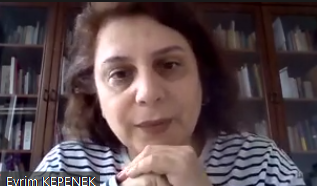
Evrim Kepenek: “Media should only enlighten the public”
Journalist Evrim Kepenek emphasized the importance of using the correct tone when writing news, discussing how the language used is perceived by readers; "We need to consider what every word we use in our news serves. Media is an open field for discussion. Media should only enlighten the public. It should report with women in mind. We see this in every femicide news, every child abuse news. Both the Turkish Journalists' Union and the Turkish Press Council have documents from Bianet on how to report in a non-masculine way. When we ask ourselves, 'How should we write news with this perspective?', we have many resources. 'Who should our news serve? Should it victimize a woman again?' These questions must not be ignored. As female journalists, we look at the concrete side of this issue. We are pursuing questions about how to implement it in life. I am hopeful that there will be a change in news writing."
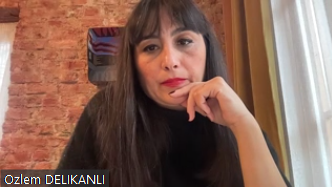
Özlem Delikanlı: “The advertising sector is a problematic area in terms of representing women, but it can be transformed”
VMLY&İstanbul Client Director Özlem Delikanlı explained how to establish communication with the team and clients regarding masculine language discourses in the advertising sector; "Actually, the fundamental step to breaking the gender discrimination we talk about is to speak up. If we don't speak up, if we don't intervene, this becomes normalized by everyone. So, if I receive a brief and relay it to the team without using that language, or if I correct them when they use that language, it leads to change and transformation. Advertising is a very problematic area in terms of representing women. It can be transformed. I absolutely believe in this. It is about changing your team's or your client's perspective. It's about opening up this space. We experience this inequality, but especially in the last three years, as a team and a brand, if a script is being written, is the gender balance in that script equal? Are we showing women in their traditional roles? The people we choose create this balance. We consider many things. That language needs to be broken down. And we can only do this by struggling and discussing."
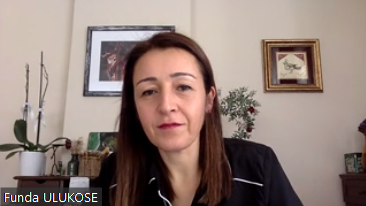
Funda Uluköse: “If things change in society, they will definitely change in the media as well”
Director Funda Uluköse, speaking about the difficulties of a woman working in the media sector, said; "I have been working as a director and producer in the television industry for many years. Whatever we experience as women on the street or at home, we experience a reflection of that in our work environments. That is, whatever we can say about gender inequality socially, we experience the same as a woman working in the media. I believe that if things change within society, they will inevitably change in the media as well. For a woman working in the media, this difficulty starts as early as hiring. You see this discrimination mostly from families rather than employers. If I have to speak from my own experience, no matter what branch of television and production you are in, there isn't a very comfortable working environment. Families feel the need to curb their children when they observe them working until late hours, and in uncertain times and places, right from the start. You encounter these difficulties from the outset. I know many female assistants who couldn't get support from their families and chose to quit their jobs because of their families' attitudes and reactions. What I have learned in directing so far is not just the skill of shooting a film, but rather the skill of conducting the orchestra there. The fact that most of the elements of that orchestra are men requires you to develop other skills. You will try to do your job the way you want and believe to be correct. And you will resist the behaviors those people show towards you with their words and attitudes, but you will also ensure the work progresses. Especially for my female friends, it is very important to talk about the inequalities we face among ourselves, even as a casual conversation. Because if we talk, it turns into an issue. It turns into a question. And anything that turns into an issue needs to be resolved."
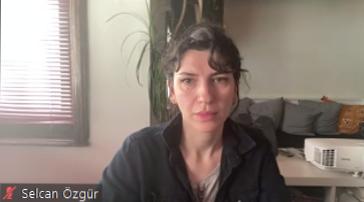
Selcan Özgür: “It cannot be expected that only women write female-perspective works”
Screenwriter Selcan Özgür, emphasizing the isolation of women in the sector, spoke about her experiences. Selcan Özgür said; "We are going through a time where we experience every kind of isolation. It even takes us years to learn to say no. In the world, in the country you live in, in the city you live in, in the school you attend, in the neighborhood you are in, there is always a secondary thing going on through the identity of being a woman, from big to small or small to big along that line. Let me give an example based on my own experience. In a place where we dream and turn these dreams into work that resembles life, it cannot be expected that only women write female-perspective works. If that were the case, we would be depriving male writers of something very significant. Or like us, female writers not being able to write male stories, of which there are examples in world literature, cinema history, and television history. For example, at the production table, when writing a female story or a romantic love story, the female screenwriter is always looked at. When talking about the world of men, the world of male leads, the female screenwriter is turned away. Men make eye contact and start talking among themselves. Looking at the last 10 years, I am much more hopeful at the point we have reached, and I think we are in a much better situation."
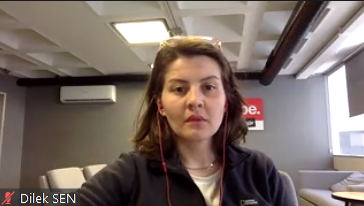
Dilek Şen: “In Turkey, anything can change at any moment”
Journalist Dilek Şen, conveying her experiences as a female journalist reporting from a disaster area, in addition to the difficulties of being a female journalist, said; "In Turkey, anything can change at any moment. I came from the earthquake zone on Sunday. Today, as a journalist, I am responsible for being in the field. I have seen solidarity, at least from women in the media older than me, and from my peers. For these reasons, I am trying to show solidarity with those who come after me. I receive criticism about whether I can do things regarding the earthquake zone, or if I might cry. Yes, I cried. By the way, the moment I arrived in İslahiye on February 7th, I cried while looking at what the people, of whom I am a part, were experiencing. This can only be something I can be proud of as a journalist. Because I will be able to better fulfill the right of this people, of whom I am a part, to receive news, and to convey the other aspects of what happened here. Because there is such a feeling here. I will do it without forcing, hurting, or exaggerating, truly feeling it, while staying within the bounds of professional ethics. This can only be an honor for me. On the other hand, what indicates that a man cannot or would not cry there? I am striving to continue by discussing the severity of what the children in the earthquake zone have seen, talking about how they can overcome those traumas, and showing their requests for help."
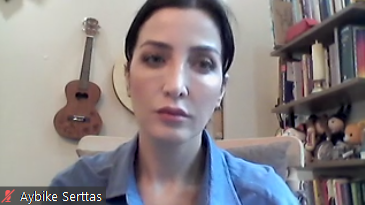
Assoc. Prof. Dr. Aybike Serttaş: “Media products are not solely responsible for this”
Assoc. Prof. Dr. Aybike Serttaş, Head of the İstinye University Radio TV, Cinema Department, stating that even trying to distinguish right from wrong is very important, said; "While listening to the speeches, I was both emotional and very pleased to meet you all. While thinking about today, I also reflected a bit on being a woman during the earthquake. Issues such as privacy, disabled women, women's safety, and the ongoing violence against women were, unfortunately, some of the darker, heartbreaking aspects of the situation that were not discussed alongside the miracle-like, fairy-tale things being attempted. Cemal Süreyya's line comes to mind: 'We are horses that run even after losing the race.' We, too, often don't win or reach the point we dreamed of, but we continue to stand. First, definitions need to be made. There are many things, from media language to the names given to TV series, the woman in the series, the definition of heroism for the male character, the definition of the mother, the definition of a good woman and a bad woman, the definition of a woman whose only concern in an advertisement is curtains. After all these correct representation codes are discussed, of course, there is also the issue of profit. There is a belief that the sector, relying on ratings, sponsorships, and advertisements, can operate through very cliché codes like a big obstacle, a financial war, a fight for a share of the pie. I cannot describe how this can be overcome right now, but I know that media products are not solely responsible for this. We see that we live in an environment consisting of a continuous staging effort and an interconnected system of different scenes. Even trying to distinguish right from wrong is very important, in my opinion."
Reporter: İlknur Yardımumar- Ahmed Okan Arslantürk
Share
Update Date: March 01, 2026
Creation Date: March 09, 2023
Request a Call
Other News
- Üsküdar University participated in an international exhibition with a child rights perspective
- Solidarity Bazaar for Palestine from Üsküdar Residents
- In additional placements, don't just choose a department, choose the profession of the future!
- 52 Erasmus students from 15 different countries at Üsküdar University
- Visit to Prof. Nevzat Tarhan from the Global Confederation of Civil Society Organizations