

An event titled “Introduction to ARDEB Programs” was held by Üsküdar University BrainPark Technology Transfer Office. TÜBİTAK Health Sciences Research Support Group Scientific Programs Expert Damla Avcı participated in the event, which took place online via Zoom.
Content
Introduction to ARDEB Programs Was Held
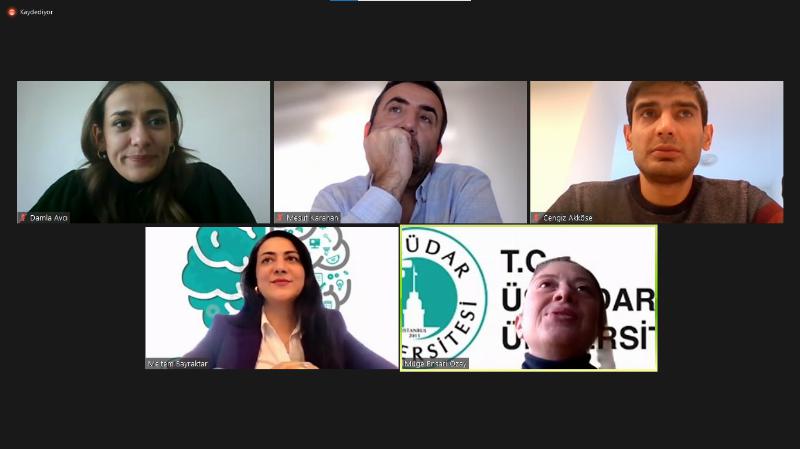
The event, which provided information about the Research Support Programs Department (ARDEB) within TÜBİTAK, was moderated by Meltem Bayraktar, Director of R&D and Innovation Policies (ARGEYEP) at Üsküdar University.
“Risk management is important”
TÜBİTAK Health Sciences Research Support Group Scientific Programs Expert Damla Avcı made evaluations to students about how a project should be. Avcı said; “Risks that may negatively affect the success of projects should be stated. Risks that may arise regarding the project’s research question or hypothesis should be considered, and anticipated measures (Plan B) should be specified in case risks are encountered. The implementation of this Plan B should not lead to a deviation from the project's main objectives and original value. I can advise young people with project ideas to start with smaller projects and move on to larger ones after gaining experience. This can put them in a more advantageous position.”
What is TÜBİTAK ARDEB?
The Research Support Programs Department (ARDEB), operating within TÜBİTAK, is the unit that ensures internal and external collaboration in research and development activities. It acts as a bridge between research groups and requesting universities, public institutions and organizations, and real and legal persons.
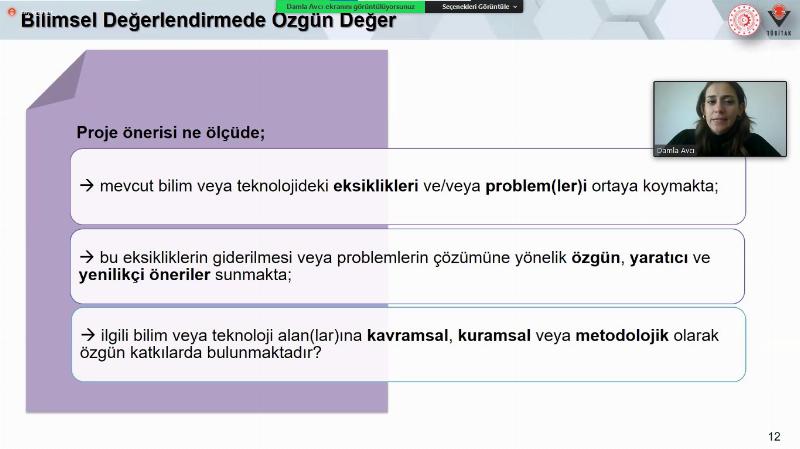
The purpose and objectives of projects should be written clearly, realistically, and be achievable throughout the project duration. Projects should identify existing shortcomings or problems in science or technology, offer original, creative, and innovative solutions to these deficiencies or problems, and make original conceptual, theoretical, or methodological contributions to the relevant scientific or technological fields.
The methods and research techniques (including data collection and analysis methods) to be applied in projects should be explained with reference to relevant literature, and it should be demonstrated that these methods and techniques are suitable for achieving the project's foreseen aims and objectives.
Share
Update Date: March 01, 2026
Creation Date: November 09, 2022
Request a Call
Other News
- The book that read today's digital threats in 2014: Being a Conscious Family
- Experts warn: 'Instead of memorizing letters, teach pencil grip, scissor use, and coloring'
- School fear and school love both start in the family!
- Family is not merely transforming, it is being battered under a serious assault
- Artificial intelligence opens the door to early diagnosis in autism!