

Prof. Dr. Haydar Sur stated that societies with a full public health consciousness achieve visible gains compared to other societies, and pointed out that public health efforts throughout world history have always developed through infectious diseases. Emphasizing that maintaining health without losing it is the most effective, cheapest, and trouble-free method, Sur said, 'Trying to regain lost health brings physical and mental distress, financial burden, and sometimes health cannot be regained. From this perspective, it has been clearly understood that health protection services come before treatment services.' Sur stated that individuals' health consciousness responsibility is not only towards themselves but also a societal obligation, and emphasized the importance of increasing health literacy.
Content
Health protection services come before treatment services!
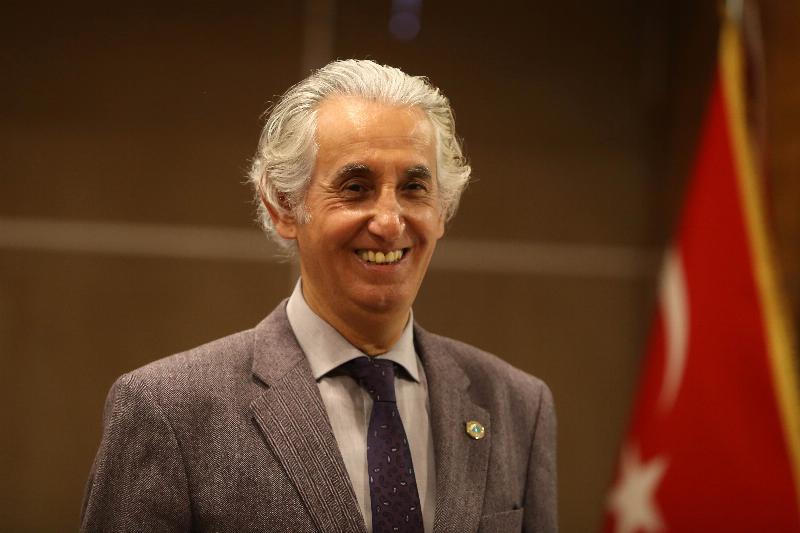
Prof. Dr. Haydar Sur, Dean of Üsküdar University Faculty of Medicine, made evaluations regarding public health and its importance in his statement on Public Health Week.
Public health efforts focused on infectious diseases
Prof. Dr. Haydar Sur noted that although public health efforts have been ongoing throughout history, their systematic structuring efforts have always centered on infectious diseases. He said, 'For example, the word quarantine emerged in Italian with the prohibition of people on ships docking in port from disembarking into the city for 40 days, isolating them on the ship. This ensured the city was kept free from infectious diseases.'
Giving examples of public health efforts worldwide, Sur said, 'In the 1850s in London, during a period when Europe was constantly threatened by epidemics such as plague, cholera, and smallpox, Dr. John Snow proved that cholera was transmitted through water and sealed the pump that was spreading the disease, marking the first application of epidemiology in history.'
The importance of public health was understood in the 1950s
Sur noted that by the 1950s, it was understood in post-war Europe and the United States that treating individuals' illnesses one by one ultimately yielded no benefit. He said, 'Because these people were getting sick again. Thus, it was understood that identifying the causes of the disease and eliminating these causes was the main solution. This understanding led to the birth of the discipline of public health.'
Public health efforts extended human life expectancy
Prof. Dr. Haydar Sur noted that thanks to the contributions of public health efforts, human life expectancy has increased. He stated, 'In the second half of the 20th century, a total of 30 years was added to the average lifespan worldwide; only 4 of these years were achieved through successes in treatment services, while the remaining 26 years of increased average lifespan went down in history as a triumph of public health.'
Sur stated that significant success was achieved in combating infectious diseases, especially in the 20th century. He said, 'Vaccination efforts, the use of antibiotics, preventing transmission through water and food, and advancements in environmental sanitation contributed to this success.'
The impact of the pandemic still continues
Prof. Dr. Haydar Sur stated that while a certain stage has been reached in the fight against known diseases in the 21st century, emerging new diseases continue to cause concern worldwide, adding that the effects of the pandemic are still ongoing:
'MERS, SARS, Ebola, Covid-19 can be given as examples. In particular, the pandemic caused by the Covid-19 virus, which emerged approximately 3 years ago, has far exceeded predictions both in terms of duration and its morbidity-mortality dimension. Even with societies worldwide taking strict measures, the pandemic has not yet been overcome. In the Covid-19 pandemic, which has affected all societies in a disruptive manner, no definitive medical treatment has been found for the disease caused by the virus. It has been necessary to settle for drug applications and care methods that alleviate the adverse effects of the disease. Again, public health techniques have emerged as the most effective methods; protection through isolation, masks, and social distancing, ensuring hand and environmental hygiene, and vaccination have been the only prescription for salvation. The field tracing efforts of public health teams have partially prevented more people from acquiring the disease and overloading the healthcare system.'
Health protection services come before treatment
Prof. Dr. Haydar Sur stated, 'Health is a treasure that cannot be compensated for by any other asset once lost,' adding, 'Maintaining health without losing it is the most effective, cheapest, and trouble-free method. Trying to regain lost health brings physical and mental distress, financial burden, and sometimes health cannot be regained. From this perspective, it has been clearly understood that health protection services come before treatment services. The second known truth is this: no professional can protect an individual's health as much as they can themselves. Therefore, the only solution is for individuals to take ownership of their own health.'
Health literacy should be increased
Prof. Dr. Haydar Sur emphasized that to enable individuals to take ownership of their own health, efforts should be made to raise the level of health literacy nationwide. He said, 'The responsibility of individuals in this regard is to strive for awareness, to grasp the importance of protecting their health, and to try to lead a healthy life by keeping their personal lifestyles away from substances and behaviors harmful to health. This will both contribute to reducing healthcare expenditures and avoid unnecessarily burdening the healthcare system.'
Healthy lifestyle should be preferred
Prof. Dr. Haydar Sur listed the primary elements that come to mind when talking about a healthy lifestyle, which individuals must pay attention to, as healthy and balanced nutrition, being physically active in daily life and exercising, avoiding stress, adopting sufficient and regular sleep habits, and refraining from smoking, alcohol, and other addictive substances.
Prof. Dr. Haydar Sur stated, 'The responsibility of individuals to increase their health consciousness and live healthily is not only towards themselves but also a societal obligation.'
Societies with public health awareness gain significant advantages
Prof. Dr. Haydar Sur stated that societies with a full public health consciousness achieve visible gains compared to other societies, listing them as follows:
- Health systems operate smoothly and do not have to incur unnecessary costs.
- The average lifespan of society increases. For example, while the average life expectancy in Japan is 85, it is 51 in Mali.
- People's physical and mental well-being increases, and they enjoy life more.
- Their living environment becomes clean and orderly. Factors that threaten health are removed from the environment.
- A foundation for being healthier, both genetically and behaviorally, is passed on to future generations.
- Their chances of extending a helping hand to their elderly, disabled, and needy increase.
- They keep as far away as possible from disasters such as earthquakes, floods, and fires, and even if exposed to such a disaster, there is not much loss of life or property.
Share
Request a Call
Other News
- The book that read today's digital threats in 2014: Being a Conscious Family
- Experts warn: 'Instead of memorizing letters, teach pencil grip, scissor use, and coloring'
- School fear and school love both start in the family!
- Family is not merely transforming, it is being battered under a serious assault
- Artificial intelligence opens the door to early diagnosis in autism!