

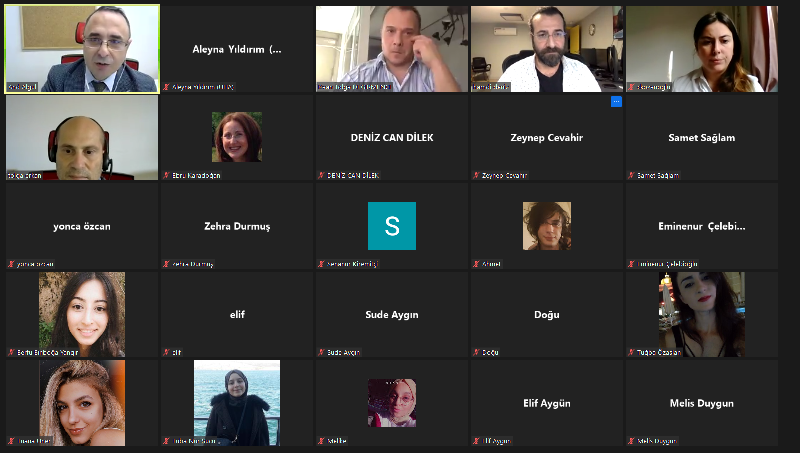
A talk titled “The Genesis of a Series from an Editor’s Perspective” was organized by the Visual Communication Design department of Üsküdar Üniversitesi. The guest of the program was Hamdi Deniz, Editor at Ay Yapım Design Center. Deniz stated that directors play a significant role in series and films, beyond just the script.
Content
'The Genesis of a Series from an Editor's Perspective' Event Held
“There is a great deal of effort in the director's part of the work”
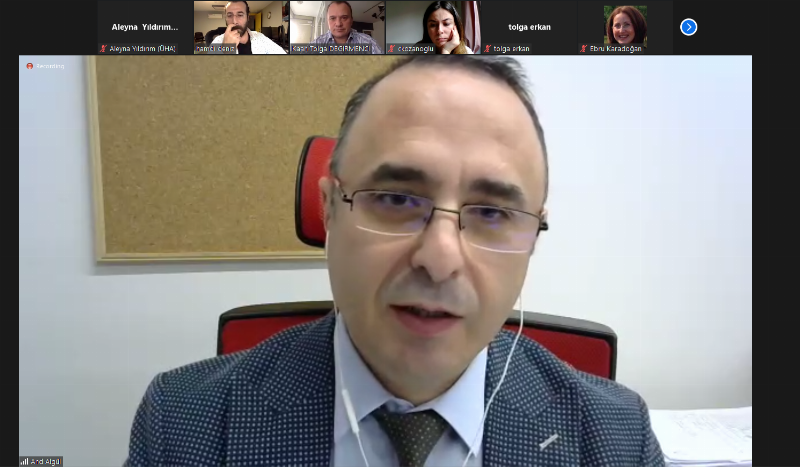
At the event moderated by Head of Visual Communication Design Department Assoc. Prof. Dr. And Algül, Deniz, who mentioned that directors play a significant role in series and films, much more than just the script, said: “The script is very important to us. It is our crowning glory. When we delve into scenes and characters, we also inject our own emotions into the work. There is a great deal of effort in the director's part of the work. While 2-3 hours might be spent on one page of a script, we can spend days trying to shoot that particular scene. A scene can be repeated many times. We first try to tell the story from our own perspective. It doesn't happen by just working for 2-3 hours. We do this job with great dedication.”
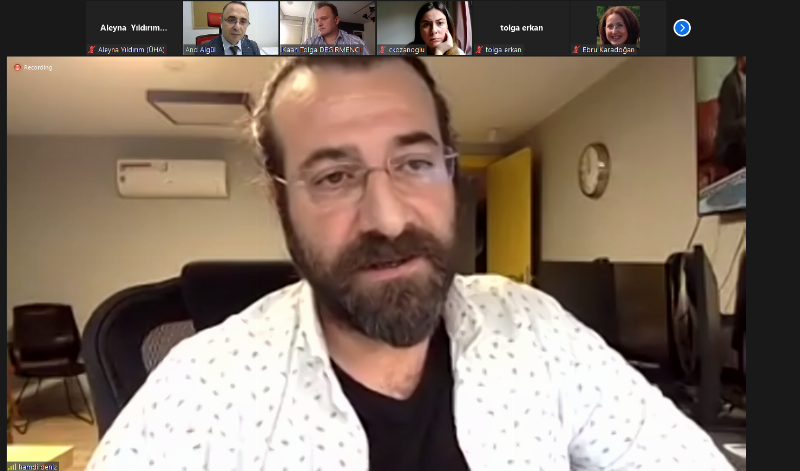
“The overall narrative of a series depends on the editor”
Deniz, speaking about the importance of an editor, stated: “An editor can turn a bad piece of work into a good one, and similarly, can turn a good piece of work into a bad one. The overall narrative of a series depends on the editor. Watch good films. Pay attention to the scenes in series and films. Watch English films with subtitles turned off. When you turn them off, you will better understand what the editor intended.”
“There can also be cultural differences in series and films”
Deniz also expressed that there are cultural differences depending on languages, stating: “Language differences are very common in series. It becomes more difficult. Because we are very accustomed to cutting sentences in the middle in Turkish, it can be challenging when working with foreign languages. Of course, there can also be cultural differences in series and films. We have Lebanese and Arab colleagues. We get help from them. For example, credit cards are not used in Lebanon. In a dialogue of an adapted series to be broadcast in Lebanon, there was a conversation about credit cards between a man and a woman. This, for instance, had escaped our notice. We can encounter such situations.”
Share
Update Date: February 28, 2026
Creation Date: December 27, 2021
Request a Call
Other News
- The book that read today's digital threats in 2014: Being a Conscious Family
- Experts warn: 'Instead of memorizing letters, teach pencil grip, scissor use, and coloring'
- School fear and school love both start in the family!
- Family is not merely transforming, it is being battered under a serious assault
- Artificial intelligence opens the door to early diagnosis in autism!