

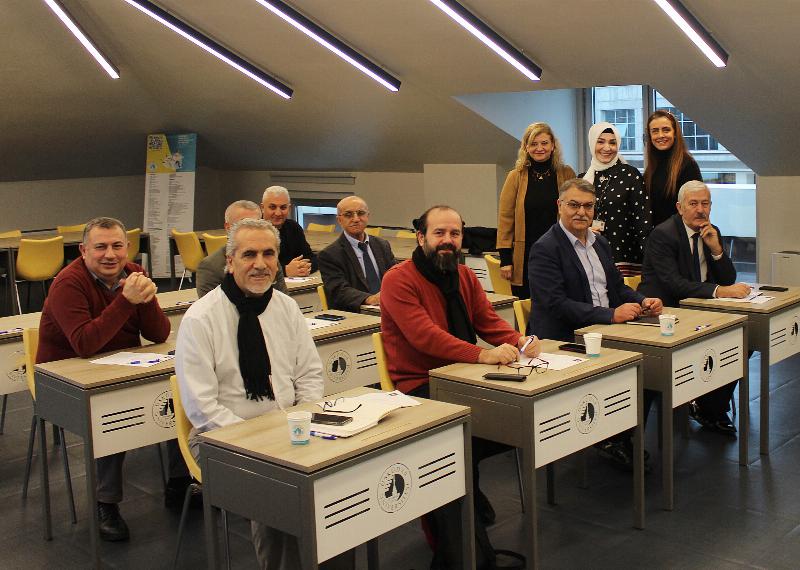
Üsküdar University, Amasya Associations Federation, and Haydi Tut Elimi Association have commenced pilot implementation studies for the “NGOs at University” Project. The first step of the project, conducted under the leadership of Üsküdar University Founding Rector Prof. Dr. Nevzat Tarhan, has been taken. Pilot implementation studies began with the training titled “Effective Communication Skills with NGOs and Effective Teamwork,” delivered by Dr. Lect. Nebiye Yaşar, Director of the Young Brains Academy.
Content
First Step Taken in the 'NGOs at University' Project!
Prof. Dr. Tarhan: “University-NGO cooperation is very important”
Üsküdar University Founding Rector Prof. Dr. Nevzat Tarhan made statements regarding the “NGOs at University” Project. Emphasizing the importance of social image for NGOs, Tarhan stated: “University-NGO cooperation is very important, and a university must always be in cooperation with NGOs. Stakeholder movements are crucial in this respect. One of the most important achievements of the 21st century is teamwork. NGOs should prioritize innovation. Innovation is not about preserving the existing but about stepping outside the shell and being open to development.” With these words, he underlined the importance of the project.
“The existence and proliferation of NGOs depend on the formation of a strong civil society culture”
In their joint statement, Amasya Associations Federation (ADEF) President Turan Sayar and Haydi Tut Elimi Education, Rehabilitation, and Aid Association President Prof. Dr. Nevzat Tarhan drew attention to the project's importance for NGOs: “Democracy, pluralism, tolerance, volunteerism, civic participation, and citizenship awareness are the fundamental values of a strong civil society. The existence and proliferation of NGOs depend on the formation of a strong civil society culture. In Turkey's development process, the strengthening of NGOs' legal framework, the increase in their number and quality, greater participation in decision-making processes, and the strengthening of their financial structure and human resources are crucial. In this context, the ‘NGOs at University’ project holds value as a pioneering and exemplary project in society.”
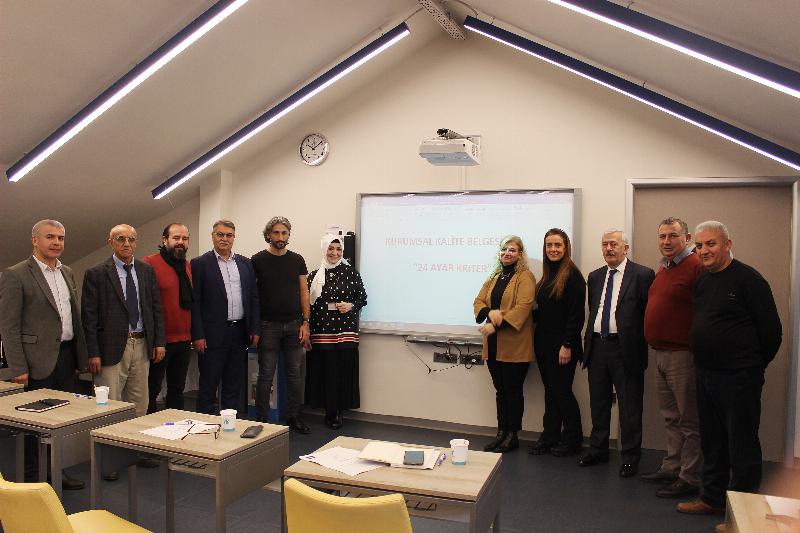
In the project to be implemented with grant support from the T.R. Ministry of Interior; within the scope of Institutionalization and Capacity Development, the project aims to certify qualified institutional NGOs with a “Corporate Quality Certificate.”
The training launched within the scope of the project will last six weeks
The pilot trainings launched within the scope of the ‘NGOs at University’ project aim to foster a new culture between NGOs and Universities and to benefit both institutions. As part of these trainings, a session titled “Human Resources Management and 24-Karat Institutional Criteria” was conducted by Fatih Demirtaş.
The six-week pilot training program will include various trainings on topics such as: “Advocacy and Influencing Policies, Legal Framework for NGOs and Human Rights, Civil Society and Strategy Formulation, Organization for NGOs, Cooperation with Volunteers and Volunteer Activities in NGOs, Public Speaking and the Art of Effective Communication, Project Proposal Writing Techniques for NGOs, Project Budgeting, Impact Monitoring and Evaluation, National and International Funding Sources for NGOs, Project Management in NGOs, and Facilitation and Training Techniques.”
Share
Update Date: March 01, 2026
Creation Date: January 13, 2023
Request a Call
Other News
- Prof. Nevzat Tarhan: “Every segment of society should be able to say, ‘This constitution is my constitution!’”
- OHS Releases Guide for Safe Operation of Industrial Robots
- Prof. Nevzat Tarhan: “Social media is digital fast food”
- 2026-2027 Academic Year orientations completed
- Asst. Prof. İdil Arasan Doğan explained the importance of early intervention in living with dementia