

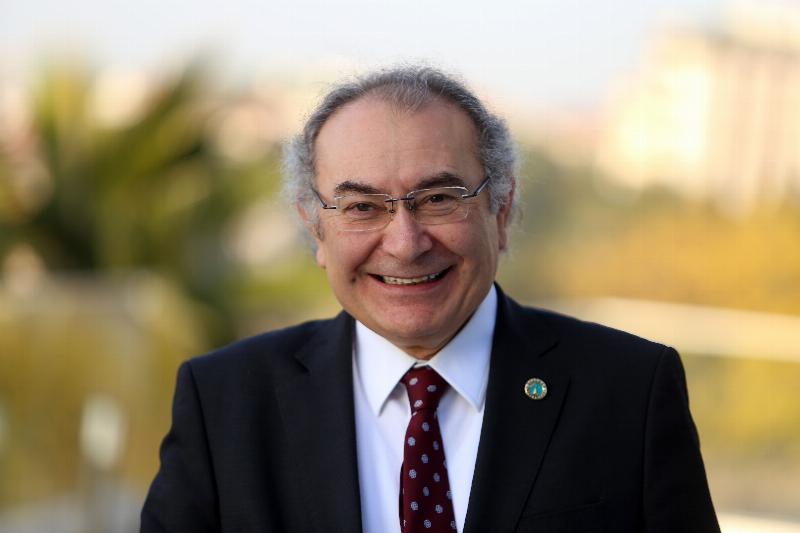
The seeds sown in the subconscious during childhood made the hyperactive Prince Mehmed into 'Fatih'. What was the influence of his mother, father, and teachers on Mehmed's passionate and determined character? Did Fatih's resentment towards Çandarlı Halil Pasha play a role in the conquest? What were the qualities that made him different and superior to Alexander the Great and Napoleon? And the impact of that blessed hadith of Prophet Muhammad (PBUH)? We delve into the depths of Fatih Sultan Mehmed's subconscious with Üsküdar University Founding Rector, Psychiatrist Prof. Dr. Nevzat Tarhan.
Content
Fatih First Conquered Istanbul in His Subconscious
Let's start with Fatih Sultan Mehmed's mother, Hüma Hatun, if you wish. Perhaps the most important figure of his childhood, but unfortunately there are not enough sources about how she raised her son! Based on Fatih's characteristic features, what kind of mother do you think such a leader could have?
When analyzing a leader's personality, their biography, childhood, upbringing, parental models, and the opinions of their close circle and friends are important. Also, how they view the future, what vision they have created, and whether they have displayed leadership that shows parallelism between their actions and implementations, all need to be considered. Coming to our topic, Fatih appears to have been a hyperactive child. If hyperactivity is high alongside intelligence, and these charming individuals are well-managed, they become excellent leaders. If intelligent but unable to manage their attention, they become a personality that is hasty, impatient, resistant to rules, famous for mischief, and exhibits rebellious behavior. Fatih had an extraordinary childhood in this sense. It is even known that Molla Gürani, with his booming voice and authoritative appearance, was specifically chosen as a teacher because Fatih could not be controlled in his childhood; his civilizing personality, rather than the stick, influenced Fatih. Here, the mother and father figures need to be evaluated separately. If hyperactive children are raised with an excess of love, this leads to loose discipline. The child becomes ego-centric, has excessive self-confidence, loves to dominate, and a dominant character emerges. Here, the mother mostly gives love to the child, and the father plays a reassuring role. We can say that Fatih had a childhood where he was raised as the focus of his mother's love. In fact, it was a love that 2-3 people could provide. In addition, he must have been raised with ideals instilled in him. The Ottoman Empire was already sensitive about raising princes to be idealists. Fatih's difference compared to his peers is striking here.
What kind of difference is this?
For example, Molla Gürani was specifically chosen and brought in. From Diyarbakır, of the Shafi'i sect. After Fatih became sultan, while dining with Molla Gürani, Molla Gürani would constantly complain that "haram" (unlawful) money was mixed with state funds. On one occasion, they were eating from the same plate. Fatih said, 'Look, you say state money is mixed with haram, but you also ate from my plate.' Molla Gürani replied, 'My side is halal, your side is haram.' Another time, he turned the plate and brought the side he had eaten from in front of Fatih, saying, 'The haram side has come to you.' Molla Gürani replied, 'You finished the haram in front of you and gave me the halal.' In this way, he expressed his sensitivity to halal and haram. There was a difference of 22 or 26 years between them. When Fatih was 12 years old, Molla Gürani, then 34 or 38, was his teacher. Molla Gürani, who passed away at the age of 80, served as Şeyhülislam for both Fatih and his son. Molla Gürani played a superego-like role for Fatih. That is, he took on a role to prevent him from making mistakes. Akşemseddin is usually referred to as Fatih's spiritual leader. Since Akşemseddin was a Sufi, he retreated to isolation in Göynük after the conquest. Molla Gürani, on the other hand, represented Fatih's conscience and in this regard had a preventive aspect that kept him from making mistakes. Both Akşemseddin and Molla Gürani left deep imprints on Fatih's life. There is an interesting point here: Sultan Murad II was very fond of scholars. He brought scholars from Damascus and Cairo to Bursa. Molla Gürani's friend Molla Hüsrev, and most of the scholars whose tombs are in Istanbul, were invited during that period. His father instilled a love for knowledge in Fatih; not only traditional sciences but also rational sciences were taught. For example, Molla Gürani was proficient in logic and Aristotelian philosophy. It is very likely that he taught these to Fatih. The knowledge he acquired here led to the formation of a vision.
Fatih is generally compared to Alexander and Napoleon. Do you think there is such a similarity in terms of leadership and characteristic features?
In Fatih's leadership, it appears he was raised with the love of 2-3 people from his mother's side and received a good education from his father's side. His teachers also instilled a vision in him. Why did 1453 become a turning point in history? It wasn't just because Istanbul was conquered; in fact, many sociological concepts changed in that era. Previously, in Europe, the inside of castles and city walls was a safe area for feudal lords. With the conquest of Istanbul, this perception of sovereignty changed, and it was understood that walls could be breached. The belief that 'whoever is behind the walls is sovereign' changed, leading to the emergence of the bourgeoisie and monarchies in the Middle Ages. Subsequently, it was the destructibility of walls with the conquest that initiated the Renaissance and Reformation periods. Fatih used the best technology of the era, brought in the Hungarian master Urban, had cannons cast, lived and breathed the idea of conquest; the conquest of Istanbul had become his Kızıl Elma (Red Apple - a legendary goal). It was the same for the Ottoman family and other Ottoman sultans, but for Fatih, this desire had become an obsession. It was either Istanbul or me!
This is actually observed in two types of personalities: individuals with high ideals and individuals willing to sacrifice themselves for their ideals. For those with high ideals, it usually manifests as martyrdom. Such personalities risk death for their ideals. Napoleon and Alexander were like this. However, in their case, it's not the pursuit of a high ideal but the fear of failure that drives them. The thought, 'Rather than fail, I'd rather not live,' prevails. Alexander goes as far as India, unable to accept failure. His mother also raised him with the love of 2-3 people, but Alexander had father hatred. We don't see that in Fatih; he loves his mother excessively, and there is admiration for his father. And he charts a path consistent with his father's educational ideals. Napoleon and Hitler were also at the point of 'I will either succeed or die.' Hitler committed suicide when he failed. There is no such despair in Fatih.
So what was different about Fatih compared to these ambitious leaders?
Fatih also had high ideals, but he did not pursue them to satisfy his ego. He placed a religious motivation at the core of his vision: to attain the glad tidings of Prophet Muhammad (PBUH)... Both Molla Gürani and Akşemseddin constantly reinforced this motivation, telling him, 'You are worthy of the glad tidings of Prophet Muhammad.' We see that he was so deeply affected by this that it entered his dreams, and his idealism in striving to be worthy of this goal. It is his idealism that made Fatih 'Fatih.' As I said earlier, raising such a mischievous and hyperactive child is very difficult. In such a situation, it is important for the father to be able to provide an education that instills discipline without letting it turn into spoiling. In this sense, we can say that Fatih's education was a great success for Murad II, and that he had a childhood characterized by parental harmony.
How might being dethroned shortly after ascending the throne at the age of 12, with his father Murad II reinstated, have affected his young spirit? How did he repair his wounded honor and the identity crisis he experienced?
It is an unusual situation for a 12-year-old child to be made sultan while his father is still alive. One must consider why the father did such a thing. He might have seen a bright future for the child and wanted to test it in some way. He might have given Fatih an opportunity, thinking 'let him try,' based on Fatih's confident demeanor. Indeed, people mature more quickly when they take on responsibility. It seems more likely that his father put him on the throne for educational purposes, to accelerate his maturity. Otherwise, it would not be a matter of embarking on an adventure by entrusting the future of the state to a child. He must have seen a talent in the child to prepare him for the future. On the other hand, Fatih exhibited risky and irresponsible behaviors. His father might have put him on the throne for him to mature out of these behaviors at a young age, thinking that he had a senior Grand Vizier by his side, thus learning state affairs by taking responsibility. Like teaching someone who half knows how to swim by throwing them into the sea. Such a situation must certainly have had a jarring effect on Fatih. You become sultan at 12, stay for 2 years and are deposed, then return to the throne 5 years later. This situation also shows that his father trusted him greatly to be able to handle such a responsibility. If such opportunities are given to overly active children who try to get involved everywhere, the child's abilities develop better. They generate their own solutions. Most likely, Murad II saw his assertiveness, entrepreneurship, and dynamism; he tried such a thing while he was alive for him to mature, and when he needed to step down, he returned to the throne. It is also said that the well-known letter was written by Çandarlı.
In that case, it doesn't seem very likely that such an assertive and courageous person would have written the letter calling Murad II back to the throne, does it?
It is very difficult for Çandarlı Halil Pasha to write such a letter without Fatih's knowledge. He might have written it with Fatih's permission, but in such a situation, it's crucial that Fatih was not broken by it. He could have fallen into depression and withdrawn from the world. An individual lacking self-confidence could have emerged. However, he learned a lesson from such trauma. He transformed this event into a gain in his life. These are resilience trainings. We can say that his father provided him with psychological robustness and resilience training. What's interesting in such a situation is that Fatih doesn't discard Çandarlı immediately, even though he knows his attitude. He doesn't just dismiss him by saying, 'I've become the Sultan.' He wisely utilizes Çandarlı's influence in the army as he desires, making him feel his own leadership and psychological superiority. Being able to do this at the age of 20 shows that he was a person with high self-confidence, ideals, and sound judgment. Generally, individuals with such personality structures, who have a frivolous childhood, act without thinking, do the first thing that comes to mind, and believe the last thing they hear, can never lead. They make many mistakes. One should act according to the principle: Stop, think, reason, and then act. Such a consultation tradition has already been established. There is the Divan tradition. Many decisions are made after discussions in the Divan.
What do you think is the most prominent characteristic in Fatih's personality?
It is a fact: had he failed in the conquest of Istanbul, his leadership would have ended. This was a great risk. Leadership requires courage. Napoleon was also courageous, but he lost many battles. Courage alone is not enough. One needs to balance courage with justice. When we look at Fatih's life, we see that he prioritized courage and justice, and that his motive to rule with justice was high. For instance, according to one account, after the conquest of Istanbul, there is an example of two priests. There were two priests who would not leave prison, saying, 'We have forsaken the world, we will not leave.' Fatih asks, 'Why?' They reply, 'There is no justice, no morality in this world, it is unbearable.' He becomes curious about these Christians who prioritize justice and morality to such an extent. He tells them to 'travel,' sending them to Bursa and Iznik. Upon seeing some examples there, the priests are astonished. They witness the horse trade of the Jews, how the qadis (judges) resolved incidents in Iznik with justice, and the moral understanding of the people. When they return, Fatih asks, 'What do you think?' They reply, 'We never imagined such justice could exist.' They even state that the Christians in Fatih's domain were cleaner and more careful, saying, 'You have influenced even them,' and convert to Islam. There is a saying by Hz. Ali (RA), 'Justice is the religion of the state.' The Ottomans made justice the religion of the state, and Fatih was one of those who applied it to the highest degree. When there is a just administration, trust is formed among people. When people say, 'I have a just leader, I have a just ruler,' trust is formed because they will not encounter unexpected injustices. This, in turn, increases commercial courage, capital mobility, economic activity, and all other social mobility; the state develops rapidly. The sense of justice is crucial in forming the fundamental sense of trust in the state. We see this in Fatih's vision. That is why he was not betrayed much; leaders who are betrayed are often those who do not uphold justice. The opponent thinks, 'He will not treat me justly,' and uses the power in his hands treacherously. If the leader says, 'He will treat me justly,' he will not make plans for betrayal. Because Fatih combined justice with courage, traitors remained on the fringes. The sense of justice at the foundation of the Ottoman Empire played a significant role in the state's long-term survival. The official ideology of the Ottoman State was justice. Fatih truly lived and upheld it.
If we look at examples that demonstrate Fatih's visionary identity, we can list his moving ships over land, challenging the chain stretched across the Golden Horn, and having gigantic cannons cast. What can we say about Fatih's psychology regarding these moves, which we still find hard to imagine today?
These are all discoveries. For example, sketching the mortar cannon project is an example of the convergence of high ideals with the power of discovery. There are three stages of inventive thought: 1) One must love to dream. It is imagination, not intelligence, that leads to discovery. 2) Imagination must be very broad and aimed at a specific purpose. 3) The incubation period. A brilliant idea comes to mind from an unexpected place. Like Archimedes discovering the principle of buoyancy in a bathhouse, or Newton discovering gravity under an apple tree. Fatih, too, went to sleep and woke up with the conquest. He had a high concentration on the conquest. In such situations, when one desires something very intensely, it's as if worldly help comes to a person. For example, there is the story of the discovery of the Benzene ring. The chemist struggles and struggles, unable to figure out how the formula is formed. He cannot solve the carbon, oxygen, and hydrogen arrangement. Then he has a dream of two snakes wrapped around each other. He realizes that if there is a snake-like arrangement in the Benzene ring, organic matter will turn into inorganic matter. For Fatih, too, the power of dreams was at play. Of course, the culture, spirit, and social winds of society at that time also served Fatih. Because society deserved it, the people of that time deserved a leader like Fatih; and Fatih met this vision in the best possible way. There was a Fatih who resonated with society. Up to Kosovo had been taken, Istanbul had arrived like a ripe fruit. In such a situation, however, it was impossible to breach the walls! Since it had matured, one last move was needed, and those were the technological moves you mentioned. Currently, in our national education, we need to synthesize religious and scientific knowledge so that we can catch up with the industrial revolution that the Ottomans missed. If Fatih had had that vision, the Ottoman Empire would not have missed the industrial revolution. If we had prioritized Fatih's madrasa education vision, we would not have lost our superiority in civilization, technology, and economy.
We know that Fatih did not even inform his closest confidants before campaigns. It is even narrated that when a kazasker asked, 'Where are you setting out for campaign?' he replied, 'If even one hair of my beard knew this, I would immediately pluck it out and burn it.' He was so cautious, giving no sign and revealing no secret. How can we interpret this?
This is again related to the education he received. In military training, intelligence and counter-intelligence are very important. What makes a leader a leader is having a strategic goal. It's about launching attacks towards that strategic goal and being able to draw a correct roadmap for it. After setting a goal, one constantly wants to gather intelligence. One must be cautious against anything that could come from the opponent and disrupt one's information. Fatih's attitude shows that he attached importance to intelligence to the degree of paranoia. This is a very important characteristic in leadership. Military leadership is different from political leadership. In military leadership, intelligence is more important. In parenthood and familial leadership, being open and transparent is more important. Therefore, Fatih's behavior is more suitable for military leadership. This is also an indicator of his determination. If you notice, he doesn't say 'I wonder?'. He has made a decision and is moving forward with it. There is no hesitation to bring opposing ideas and change his mind. The combination of three things is important in leadership: 1) idealism, 2) activism, 3) realism. In Fatih, idealism is at a high level, activism is in the form of mobilizing himself and the army, and realism is in being realistic and not overly imaginative.
We know that in the 5-year period between Fatih's first and second reigns, with the help of his trusted teachers, he researched the biographies of successful leaders throughout history, studying religious and national leaders such as Prophet Solomon, Prophet David, Alexander, and Alaaddin Keykubat. How do you interpret this effort within the framework of role modeling?
A smart person benefits from the experiences of others. For this, one must know history well. Historical knowledge was a part of Fatih's education. He was trained in leadership. He possessed tremendous knowledge. His benefiting from examples and enacting the law regarding fratricide is very meaningful. He acted with the vision of making the state an empire. He had the vision of making the Ottoman Empire like Rome. That is why he was very open to different cultures and religions. For example, he maintained the Fener Patriarchate as an Orthodox symbol. In Bosnia, he issued a decree stating that if there were Serbian girls at the fountains, soldiers should not stop there or look at them. This action created tremendous trust among the people of Bosnia, and Bosniaks voluntarily converted to Islam. Fatih being known as a just sultan created an environment of trust, and his subjects believed in and became more loyal to him.
He was also a very hopeful leader. A leader must manage not to fall into despair under any circumstances. For example, around the 40th day of the siege, he could have given up on the conquest. Because conditions were quite difficult, but he never lost hope. The expectation of success and the feeling of hope allowed him to use his full capacity. Pioneering personalities are like this; they are optimistic and have high hopes. They can take all kinds of risks towards their goals. There is also a leadership that loves risk. But the leader must take calculated risks. For example, Napoleon lost many battles because he took uncalculable risks, but Fatih had a more cautious leadership. He managed risk better. In this sense, reading the lives of past leaders and taking them as examples is actually an expected action.
Anna Freud has a sentence: "The intellectual abstract thought efforts, discussions, and the willingness and desire of adolescents in this regard are not activities related to solving certain problems of reality, but rather the transference of an internal tension arising from instinctive processes into abstract thought." Fatih seems to represent the opposite of this statement. In that period when blood ran wildest, he did not leave his dreams as abstract thoughts. He managed to bring them to life with extraordinary effort.
This is a statement made to explain behavioral disorders during adolescence. Especially in early adolescence, people ask questions like, 'Who am I, where do I belong, where should I go?' An adolescent experiences an identity crisis; within that turmoil, they question themselves, as well as their cultural, sexual, social identity, and their environment. There is also a biological dimension to this. That's why they are called 'deli kanlı' (crazy blooded/hot-blooded). Some psychology schools even call it a 'normal schizophrenic period.' Meaning, if a 40-year-old man behaved like an adolescent, you would call him sick, disturbed, schizophrenic. Such outbursts, such dreams... But for an adolescent, this is natural behavior. A hadith states: 'Adolescence is a branch of madness.' Fatih also had an uncontrollable, even sarcastic personality. In adolescence, he had a high ego, a defiant personality trait. Someone with such a personality lives their adolescence noisily. Probably, his sense of responsibility developed with difficulty, partly due to his father. He was given more responsibility to balance freedom and responsibility.
A mother brought her 20-21 year old child to me. The child was a university student but constantly had a phone, tablet, computer in hand... living irresponsibly, carefree. The woman was distressed. She said, 'I didn't raise such a child, I didn't want him to be like this, I set high goals, ideals; I wanted him to be like Fatih Sultan Mehmed, I always ingrained that in his mind, but it didn't happen.' Fatih was also raised as an idealist, but not by comparing him to someone else. You cannot be like Fatih in this era, it is not rational. This young person, too, gave up saying, 'I cannot be like Fatih anyway.' Whereas, one should strive to be the best of what is available. Fatih was also guided to be the best of what was available in his time.
We can easily say that the combined education by the mother, father, and teacher produced a very good leader from a child who was hard to handle. The conditions of the time also allowed this cooperation to bear fruit.
It is narrated that Fatih said to the Byzantine ambassador, "Tell your lords, the current Ottoman sultan is nothing like his predecessors; their dreams have not even reached where my power has." If we were to apply psychoanalysis to Fatih based on this sentence, what conclusion would we reach?
If we look at this from the perspective of the psychoanalytic school, we would call it an "Oedipal complex". He has a conflict with his father, and he will satisfy his ego by being more successful than his father. If we reduce it to only psychological dynamics, we would say he sees his father as a rival, and he embarks on such a path in later years to declare 'I am superior to my father.' There is such a psychodynamic explanation, but it is not a very scientific approach. Fatih was a person raised with high ideals. He was not given only concrete ideals, nor was he raised solely with a desire for world domination. If that were the case, it would be like the ancient Turks. He would have a small state, he would say 'it's mine,' and he would live his life as the leader of his small state, but he always thought outside the box, differently. For this, he was able to look from different angles, and set high goals for himself that transcended his time. These are also grounded goals, not entirely products of imagination. This also shows how high his ideals were.
The statement in your question seems to contain an assertion of grandeur, but in reality, it is a sign of self-confidence. It's called a feeling of absolute power, an expression of a person with high self-confidence, but it is a necessary quality for a leader. A leader needs to convince their followers that they know what they are doing. In fact, we can say it is one of the most important qualities a leader should possess.
After the conquest, Akşemseddin's departure to Göynük and their parting of ways, what kind of impact might this have had on Fatih's spirit?
This event shows that Akşemseddin was a true saint (wali). If he had had worldly desires in his heart, a sultan would become his disciple and make him do many things. This would be false sheikhdom. This means Akşemseddin was a true spiritual guide. By parting ways with Fatih, he believed that a just ruler like Fatih should serve the Ummah instead of staying in a dervish lodge and pursuing his personal spiritual perfection. That's why he perhaps reluctantly said no to Fatih. This also shows Akşemseddin's spiritual greatness and the strength of his sainthood. Fatih already respected this. If he had kept Fatih as his disciple, Akşemseddin would not have left such a mark in history. His ability to turn his back on the world is what created this legacy. Fatih should not be considered alone. After the conquest, when someone said, 'Allah granted you to conquer Istanbul, but if Allah had not granted it, you could not have,' Fatih became a little agitated, showed his sword, and said, 'This also has its right.' The phrase 'right of the sword' comes from there. Everything should be given its due. Allah's right, amen, but he tells him not to deny free will.
Hacı Bayram Veli's words about Fatih conquering Istanbul with Akşemseddin were instilled in Fatih since his childhood. Fatih kept him by his side and benefited from his encouragement and help during the conquest. Can you interpret this in terms of subconscious processes?
It is narrated that Akşemseddin told Fatih, 'Fate opened the way for you.' Fate opening the way is such that things one never expected or foresaw can appear before them. It's as if an unseen hand is helping the person. Akşemseddin is saying that Fatih's leadership is with the help of Allah, not to claim it for himself, that his brother's death was not a coincidence, that fate brought him here, and that he has a duty. He says these words to motivate him. His relationships with his brothers were important to him. Akşemseddin also had a connection with Hacı Bayram Veli. Hacı Bayram Veli told Sultan Murad II, 'My Köse (Akşemseddin) and your son will take Istanbul.' Some people have a dream, and they constantly plan for that dream to come true. Fatih also worked from a young age to bring this prophecy to life. This is called a self-fulfilling prophecy. Here, it inspired and encouraged him.
And there is also the hadith of Prophet Muhammad (PBUH).
That hadith, of course, has a great motivating quality; it makes one believe that 'my sheikh said so, this can happen,' which enables him to go on until the end without falling into despair. Also, to understand Fatih, one needs to understand the seeds sown by Hz. Mevlânâ and Yunus. They lived through an interregnum period in the 13th century. No one trusted anyone, the Seljuks were fragmenting, Templar knights, Mongols had invaded everywhere, there was no household where a child or sheep had not been stolen... In such a period, Yunus and Hz. Mevlânâ emerged and revived the spirit in Anatolia. This spirit bore fruit 100-150 years later. Sociological change emerged at that time. What stands out in Fatih is his vision that made the Ottoman Empire what it was, transforming the state into an empire.
His permission for fratricide in the Kanunname (Law Code) was a revolutionary practice in Ottoman history. How can we evaluate this decision in terms of psychological dynamics?
Among the Turks in Central Asia, when the father died, the state would collapse, having modeled the leadership of wolves. When a wolf dies, the family disperses, and other families form. That's why there are no herds among wolves; they are in small groups. The Ottomans were against this. Especially after Timur, because there were prince wars, they did not practice sibling marriage. That's why they always married converts or concubines. This is also why the Ottomans made it a tradition to marry non-Muslim family members. A decree was issued stating that if there was a prince with the potential to rebel, his execution was obligatory for the continuation of the state. They believed that the harm of the state dissolving was greater. Fatih's law in the Kanunname allowing fratricide should be read with this perspective. He enacted this law as a deterrent to prevent conflicts among princes. Here, we see an advanced, strategic leadership vision. Not charismatic leadership! A charismatic leader might charge blindly, but strategic leaders think long-term, plan, and decide well when to attack. Fatih was a leader with strong strategic leadership qualities. I don't know if he played chess, but if he did, he would have been a very good political chess player. The decisions he made during that period demonstrate this...
Özlem Kocukeli Özbay / Havva Akdağ
Derin Tarih Magazine Issue 74 /May 2018
Share
Update Date: February 28, 2026
Creation Date: April 26, 2022
Request a Call
Other News
- Üsküdar University participated in an international exhibition with a child rights perspective
- Solidarity Bazaar for Palestine from Üsküdar Residents
- In additional placements, don't just choose a department, choose the profession of the future!
- 52 Erasmus students from 15 different countries at Üsküdar University
- Visit to Prof. Nevzat Tarhan from the Global Confederation of Civil Society Organizations