

Üsküdar Üniversitesi and NPİSTANBUL Beyin Hastanesi's 'Families at University' Project will also be implemented in Gaziantep. With the support of Gaziantep Governorship, a cooperation protocol was signed between Gaziantep Metropolitan Municipality, Üsküdar Üniversitesi, and NPİSTANBUL Beyin Hastanesi. Speaking at the signing ceremony, Prof. Dr. Nevzat Tarhan emphasized that the most important social and political investment for a strong society is strengthening the family. Prof. Dr. Tarhan said, 'We see this project as a remedy, a solution for the wounds of society.'
Content
'Families at University' Project Now in Gaziantep…
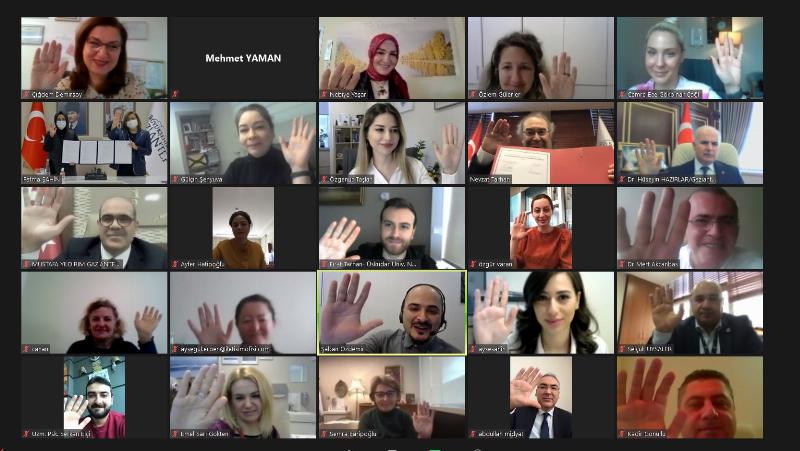
The 'Families at University' Project, implemented in cooperation with Üsküdar Üniversitesi and NPİSTANBUL Beyin Hastanesi with the support of Istanbul Governorship, will now also be applied in Gaziantep to young people in need, couples preparing for married life, and families, with the support of Gaziantep Governorship and a protocol signed with Gaziantep Metropolitan Municipality.
The signing ceremony, held with the participation of Gaziantep Governor Davut Gül, Gaziantep Metropolitan Municipality Mayor Fatma Şahin, Üsküdar Üniversitesi Founding Rector, Psychiatrist Prof. Dr. Nevzat Tarhan, Gaziantep Provincial Director of Family, Labor and Social Services Mustafa Yıldırım, Gaziantep Provincial Mufti Dr. Hüseyin Hazırlar, and NPİSTANBUL Beyin Hastanesi Board Member Fırat Tarhan, took place online due to pandemic conditions.
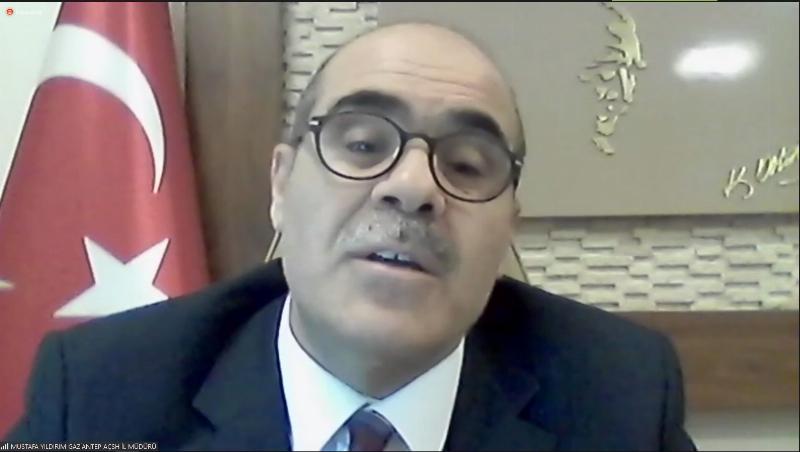
Mustafa Yıldırım: 'Lack of communication within the family is the source of problems'
Gaziantep Provincial Director of Family, Labor and Social Services Mustafa Yıldırım, speaking during the opening speeches of the protocol, stated that he once again realized how valuable and vital the chosen topic was in his assessments related to his field of service, saying, 'The reason why children under protection and care and the women we host stay entirely in these institutions is the lack of communication within the family. This is a vital issue. Our only refuge is our family, our parents, our relatives. Because these are the reasons for us to hold onto life, open the right channels, and communicate. Your scientific approach to the subject as Üsküdar Üniversitesi is very valuable and precious. We will provide our utmost contribution in this regard.'
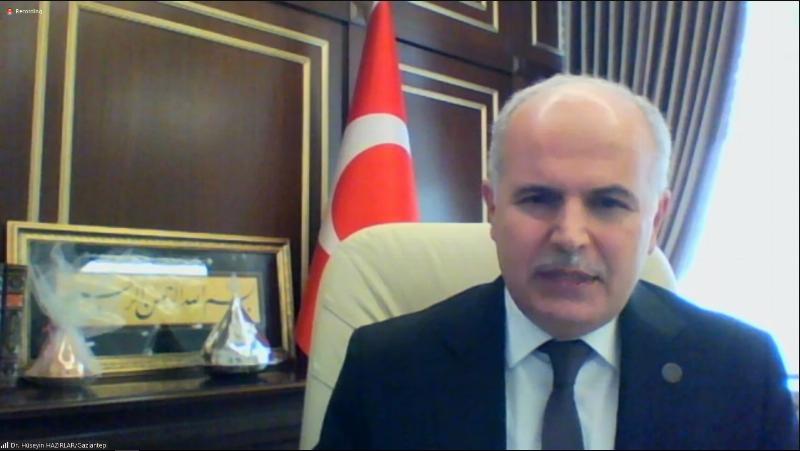
Dr. Hüseyin Hazırlar: 'It will be a very important work for our province'
Gaziantep Provincial Mufti Dr. Hüseyin Hazırlar stated that life's journey consists of youth, adulthood, and old age, and the family is what makes these periods meaningful to us. Hazırlar said, 'Our family is our most important sanctuary where we inherit our traditions, beliefs, and values. Therefore, the institution of family is the most strategic institution we will leave for the future. This institution needs to be protected, strengthened, and preserved. As the Directorate of Religious Affairs and the Provincial Mufti's Office, we strive to prioritize our social services for the community alongside religious services. I believe this work will be very important for our province.'
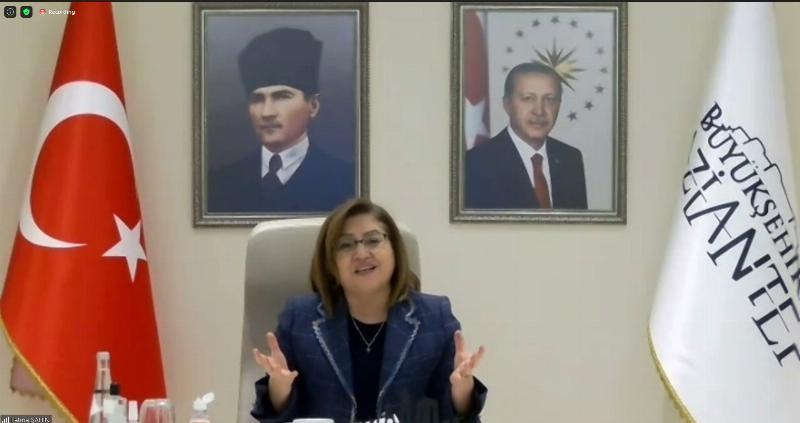
Fatma Şahin: 'The concept of family comes first among what needs to be preserved'
Gaziantep Metropolitan Municipality Mayor Fatma Şahin, who later spoke during the protocol speeches, emphasized the great importance of the family concept for a healthy society and reminded of President Recep Tayyip Erdoğan's words on December 5th: 'We are neither matriarchal nor patriarchal; we are a family-centric society.' Fatma Şahin said, 'Indeed, when we look at the values that make us who we are, where we define ourselves as conservative democrats, when asked what we preserve, our family and family values come to mind first.'
Fatma Şahin: 'We have carried out important work with Üsküdar Üniversitesi and Prof. Dr. Nevzat Tarhan'
Fatma Şahin, pointing out the importance of the work of Üsküdar Üniversitesi Founder Prof. Dr. Nevzat Tarhan and his team, especially on the family issue, said: 'While I was the founding Minister of Family and Social Policies, I had the opportunity to work very closely with Üsküdar Üniversitesi, Professor Nevzat, and all the professors there. Every university has a specialization. Üsküdar Üniversitesi, under the leadership of Professor Nevzat, has indeed acquired a very large team of experts in this field. Especially concerning the rehabilitation of children in our orphanages, adolescence, we had done very good work on research, counseling, and guidance for them.'
Fatma Şahin: 'Protective and preventive measures are very important'
Fatma Şahin stated that she always believed in protective and preventive measures, saying, 'We see all problems this way. We see it in drug addiction, in earthquakes; they are all consequences. What we call protective, preventive measures start at an earlier age group. During adolescence, how conflict is managed, how to reach a compromise, what to do in the face of a problem, how to control anger – these issues need to be addressed from a more fundamental level and taken step by step. Pre-marriage education is very important.'
Fatma Şahin: 'Our professors at Üsküdar Üniversitesi have become experts in this field'
Fatma Şahin noted that the steps from pre-marriage education to resolving issues during marriage before they escalate into conflict are stages requiring expertise, saying, 'Each stage demands serious expertise. That is why our professors at Üsküdar Üniversitesi have become serious experts in this field, and when we visited our professor, we saw that the Istanbul Governorship has also launched this project today through district governors. Actually, when we say 'Strong Individual, Strong Family,' it turns into a power struggle. We call this a 'Conscious Individual.' It is very important for the individual to be conscious and for the family to be healthy. Because marriage is not an arena for competition. It is not an arena for conflict with each other, nor an arena for power. On the contrary, the Almighty Creator creates woman and man as complements to one another. And entrusts them to each other.'
Fatma Şahin: 'With this project, we will protect the future of society'
Fatma Şahin stated that the importance of family values was understood during the pandemic, saying, 'One of the most important reasons for our positive distinction against the entire world is, of course, our strong healthcare system and social security structure, but family values protect us greatly. It creates strong protective and preventive measures against all problems. This institution is very delicate, a very special institution. Against all future dangers, a tsunami, globalization in the world, many problems experienced such as urbanization, digitalization, it seriously brings us the necessity to protect this institution even more delicately. That's why we are here today. First of all, I thank Professor Nevzat for his well-trained staff in this regard, because human capital is very important, trained human resources are very important. A perspective that knows the world, analyzes the problem well, and solves it correctly. We are here to academically enrich our own system with a consultancy service from Üsküdar Üniversitesi. The more families we reach and protect in a healthy way, the more we will protect the future of this society. We will build a healthier world, a healthier Turkey, and a healthier Gaziantep in every respect.'
Reminding the words of Fatih Sultan Mehmet Han, 'While developing a city, you cannot neglect the generation. The generation you neglect will destroy the city you develop,' Fatma Şahin said, 'Therefore, the most important thing for us is the development of the generation and preparing the generation for the future. With a human-centered approach, carrying Şeyh Edebali's philosophy of "Let people live so that the state may live" into the future. Our civilizational codes command us to do this. The modern world, the academic world is ready for this. Then the only thing we need to do is cooperation, synergy, and coordination.' Şahin stated that they plan to share this with the Ministry of Family, Labor and Social Services, saying, 'Under its chairmanship, we would have the opportunity to announce this work more powerfully to all of Turkey. Therefore, I find this work very important both in terms of strengthening our own institutional capacity and in terms of the horizon and vision of our colleagues on this issue. First of all, I extend my respects and regards to Professor Nevzat and his entire team.'
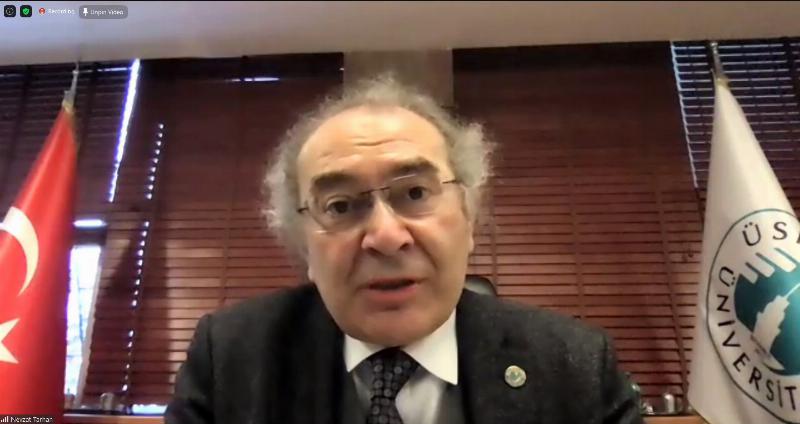
Prof. Dr. Nevzat Tarhan: 'Gaziantep Municipality is pioneering a socially innovative work'
Üsküdar Üniversitesi Founding Rector, Psychiatrist Prof. Dr. Nevzat Tarhan, stated that Gaziantep Municipality is pioneering a socially innovative work, saying, 'We hope to present a more advanced version of the project we started with the Istanbul Governorship and 4 district governorships, in terms of 'training of trainers' type staff development, in Gaziantep. If we ask why such a project was needed, projects first start with an idea, there is a need, and an idea emerges from that need; then, with that idea, social innovations, that is, things desired to be done in society, are attempted.'
Prof. Dr. Nevzat Tarhan: 'There is a need, a wound in society'
Tarhan noted that when they say the family is the last refuge, they actually emphasize strengthening the family, saying, 'There are laws that protect a society, and there are social norms, social walls. There are social standards like traditions, customs, conventional practices. If this social structure has weakened, then family standards and norms related to the family come as the last refuge. It is the cornerstone for how a family and a child will be raised, and how society will be. This era is an interesting era. Especially the last generation, born after 1990, reaching adolescence, is a digital generation. Now a television, a smartphone has become the open door of the house. The child there started encountering a lot of information unsuitable for their age, their young age, at an early age. What happened then, the family's characteristic as a refuge was also damaged. Previously, 20-30 years ago, the family was called a nest of love, but now we call it a nest of trust. The family needs to be a safe space. For it to be safe, love is also needed; if the family is not a safe space, it cannot serve as a refuge for the individual.'
Prof. Dr. Nevzat Tarhan: 'Suicides increased after the pandemic'
Tarhan stated that a person should feel safe in their home, saying, 'When the opposite happens, the person is constantly under tension. In this situation, anxiety and stress rise in the person, and antidepressant use, divorces, and suicide incidents increase. Currently, in terms of the highest suicide rates in the world, Japan is first, Korea second, followed by Nordic European countries. According to statistics, suicides have increased even further after the Covid pandemic. Because here, social ties and social support are weak. Stress has risen, people's expectation levels have increased, and social supports have weakened. There is a price for this: social stress has risen, stress and anxiety within the family have risen, and the family's characteristic as a refuge has been shaken. For years, we have always dealt with problematic families. In medicine, there are three types of practice. One is curative medicine, the second is early diagnosis and preventive medicine, which involves early recognition, early detection, and treatment of the disease; this is also very important and good, but the real medicine is preventive medicine—working so that people do not get sick. How people can live happily and healthily.'
Prof. Dr. Nevzat Tarhan: 'We need to do something to strengthen the family'
Tarhan noted that a large majority of many diseases, psychological and psychiatric problems—60% to 70%—stem from not knowing life skills, and said the following:
'We have sufficient infrastructure at the university to teach these. We have the grounds to express this with scientific robustness, we have theoretical foundations, and we need to implement it. Something needs to be done to strengthen the family. The most important thing to strengthen the family here is not classical psychotherapies, but the science of happiness course, positive psychology, which was introduced as a course at Harvard in 2015. We, as Üsküdar Üniversitesi, had introduced this course before Harvard in 2013 and saw its results. Young people say, "My relationship with my father improved, I stopped using substances, I made peace with myself, I forgave myself." They take a course for one semester, 3 hours a week for 14 weeks. We conduct pre-tests and post-tests; in the pre-test, we measure emotional intelligence, and at the end, we measure emotional intelligence again. We found that emotional intelligence increased in 20% of them and published this. It has a protective mental health effect, and we said, let's use this in the family too. While doing this, we published a family manifesto, stating the scientific reasons why.'
Prof. Dr. Nevzat Tarhan: 'Family is a discovery in humanity's socialization process'
Tarhan noted that in humanity's socialization process, neuroscience has shown that mating is biological but marriage is cultural, saying, 'We saw that concepts like identity, social identity, male and female identities, and similar concepts are learned later, and that societies teach them culturally. Within the process of human socialization, the institution of family is a discovery. The human being of a hundred thousand years ago is not the same as the human being now; humans have socialized, created civilization, established social structure, formed states, created culture. Genetically, humans are obliged to socialize; if they live alone, they cannot be happy. We are not mentally or genetically programmed to live alone. Humans are relational beings. When they live alone, they cannot be happy. The smallest unit of social structure is the family. That is, the family is a society in miniature. And society is an enlarged family. If the family is healthy, society will also be healthy. We believe that a strong society can emerge in this way with a conscious family. A strong society naturally means a strong state.'
Prof. Dr. Nevzat Tarhan: 'The most valuable treasure for a child is a family full of peace and trust'
Tarhan reminded the 5S 1M rule for a healthy and happy family, stating that the most important treasure for a child is a family full of peace and trust, and said the following:
'The 5 S's are love, respect, patience, loyalty, sincerity in the family, and the 1 M is spiritual accumulation. If these rules are developed in the family, the core of family values is formed within that family. The family becomes a safe space, and in family relationships, there are common goals, common values, and a meaningful life. What shapes a child's life are the stories, experiences, meanings gained in the family, and time spent together. Those stories and experiences settle as seeds in the child's developing soul, and the life scenarios learned in childhood become a very important social capital in their hands in later life.'
'It becomes psychological capital. Those life scenarios remain, but the actors can change. Parents may pass away, but a spouse comes in their place. The life scenario is re-shaped. But the basic life scenarios learned during childhood are very important. That's why if you ask what a child's greatest chance is, it is said; for that child to grow up in a peaceful, trusting family with common goals. If a child grows up in a restless, untrustworthy family, we cannot raise healthy generations there. We see most problems in fragmented families.'
Prof. Dr. Nevzat Tarhan: 'One must be protected from social viruses'
Prof. Dr. Nevzat Tarhan noted that we are experiencing very rapid changes as a result of socialization and globalization, saying, 'We had our family insurance. Even during the pandemic, family insurance saves us. For example, when someone goes bankrupt, everyone helps them in our family system; we have a social solidarity structure. We see these weakening. On the other hand, crime is increasing, violence is increasing, mental illnesses are increasing. The increase in all these has consequences from family dissolution and a child's inability to grow up in a safe family environment. We don't know how to be a good mother or a good father; all these are learned in the family. When we see problems within the family, the most common problem we encounter is not knowing how to solve problems. Problem-solving is like a virus; if you solve it when it's milder, it won't cause harm. Social viruses are the same. One must be protected from social viruses.'
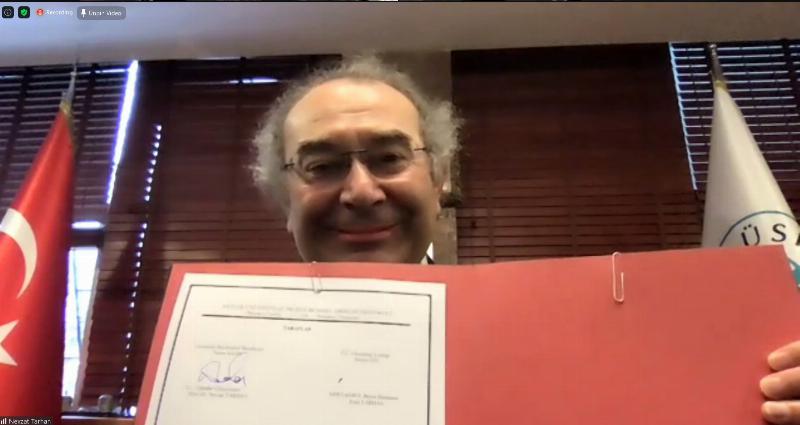
Prof. Dr. Nevzat Tarhan: 'We see this project as a remedy for society's wounds'
Tarhan said, 'Our most important social, even political, investment is strengthening the family,' adding, 'Strengthening the family is a mid-term, long-term benefit, but time passes quickly, and acting with short-term strategies is an incomplete thought; generations pay the price. To be able to make mid-term and long-term policies, one must invest in the family and invest in children. We see this project as a remedy, a solution for the wounds of society.'
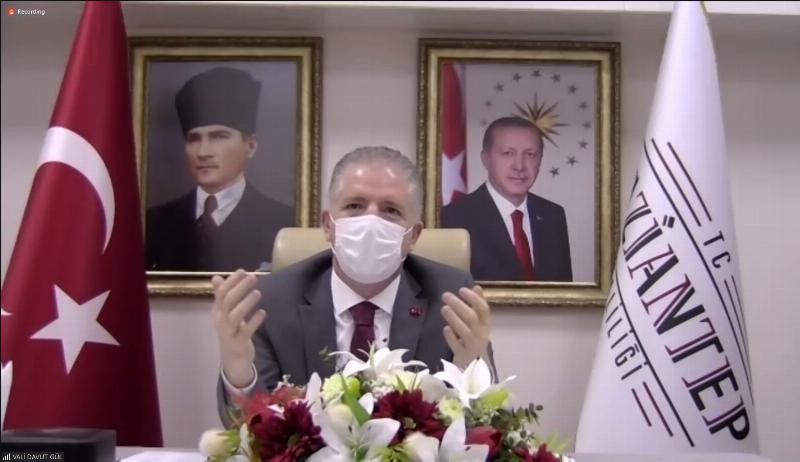
Governor Davut Gül: 'There is a need for social restoration'
Gaziantep Governor Davut Gül congratulated Gaziantep Metropolitan Municipality Mayor Fatma Şahin, Üsküdar Üniversitesi Founder Prof. Dr. Nevzat Tarhan, and his team for the project they implemented, stating that looking at Turkey in general and Gaziantep in particular, the city needs a social restoration. Davut Gül stated that issues such as security, poverty, and drug use converge at two points: 'Firstly, lack of education, and secondly, a weak family. Therefore, I believe that the joint efforts of these two deeply rooted institutions to strengthen the family, with the support of the governorship and other stakeholders, will make this an exemplary work for Turkey in Gaziantep.'
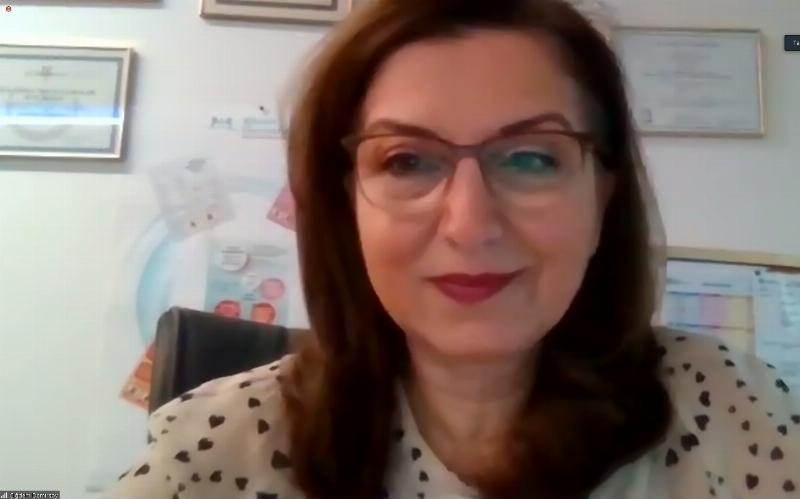
Çiğdem Demirsoy and Dr. Nebiye Yaşar explained the project
The 'Families at University' project was also presented during the protocol signing ceremony program. Project Consultant Dr. Nebiye Yaşar stated that it was gratifying for the project, which entered its second phase in Istanbul, to also be implemented in Gaziantep, and provided information about the planned activities within the project. Project Coordinator Specialist Psychologist Çiğdem Demirsoy shared information about the project during the 'Families at University' Project presentation.
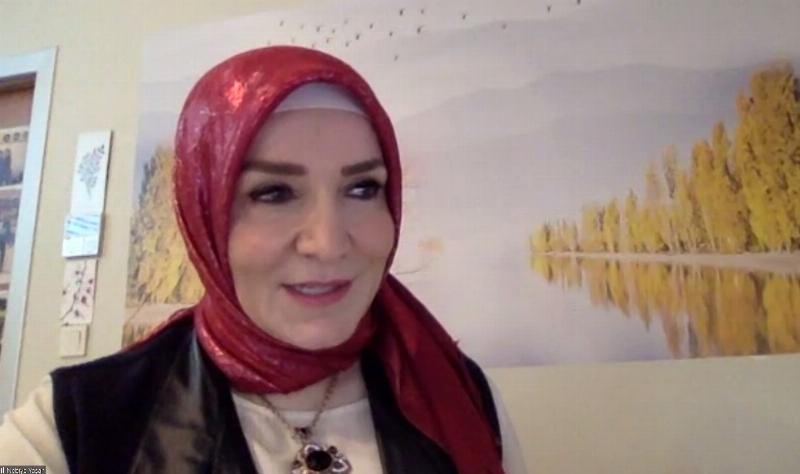
Çiğdem Demirsoy stated that the online trainings, which will be held one day a week as part of pandemic measures, will continue for 6 weeks, and that a certificate of participation will be given at the end of the trainings. According to the information provided by Çiğdem Demirsoy, the determined groups and objectives will be as follows:
White Group: To ensure that individuals under 18 years old are trained in emotional maturity and relationship management.
Pink Group: To ensure that individuals over 18 years old and couples preparing for marriage are informed about topics concerning 'Marriage and Family'.
Orange Group: To ensure that couples and families who are at risk, even if they have not yet experienced problems, are supported.
Red Group: To ensure the rehabilitation and strengthening of families with problems requiring professional help.
Share
Update Date: February 27, 2026
Creation Date: December 11, 2020
Request a Call
Other News
- Prof. Nevzat Tarhan: “Those with a mental filter are not afraid of the digital”
- Artificial intelligence doesn't eliminate the translator, it transforms their expertise!
- Social responsibility courses moved to the field
- Erasmus+ Orientation Week completed at Üsküdar
- Prof. Nevzat Tarhan: “Brain secretes ‘dark glue’ in social media lynchers!”