

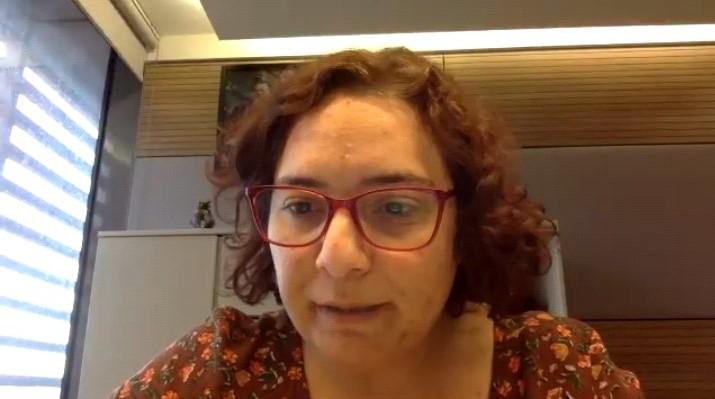
Üsküdar University Faculty of Medicine Physiology Department organized an event titled “Every Flower Blooms in Its Time; The Effect and Molecular Mechanism of Circadian Rhythm in Health and Disease.” Speaking at the event, Dr. Hande Asımgil Schmıdt, Lecturer at the Pancreatic Neuropathy Department of the Technical University of Munich, Germany, said: “When your circadian rhythm, that is, your night and day rhythm, is disrupted, you become more prone to depression and bipolar disorder.”
Content
Individuals with Disrupted Circadian Rhythm Are More Prone to Depression and Bipolar Disorder…
“Circadian rhythm exists to adapt the organism to external changes”
Commenting on the subject of circadian rhythm, Asımgil said: “The circadian clock is the sum of the biochemical and psychological behaviors of plants, animals, fungi, and cyanobacteria within a 24-hour period. Evolutionarily, the circadian rhythm exists not only in us but in almost all living things. It exists to adapt and prepare the organism for external changes. For example, at 08:00 in the morning, cortisol generally increases in the body to speed up the heart and metabolism. Also, at the same hours, insulin and testosterone increase with the first meal of the day. Around 10:00, it is the time when we are most alert. 17:00 in the evening is the period when the body's cardiovascular and muscle strength are at their highest level. Later in the evening, body temperature rises, and blood pressure increases a little more. Finally, around 21:00-22:00, the body prepares you for sleep with melatonin. Along with this, all vital processes are stopped by melatonin and the circadian rhythm. The body begins to work on other tasks.”
“When your circadian rhythm is disrupted, you become more prone to depression and bipolar disorder”
Asımgil, noting that the circadian rhythm forms after a certain period, stated that individuals with disrupted rhythms are more prone to depression and bipolar disorder. Asımgil added: “Why don't babies sleep after birth? Their circadian rhythms have not yet formed. Circadian rhythms form after a certain period. Similarly, studies on mice also show that mice do not have a circadian rhythm at a specific time. We also have a rhythm and time at every level. For example, when there is light, that is, during the day, we expend energy, and our DNA is damaged by rays from the sun; the DNA repair mechanism repairs this in the evenings. The disruption of the circadian rhythm can be associated with the development of cancer, obesity, diabetes, and psychological problems. When your circadian rhythm is disrupted, that is, your night and day rhythm is disturbed, you become more prone to depression and bipolar disorder, and cardiovascular problems, in particular, occur much more frequently.”
“Women working night shifts have a higher risk of breast cancer”
Asımgil stated that the disruption of the circadian rhythm can lead to various diseases: “People working night shifts have a much higher tendency to cancer, obesity, and psychological disorders. The reason for this is that day and night get mixed up. When day and night get mixed up, the body and internal organs perform the wrong tasks at the wrong time. There are significant drops in melatonin levels, in particular. Melatonin is suppressed by light. This leads to neurological problems. There is a study conducted on women in 2018. Women working from 00:00 at night until 05:00 in the morning have a particularly higher risk of cancer. If you follow a certain rhythm to protect your health and the necessary molecules are produced when needed, there won't be many physiological diseases. But when this is disrupted, problems begin to arise.”
Share
Update Date: February 27, 2026
Creation Date: March 24, 2021
Request a Call
Other News
- The book that read today's digital threats in 2014: Being a Conscious Family
- Experts warn: 'Instead of memorizing letters, teach pencil grip, scissor use, and coloring'
- School fear and school love both start in the family!
- Family is not merely transforming, it is being battered under a serious assault
- Artificial intelligence opens the door to early diagnosis in autism!